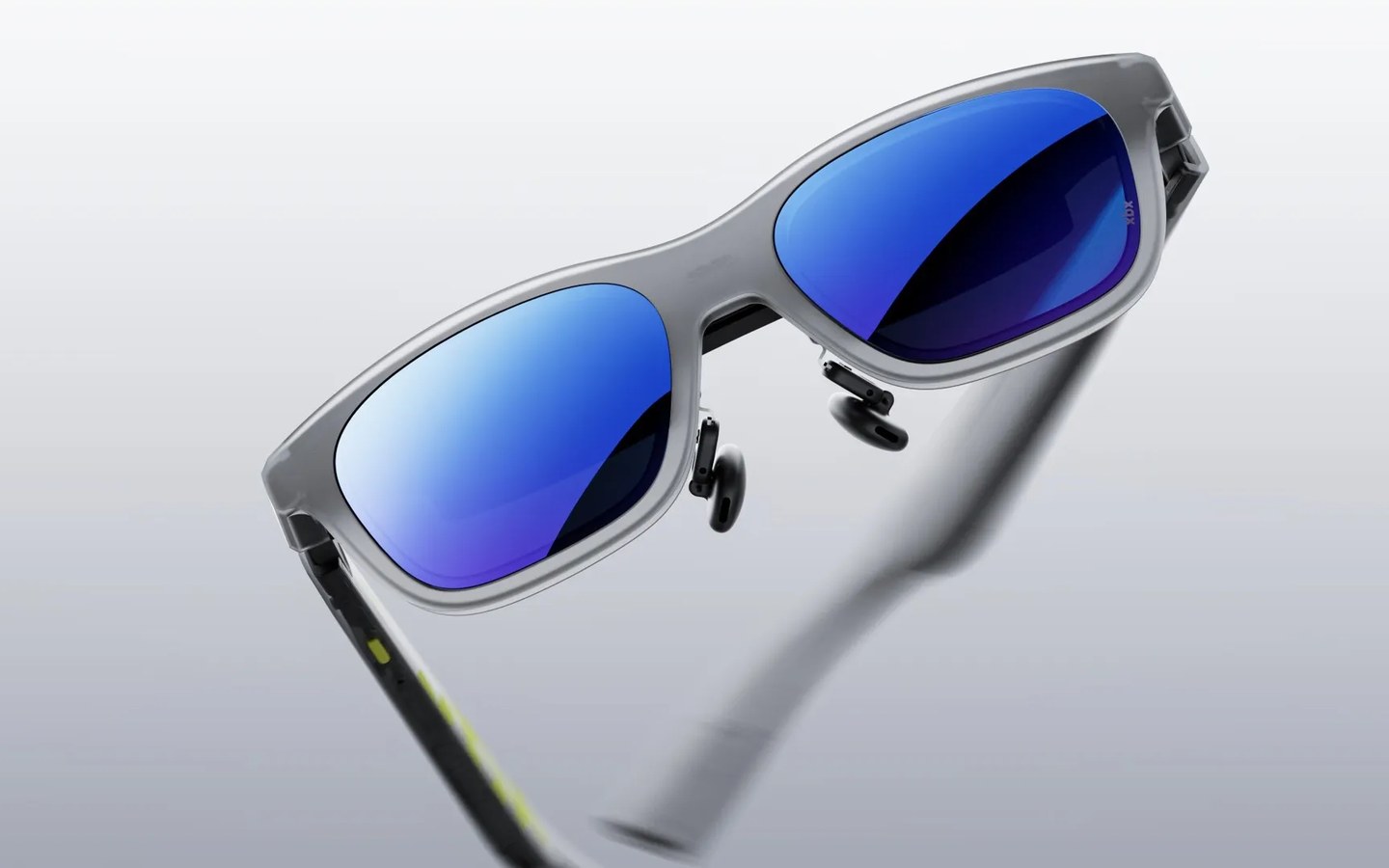
XREAL is making a bold play for the everyday consumer with the international launch of its first budget AR glasses under the new ‘X by Xreal’ (xbx) sub-brand. As reported by Road to VR, the xbx a01+ is now available in the US and key markets across Europe and Asia for $300 — a price that positions it firmly below the company’s flagship Xreal One, 1S, and the forthcoming One Pro.
Featherweight Design, Heavyweight Specs
The xbx a01+ manages to pack impressive optics into a frame that weighs just 62 grams. That’s lighter than many regular sunglasses, yet it houses dual Sony micro‑OLED displays capable of pushing up to 1,600 nits of brightness and a 50° field‑of‑view. The bird‑bath optics support HDR10 and real‑time SDR‑to‑HDR conversion, while the 120Hz refresh rate keeps motion smooth — specs that feel almost absurd at this price. A spatial anti‑shake algorithm helps stabilize the virtual screen during movement, a nice touch for watching videos on a bumpy commute.
Like all of XREAL’s glasses, the a01+ is not a standalone device. It’s designed to tether to phones, tablets, handheld game consoles like the Steam Deck, and laptops via USB‑C. You’re essentially getting a wearable, private big‑screen monitor that floats in front of you wherever you go, perfect for movie buffs and mobile gamers who want a more immersive experience without hauling around a physical display.
The Trade‑Offs That Make the Price Possible
To hit the $300 mark, XREAL had to leave a few things on the cutting‑room floor. Most notably:
- No camera sensors — so no augmented‑reality overlays or hand tracking found in pricier models.
- No electrochromic dimming — the glasses rely on a simpler, permanent tint rather than the adjustable opacity that adapts to ambient light.
- No ‘Sound by Bose’ audio — you’ll get basic built‑in speakers instead of the tuned audio experience found in the Xreal Air series.
These omissions are sensible trade‑offs for a device aimed purely at media consumption. If you’re looking for a spatial computing headset with environment sensing, you’ll need to step up to the $400 Xreal One or higher. But for couch‑gaming sessions, in‑flight movies, or a second screen for your laptop, the a01+ delivers 80% of the core experience at a significantly lower cost.
Global Availability and What It Signals
The xbx a01+ launched in China back in May, but today’s international rollout is a clear signal that XREAL wants budget‑conscious buyers everywhere to join its ecosystem. You can now buy the glasses directly from xreal.com, Amazon, Best Buy, B&H, and Micro Center in the US, with partner retailers covering the EU, UK, Canada, Australia, Japan, and South Korea.
XREAL co‑founder and CEO Chi Xu called the a01+ “an important step toward making big‑screen AR something anyone can experience.” While the device won’t wow you with futuristic overlays, it democratizes one of the most practical uses of AR today: a portable cinema and gaming display that disappears into your pocket. For $300, that’s a proposition worth watching.