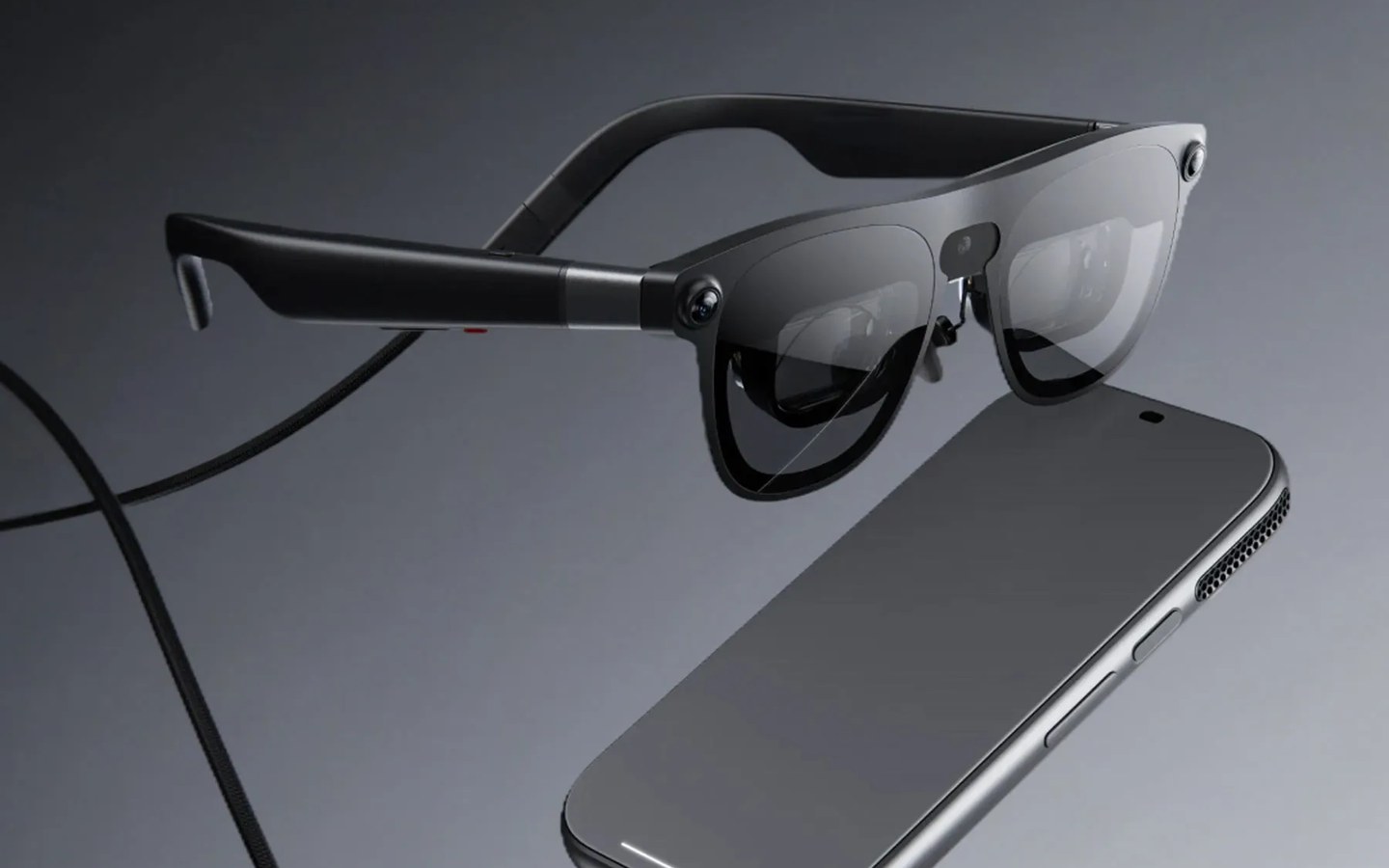
Reservations are stacking up before final pricing exists
XREAL has confirmed that XREAL AURA, the first AR glasses to run Google's Android XR operating system, has passed 10,000 global reservations. Road to VR reports that demand spans consumers, developers, and enterprise customers. The initial $99 reservation offer, which unlocked a $199 launch credit, has sold out completely.
That enthusiasm comes with a caveat: final pricing still hasn't been announced. XREAL has said Aura will not exceed $1,500 before taxes, but the exact number could shift the calculus for some of those refundable reservations. For now, $199 refundable deposits remain open. Launch is expected in Fall 2026, with more pricing and availability details promised in the coming weeks.
A pocketable brain keeps the glasses light
Aura sticks with Xreal's familiar birdbath optics, delivering a 70-degree field of view in a package that weighs less than 95 grams on the head. But the real story is the split-compute architecture. Instead of cramming everything into the frames, XREAL offloads processing to a wired, pocketable compute unit.
Key hardware and software specs include:
- Weight: under 95 grams on-head
- Optics: birdbath with 70° FOV
- Tracking: six degrees of freedom (6DOF) plus hand tracking
- Compute: Qualcomm Snapdragon Reality Elite chipset paired with Xreal's X1S Spatial Coprocessor
- Software: Android XR with access to the Google Play Store and a growing catalog of XR apps
Unlike many birdbath glasses that simply project a virtual screen, Aura supports multimodal AI experiences and full 6DOF spatial tracking. Early hands-on reports from December highlighted field of view, sharpness, brightness, and electronic lens dimming, though production tuning may still change before launch. That combination puts Aura closer to a lightweight mixed-reality headset than a basic display accessory.
A milestone with real product implications
The 10,000-reservation milestone is more than a vanity metric. It suggests that a sub-100-gram glasses form factor, paired with a tethered compute puck, is resonating with people who want portable AI and spatial apps without the bulk of a traditional VR headset. Aura's Android XR foundation also means it inherits the Play Store's existing Android app library, not just a curated XR store. That app compatibility could lower the barrier for developers and consumers who already live in Google's ecosystem.
The split architecture sidesteps thermal and weight constraints that have long plagued all-day wearable AR. If XREAL can nail pricing, battery life, and app support—areas the company has yet to fully detail—Aura could become one of the most practical bridges between today's smart glasses and tomorrow's context-aware AI assistants.