From Home Assistant to AI agents: what Linux unlocks on the Arduino® UNO™ Q board
What can you build, when AI can interact with the real world?
The single-board computing market is shifting rapidly, and we are moving into an era of unprecedented possibilities where edge AI, computer vision, real-time control, and rich sensor streams converge locally. Yes, it’s exciting – but even amidst this “explosion” of hardware, an age-old rule holds true: define what you want to build before picking your tool.
No single board can (nor should!) excel at everything. A low-power embedded sensor, an autonomous robot, and a high-throughput video server all demand different architectures. For example, if you are weighing hardware choices for a general-purpose Linux setup versus a hybrid microcontroller, read this in-depth review to evaluate how different design philosophies match your requirements.
In concrete terms, it’s great to get a sense of what each board can do – and even better if you can look at a variety of cool projects at the same time! So here is a selection of what we are seeing developers build across key domains with the Arduino ® UNO ™ Q board , leveraging its dual-brain to bridge high-level AI workloads with deterministic physical control.
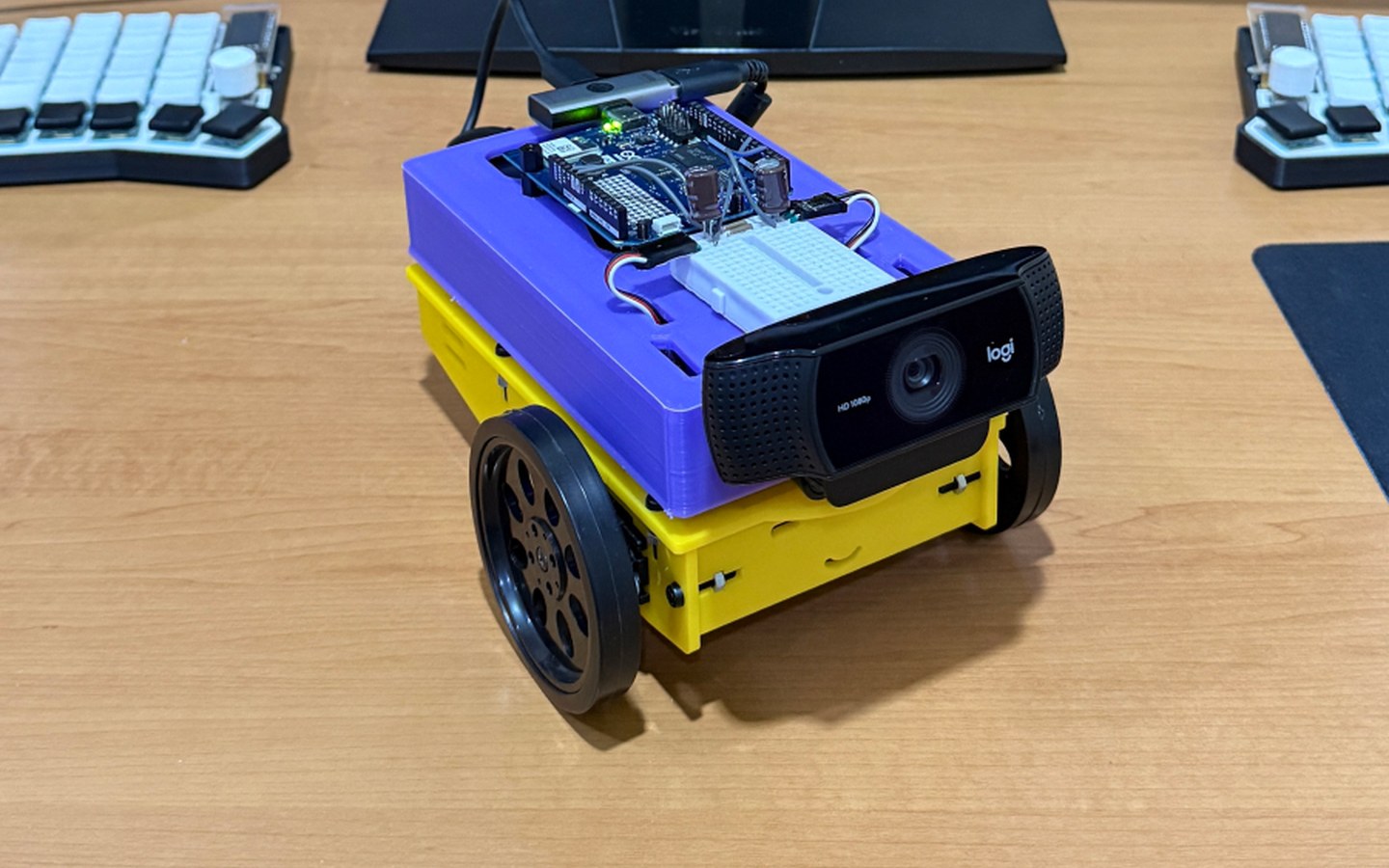
Robotics excels on hybrid platforms because physical movement requires tight, real-time microcontroller timing while visual recognition requires heavy AI processing.
A robot arm that sees you : Uses camera vision designed to recognize people and a robotic arm built to deliver items, with a Modulino LED Matrix providing visual feedback.
UNO Q Braccio : Integrates Edge Impulse AI and ROS 2 in a platform engineered to support robotic arm control, including simulation in Gazebo.