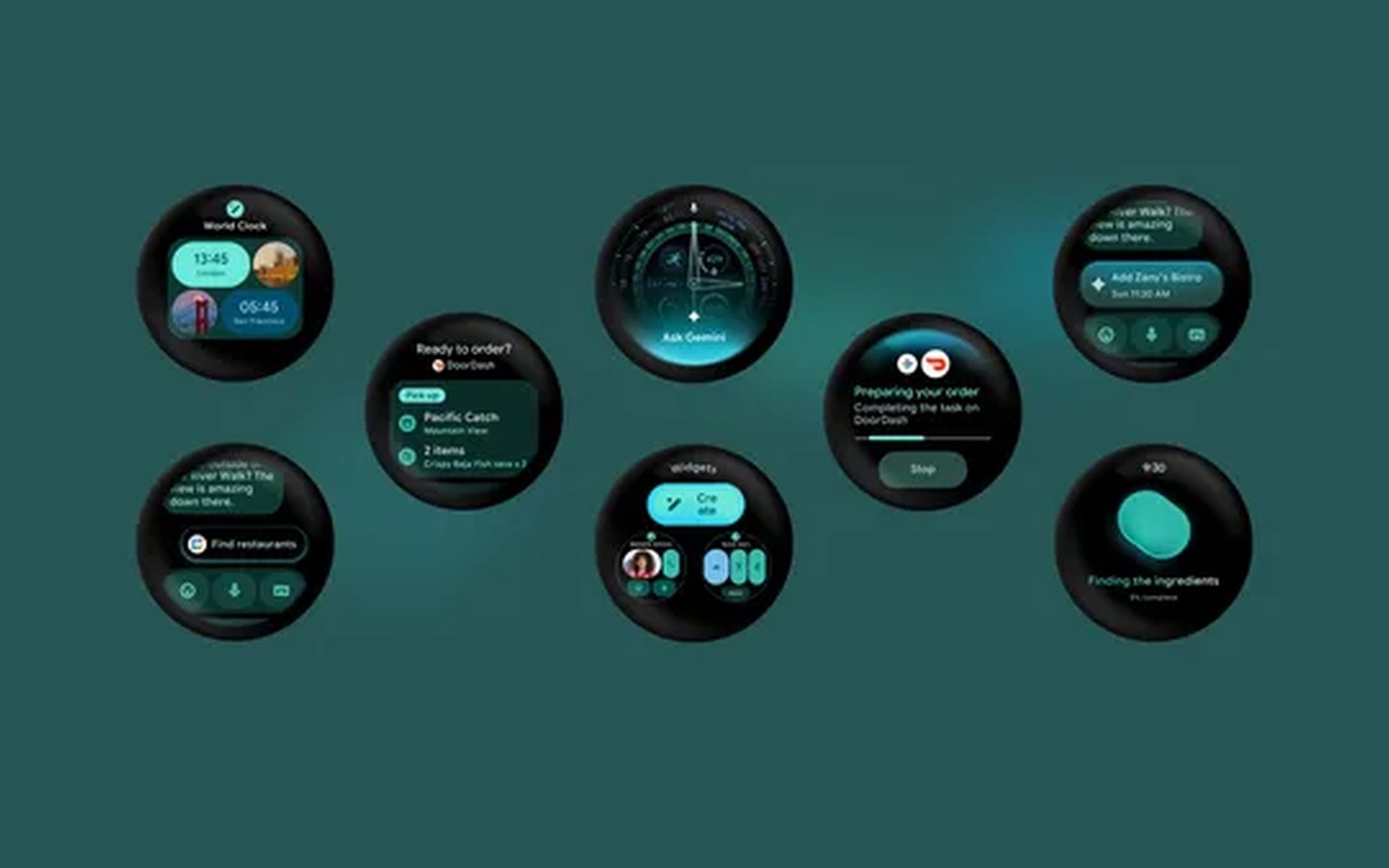
Google has started rolling out Wear OS 7 to eligible Pixel Watch devices, and the update positions the smartwatch less as a phone mirror and more as a standalone, proactive assistant. More than half of Wear OS users already strap on their watch seven days a week, often for over 23 hours a day. With this release, Google is betting that real-time glances, seamless device orchestration, and—soon—on-wrist AI can make the smartwatch genuinely indispensable.
Real-time info at a wrist glance
Live Updates are the most immediate payoff. Instead of pulling out your phone, you can track live events directly on your wrist: sports scores, food delivery ETAs, or workout progress. The feature surfaces glanceable information exactly when it matters. For instance, the Just Eat app can push order status updates that you can absorb without breaking stride. It’s a practical refinement that acknowledges the smartwatch’s role as a quick-look interface, not a miniature phone.
Orchestrating your device ecosystem
Wear OS 7 also deepens your watch’s role as a remote control for the gadgets scattered around you. The update introduces a media output switcher that lets you manage playback across headphones, home speakers, and other connected devices from your wrist. If you snap a photo using audio-enabled eyewear (launching this fall), the capture appears instantly on your watch screen for review. The design philosophy is clear: your watch becomes the hub for a growing mesh of personal devices, reducing friction when switching between screens and speakers.
Gemini Intelligence arrives later this year
The most ambitious layer of Wear OS 7 will come later in 2025 for select devices. Gemini Intelligence brings large-language model capabilities directly to the wrist. Three standout features are worth tracking:
- Create My Widget: Build fully custom dashboards using natural language—no template tapping required.
- Multi-step app automation: Gemini navigates tasks across apps, such as booking a front-row bike for a spin class or reordering your favorite meal, all from a voice command.
- Personal Intelligence: Drawing on your Gmail, Search, and chat history (with permission), the watch connects dots to offer context-aware suggestions, all wrapped in a new Neural Expressive design language that feels native to a tiny screen.
These AI features don’t just mirror what’s on your phone; they reconceive the watch as a primary interface for actions that once required a larger display. The emphasis on natural language and cross-app choreography moves the smartwatch from a notification receiver to a task completer.
Under the hood: efficiency gains
All these additions would be hollow if battery life suffered, but Google promises the opposite. Thanks to deep system-level power optimizations, average users who upgrade from Wear OS 6 can expect up to a 10% improvement in battery life. That margin may translate to an extra hour or two of active use, enough to make all-day wear more dependable without disabling features. It’s a quiet but critical foundation for the AI-heavy future that Gemini Intelligence previews.
Wear OS 7 is available now for compatible Pixel Watch devices. The Gemini Intelligence rollout will follow in phases, marking a deliberate step toward wrist-worn AI that doesn’t just inform you but acts on your behalf.