Brain-Computer Interface Comes to Consumer VR
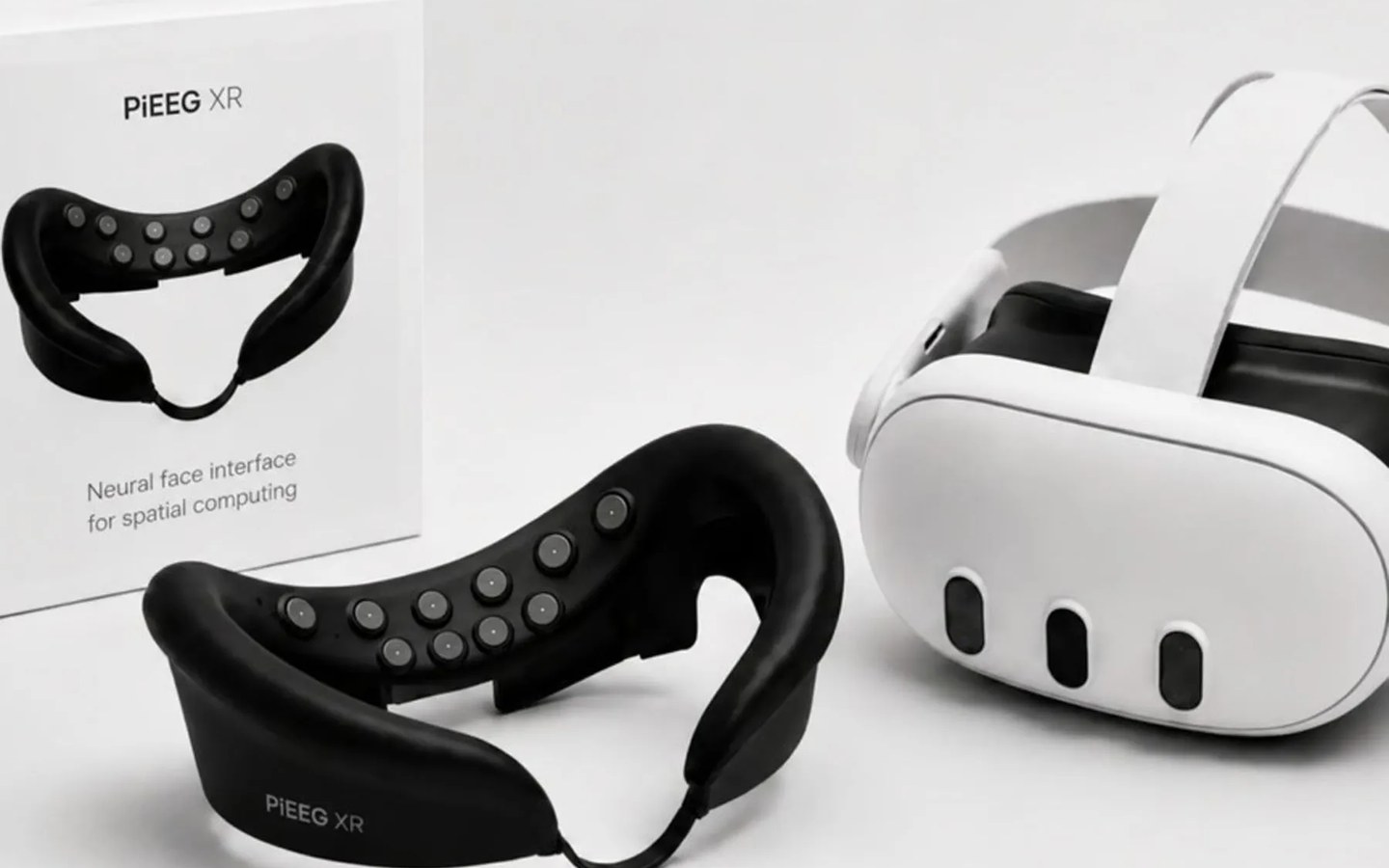
A Scottish startup wants to replace your Quest headset’s stock facial interface with something far more intimate: a ring of EEG sensors that reads your brain’s electrical rhythms and facial muscle twitches, then translates them into avatar movements and in-game actions. PiEEG, founded in 2022 by Dr. Ildar Rakhmatulin, has spent the past few years building low-cost brain-computer interfaces for researchers and hobbyists. Now it’s preparing to launch a Kickstarter for PiEEG XR, a neural facial interface purpose-built for Meta Quest headsets.
Rather than a bulky medical-grade EEG cap, PiEEG XR integrates its sensors into the facial padding that already touches your forehead and cheeks. The promise is straightforward: wearing the device in VRChat or other social XR platforms lets you animate avatar expressions and trigger actions simply by thinking—or, more accurately, by shifting your cognitive state. The company says avatars will react to your actual brain activity and micro-expressions in real time.
How It Works: From Brain Waves to Actions
Importantly, this isn’t mind reading. Consumer EEG systems don’t decode literal thoughts like “move my left arm” or “smile.” Instead, they detect broad neural signatures tied to attention, relaxation, cognitive workload, and other states. PiEEG XR picks up these signals through its IronBCI processing platform, which captures data at 250 samples per second with 24-bit resolution and Bluetooth Low Energy 5 connectivity, all while keeping noise to a minimum.
The magic happens in software. PiEEG’s Focus-to-Action API maps those broad brain states to specific software events. A burst of concentrated attention might change an environment’s lighting or activate a tool in a game. Relaxation could slow an avatar’s breathing animation. Facial micro-expressions—little eyebrow shifts or cheek twitches captured by the same sensors—add another layer of avatar realism, all without holding controllers. And for those who want to dig deeper, the raw EEG data streams are fully exposed.
Opening the Door for Developers and Researchers
PiEEG is betting that open-source access will attract a community it calls “the engine of innovation.” The company is positioning PiEEG XR as both a turnkey VRChat accessory and a research-grade tool. Developers could build what the startup calls “thought-controlled” horror games—imagine a scenario where your rising fear, measured by your brain, makes the game more intense. Researchers studying emotional responses in VR get a clean, timestamped data pipeline without cobbling together separate hardware.
The device’s Kickstarter campaign is expected soon, though pricing tiers haven’t been announced yet. For now, PiEEG is encouraging sign-ups for launch notifications. If the campaign succeeds, a faceplate that listens to your brain might become the most unusual Quest mod on the market—one that turns the internal mess of concentration, calm, and surprise into a visible, shareable digital self.