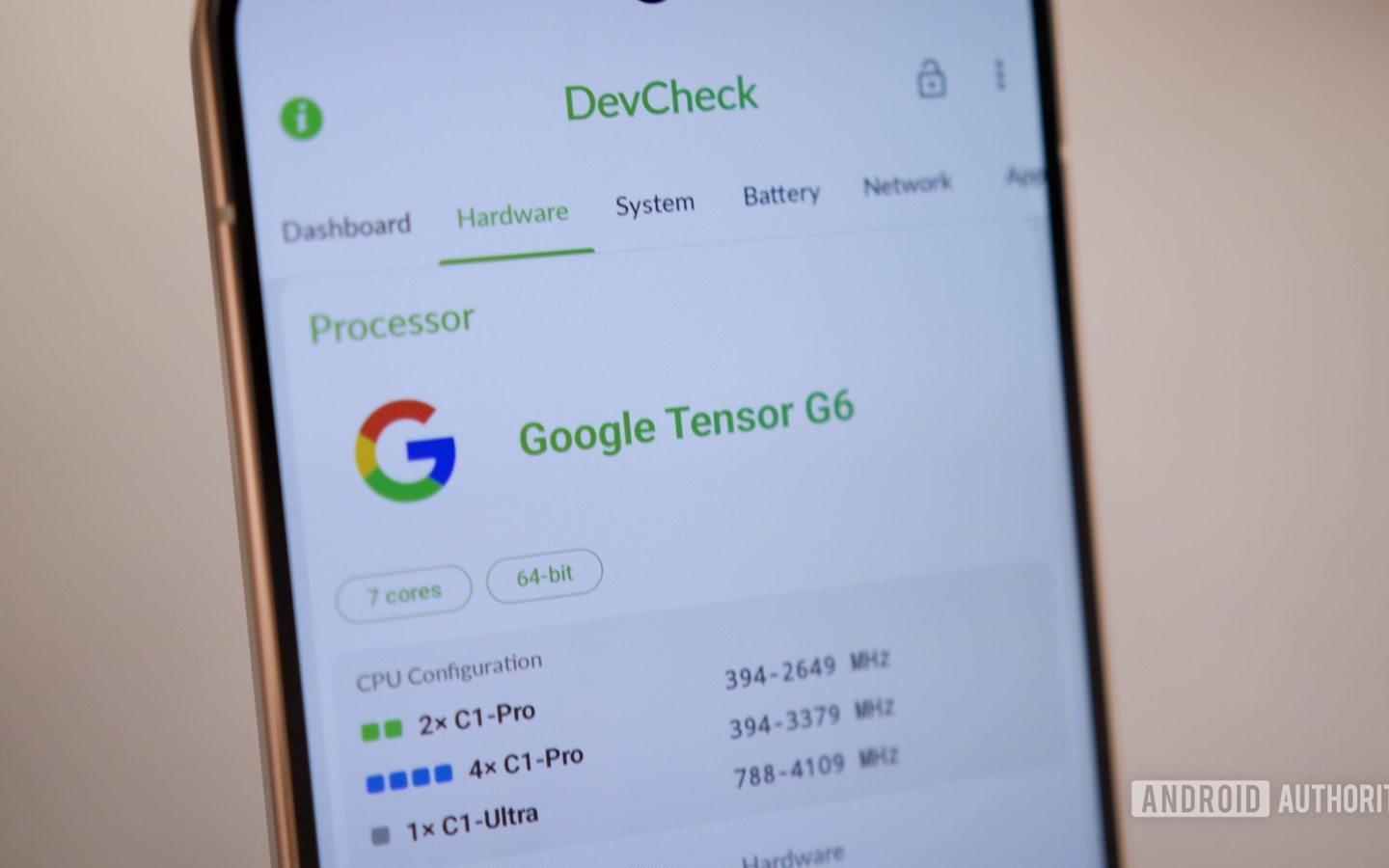
According to Android Authority, the Pixel 11's most significant hardware change isn't flashy camera hardware or a higher refresh rate display—it's the custom Tensor G6 TPU. Google claims this new Tensor Processing Unit delivers 50% more compute power and up to 3.5x faster performance in certain AI workloads. Those are the kinds of generation-over-generation jumps that usually get buried in spec sheets, but they have real consequences for anyone who uses AI features on a phone.
The specs behind the leap
The TPU is Google's in-house silicon designed specifically for machine learning tasks like image recognition, speech processing, and on-device language models. The previous Tensor G5 already handled a lot of this locally, but the G6's TPU significantly widens the runway. A 50% compute uplift means more complex models can run without choking the phone, while the 3.5x speed improvement in select workloads suggests Google has optimized for specific AI operations—likely transformer-based models that power modern assistants and photo editing.
The most immediate beneficiaries:
- Faster on-device photo and video processing — Magic Eraser, Best Take, and other Pixel exclusives should see noticeably quicker results.
- Lower-latency voice and assistant features — Commands that used to roundtrip to the cloud can be handled locally, which means fewer "one moment" pauses.
- Expanded third-party developer access — Google has been opening TPU access through ML frameworks, so app makers can tap into the same AI acceleration for their own local inference tasks.
Why this matters for everyday use
The practical upside isn't just speed; it's privacy and reliability. When AI runs on the device, your data doesn't have to leave the phone. A live translation or voice note can work in airplane mode. And if you're in a spotty cell area, the assistant won't degrade into a useless stub. The Tensor G6's TPU makes all of that more feasible for heavier models that would have been too slow or memory-hungry before.
Android Authority notes that Google has also signaled greater developer access to the TPU, which could lead to a wave of third-party apps using on-device AI for tasks like real-time language translation, document summarization, or offline voice dictation—without each app having to reinvent the wheel.
The cloud still has a role
None of this means the Pixel 11 can replace cloud AI entirely. Many of Google's most impressive features—like Gemini's most capable reasoning models—still require massive compute that a phone simply can't match. The 3.5x speed gain is impressive, but it's still a fraction of what data-center GPUs deliver. So expect a hybrid approach: the TPU handles the frequent, latency-sensitive, privacy-critical tasks, while the cloud remains the backbone for heavy lifting.
Even so, the trajectory is clear. With each Tensor generation, Google pushes more AI out of the data center and into your pocket. The TPU upgrade may not be the sexiest change on a Pixel 11 spec sheet, but it's the one that quietly makes every AI interaction feel less like a server request and more like a native phone capability. That's arguably the best upgrade of all.