The Oura Ring 5 Finally Shrinks
For smart ring loyalists, the Oura Ring 5 looks like a direct answer to long-standing complaints. It’s 40% smaller than the Ring 4, finally addressing the chunky profile that has bothered wearers since the early days. The company has also improved durability, added advanced blood pressure monitoring, and packed all of this into a ring that still delivers Oura’s signature sleep and readiness scores. After spending months with the Ring 3 and Ring 4, I’ve always praised Oura’s software, but the hardware forced daily compromises. The ring would come off multiple times a day—a habit that completely undermines the promise of effortless, continuous health tracking.
The Everyday Friction of Smart Rings
Even with iterative slimming, a ring remains a ring. My Oura Ring 4 highlighted three constant annoyances:
- Weightlifting: The ring presses painfully into my finger and risks getting scratched or bent by knurled barbells.
- Cooking: I’d instinctively remove it when handling raw meat or sticky dough, breaking the tracking continuity.
- Handling my phone: A metal ring scraping against the back glass is an unpleasant sensory jolt.
The Samsung Galaxy Ring, despite being noticeably trimmer, still interrupted these activities. A ring will always project into the physical space your fingers occupy, and that means it will always clash with daily life in a way a wristband doesn’t.
Why the Fitbit Air Wins for All-Day Wear
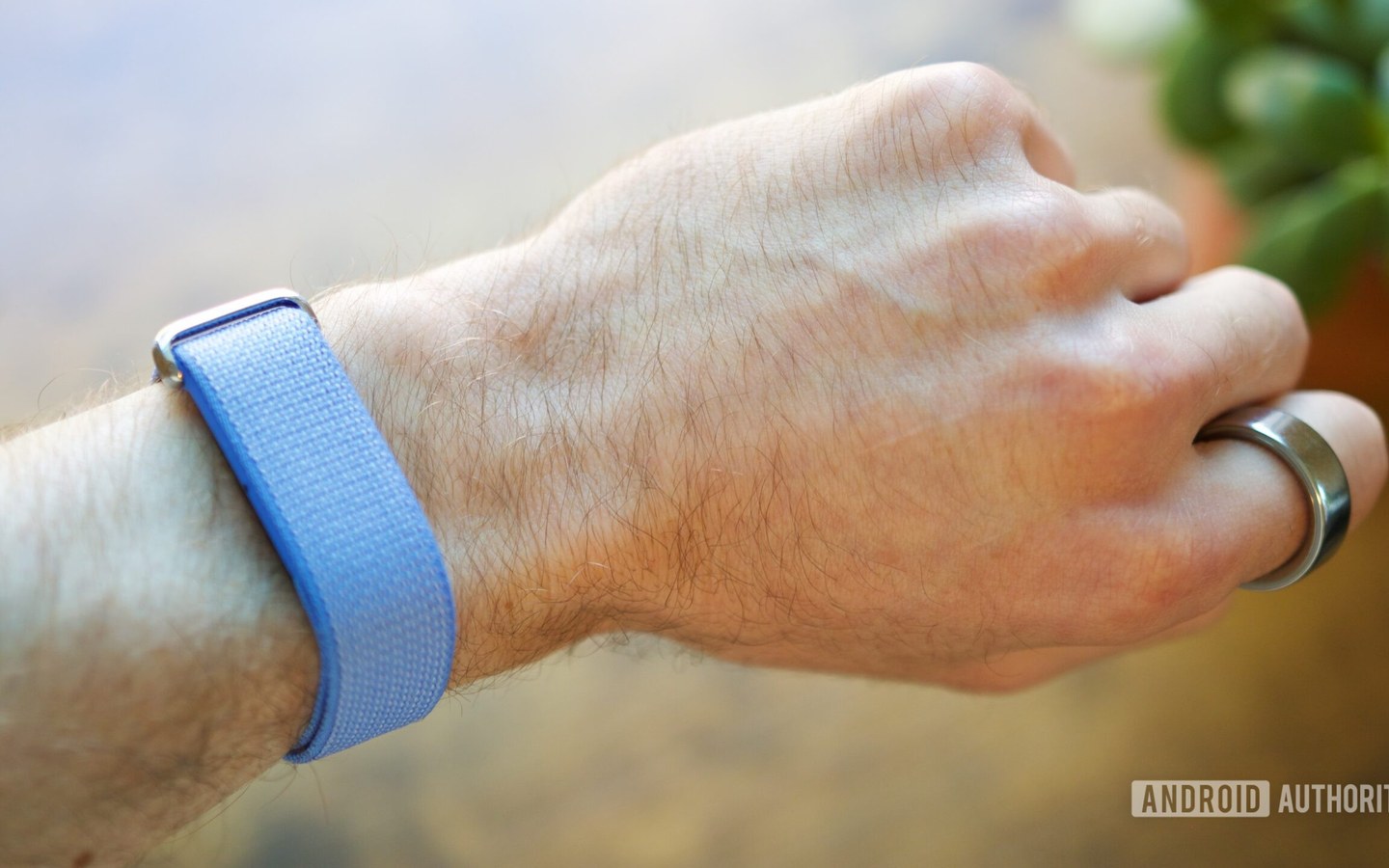
The Fitbit Air flips the script. It’s a screenless, ultralight band that delivers week-long battery life and zero notification distractions. I’ve worn it for a week straight—through sweat, sleep, and kitchen duty—without ever needing to take it off. It’s so comfortable that I forget it’s there, something I could never claim about the Oura Ring 4. The data collects silently, and the lack of a screen makes it feel like a true background health companion rather than another gadget clamoring for attention.
This form factor simply disappears into my routine. When I lift, there’s no finger pressure; when I cook, there’s no hygiene worry; when I grab my phone, no clack. The Fitbit Air solves the core problem that smart rings, by their nature, can’t fully fix: passive wearability. And it’s not alone—the rising popularity of bands like the Luna Band and Garmin’s anticipated Cirqa band shows a market shift toward invisible, wrist-worn trackers.
Where Oura Could Go Next
I’m still impressed by the Oura Ring 5. For anyone committed to the ring aesthetic or who simply can’t stand anything on their wrist, it’s the undisputed king of its category. Its slimmer build and new health tools will likely pull in new users and satisfy upgraders. But my time with the Fitbit Air has recast my expectations: I now want a wearable that I never have to think about removing. Oura’s app and algorithms are second to none; if the company ever crafts a sleek wristband that ties into that ecosystem, I’ll be first in line. Until then, the Air has proven that the best wearable isn’t the one with the most features—it’s the one you can wear continuously without a second thought.