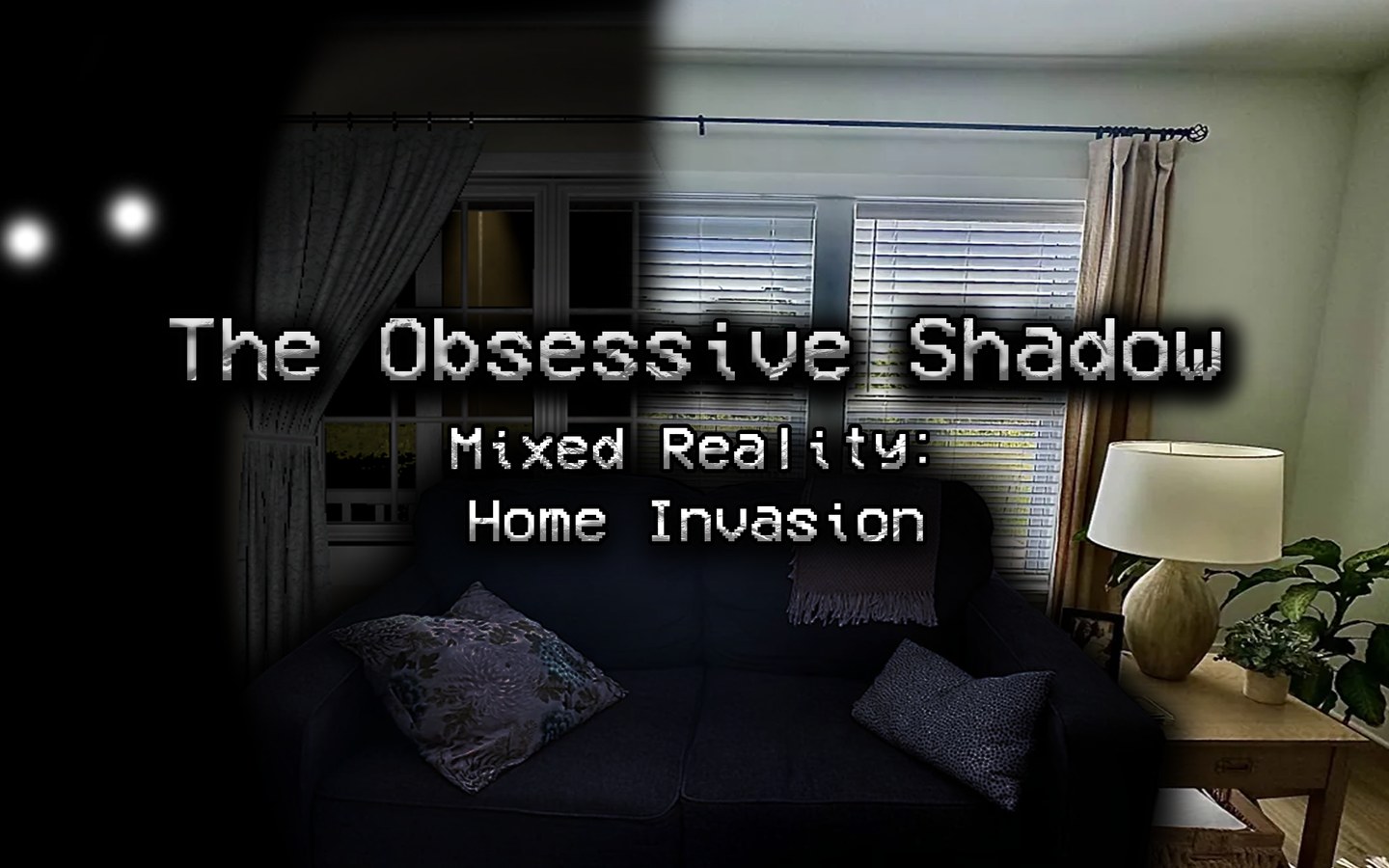
Home invasion is already one of the most primal horror setups in VR. Now The Obsessive Shadow wants to push it one step further by pulling the intruder out of the 1980s suburban set and into the player's actual living space. The update was first shown as a teaser by developer Pablo Heckman at the Ruff Talk VR Showcase, as UploadVR reported. Details are deliberately thin, but the direction is clear: take a game about waiting, listening, and surviving until dawn, and let the room itself become part of the scare.
The familiar fear gets a spatial twist
The original The Obsessive Shadow drops players into a 1980s suburban home with only a flashlight and a voice on the other end of a phone call. The premise is simple but effective: a mysterious intruder is peeping through windows, and the player has to use every sense to fend them off. As the in-game night progresses, the threats intensify, echoing the escalating pressure loops of early Five Nights at Freddy's titles. The game already ships on Meta Quest and Steam, with the Steam version supporting both VR and flatscreen play. And because player actions already lead to multiple endings, the core design clearly favors replayability and tension over a single scripted path.
- Flashlight as the only tool
- A voice on the phone acting as guide or warning
- An intruder peeping through windows
- Threats that intensify through the night
- Multiple endings based on player choices
What the mixed reality mode changes
UploadVR's report from the showcase doesn't yet explain how the MR mode will handle occlusion, passthrough, or room scanning. What we do know is that the teaser suggests the familiar loop is being transplanted from the stylized 1980s house into the player's own real environment. That means walls, furniture, and doorways could become cover, hiding spots, or even failure points. It also raises practical questions: Will the game ask for room setup? Will the intruder appear behind your actual couch? Will the branching endings remain identical? The developer hasn't said, which makes this a preview rather than a full reveal. But for horror, that uncertainty is part of the pitch.
Why this matters beyond a scare
For AI-Portable readers, the interesting signal isn't just another VR horror update. Mixed reality is moving from a tech demo trick to a design layer on top of existing titles. The Obsessive Shadow's MR mode suggests developers are willing to let software react to a real room's geometry, lighting, and obstacles, not just project a virtual backdrop. That kind of room-aware behavior is central to lightweight headsets and ambient computing: if an experience can turn your home into a stage, then training simulations, guided assistance, and context-aware notifications can use the same machinery. Horror is a natural testbed because it rewards spatial attention, surprise, and the feeling that software understands where you are. It also matches a broader user behavior: people are increasingly comfortable letting a headset reinterpret their private space, even for content that is deliberately uncomfortable. The fact that a small indie title is experimenting with this layer matters more than any single game mechanic.