Affiliate links on Android Authority may earn us a commission. Learn more.
As I look at the Galaxy Watch 4 clasped to my wrist, I feel little desire to upgrade to a new Samsung model. There’s much excitement surrounding the incoming Galaxy Watch 9 and Galaxy Watch Ultra 2 , and the recent rollout of the upgraded Health app teased a plethora of new features.
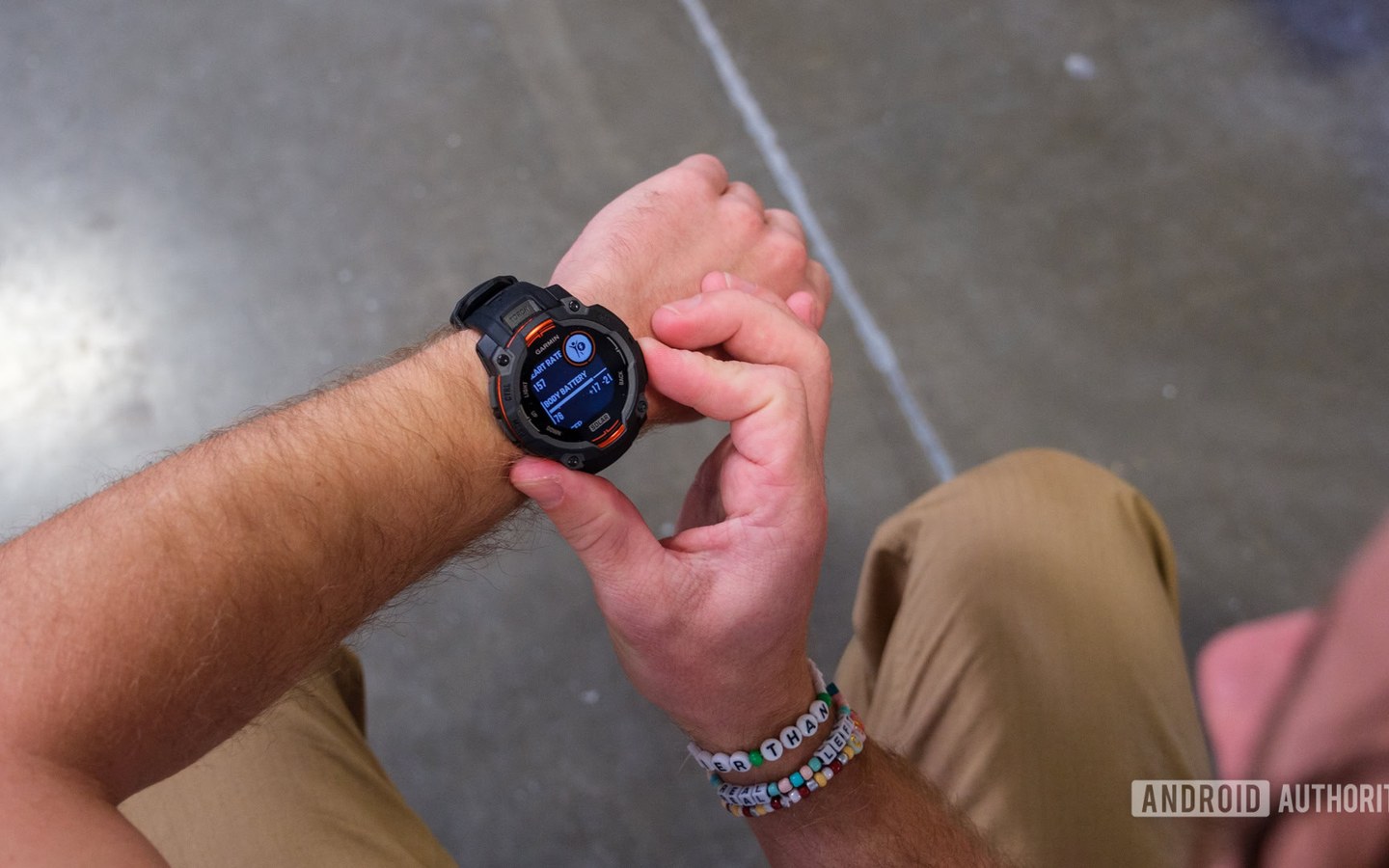
Fitness index? Vitals? Hearing health!? They all read pretty exciting on paper. But after many years, Samsung and its contemporaries have yet to properly recreate a Garmin feature that wraps my entire day’s activity into a neat number. That feature? Body Battery.
How do you feel about Garmin's Body Battery feature?
It’s been nearly a decade since Garmin launched Body Battery and several years since I last used a Garmin. Absence, as they say, makes the heart grow fonder.
In a nutshell, the Body Battery score approximates a user’s energy level throughout the day, with 0 being the lowest possible value and 100 the highest. The score uses several physiological factors in its calculation, including heart rate, sleep quality, and heart rate variability (HRV) — a strong indicator of overall bodily stress.
That probably sounds similar to other holistic scores, but Body Battery differs in one key way. I can “recharge” my score — or earn positive points — by resting, sleeping, or napping. Alternatively, any physical exertion costs points. The more I demand of my body, the lower my score will drop. Conversely, I can top it up again by catching a quick snooze on the couch in the middle of the day. It’s unlike Samsung and Google’s equivalents, which remain static until the next morning.
To simplify it further, Body Battery can essentially be viewed as the body’s “state of charge,” and this framework makes it easy for newcomers and advanced users alike to understand and utilize. There’s no need for the rambling AI anecdotes often paired with its rivals’ scores.