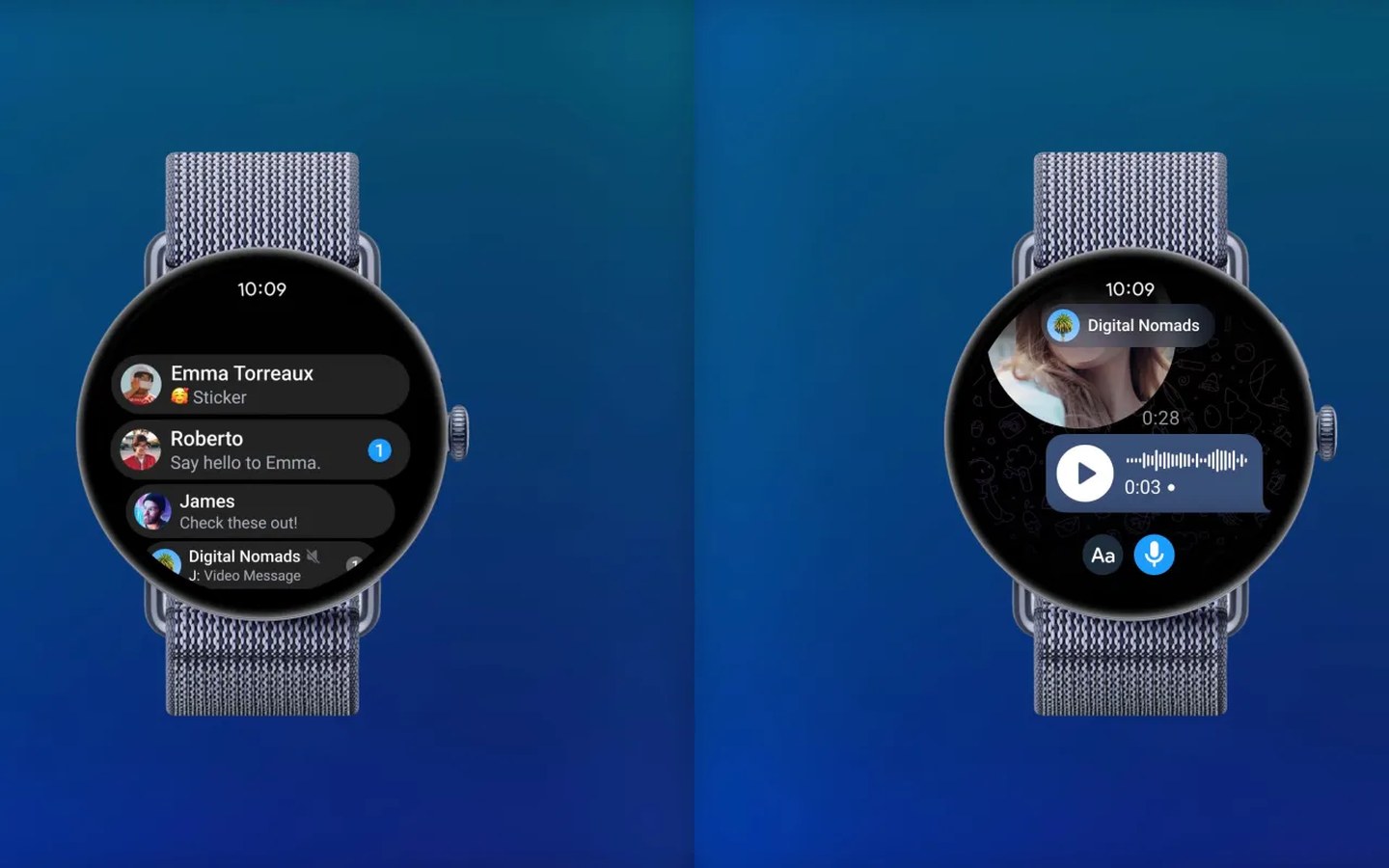
Five years after abandoning its Wear OS app, Telegram has returned to Android smartwatches with a streamlined experience that finally brings core messaging features to the wrist. The update, launched alongside a fully native Apple Watch app, signals a renewed commitment to wearable platforms and reflects growing user demand for phone-free connectivity. The new Wear OS app arrives at a moment when smartwatches increasingly function as standalone communication hubs, with cellular models and on-device intelligence reducing reliance on tethered phones.
What’s Back and Why It Matters
Telegram’s original Wear OS app was discontinued in 2021, leaving a void in the wearable messaging landscape. Competitors like WhatsApp offer only limited notification viewing, while proprietary solutions from Samsung and Google remain fragmented. The revival fills that gap with a dedicated interface, not just a notification mirror. The timing is strategic: the parallel Apple Watch launch suggests a coordinated cross-platform push to embed Telegram deeply into daily wearable use.
This matters because wearables are increasingly judged by their ability to handle quick interactions without pulling out a phone. For Telegram’s 900 million+ users, the app means less friction during workouts, meetings, or driving. It also reinforces the smartwatch as a valid primary communication tool—not just a secondary screen. Early reactions from beta testers highlight the convenience of replying to group chats with a few taps or a voice note, turning fleeting moments into productive exchanges.
Features Tailored for the Wrist
The Wear OS app focuses on immediate, natural interactions. Users can:
- Read and reply to messages via voice dictation or a set of customizable quick replies.
- Send voice recordings directly from the watch, ideal when typing is impractical.
- Receive real-time notifications with full message context and sender details.
- Access chats and group conversations in a scrolling interface optimized for small screens.
Unlike a simple notification viewer, the app lets you initiate conversations, scroll through recent chats, and pick up where you left off across devices thanks to Telegram’s cloud sync. While the interface is deliberately minimal, it avoids the common pitfall of feeling like a stripped-down afterthought. Voice message support is a standout: recording a quick note from your wrist and knowing it will sync instantly to your phone or desktop fits perfectly with the “micro-interaction” ethos of wearables.
The Bigger Picture for Wearable Messaging
Telegram’s return validates the notion that messaging is a “killer app” for smartwatches. As cellular-enabled watches become more common, users expect full communication capabilities independent of their phones. Telegram’s cloud-based architecture naturally supports this, keeping conversations seamlessly in sync.
Looking ahead, deeper integration with on-device AI could elevate the experience further: smart reply suggestions beyond canned texts, automatic transcription of voice memos, or even proactive notifications that learn your response patterns. For now, the app sets a benchmark for what a non-OS-native messenger can deliver on Wear OS. If adoption follows, other popular services may feel pressure to invest in true wrist-first experiences rather than half-hearted notification bridges. In a world where portable AI assistants increasingly live on our wrists, Telegram’s move ensures it won’t be left out of the conversation.