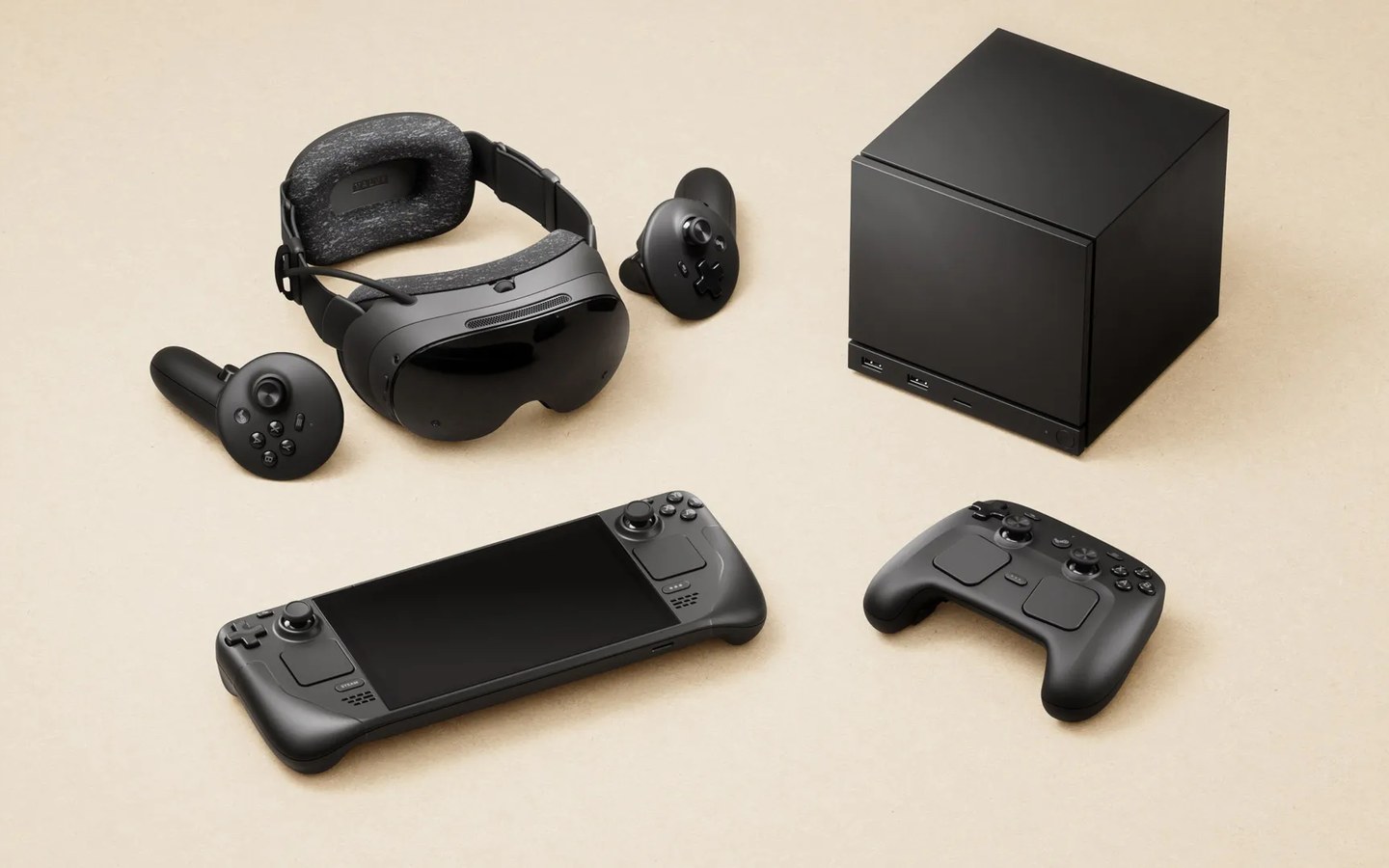
Valve stunned the handheld gaming world this week with a price hike that’s anything but incremental. The 512 GB OLED Steam Deck jumped from $549 to $789, while the 1 TB model vaulted from $649 to $949 — increases of 44% and 46%, respectively. The budget-friendly 256 GB LCD Steam Deck has quietly vanished from the store, likely retired after months of being out of stock. The company pinned the blame squarely on surging component costs and ongoing global logistics snarls. For anyone watching the portable VR space, the move signals a rough road ahead for Steam Frame, Valve’s eagerly awaited standalone headset.
The math isn’t comforting. Earlier this year, Valve hardware engineer Steve Cardinali told Polygon that the new Steam Controller launched primarily because it “doesn’t have RAM in it,” a candid admission that memory prices were already pinching. RAM and SSD prices have since experienced exponential jumps, and Valve confirmed in February that it was “revisiting” both the pricing and release dates for Steam Frame and its companion device, Steam Machine. This Deck price hike is the first tangible proof that those cost pressures aren’t letting up — and they’ll likely hit any future VR hardware even harder.
Valve has promised that Steam Frame will be “cheaper than Index,” but that’s a vague benchmark from a product whose 2019 launch price looked very different. At debut, a full Index kit ran $1,000 (headset, controllers, base stations), while the headset alone cost $500. Applying the same 45% increase we’ve just seen on Deck gives us a sobering estimate: a Steam Frame headset could land around $725, with a full kit possibly cresting $1,450. Even if Valve manages to keep costs lower, the Deck pricing reality suggests the floor has risen significantly. That’s a bitter pill for potential buyers hoping for a sub-$500 entry point into high-quality standalone VR.
The sting is particularly sharp because Steam Frame represents a bold attempt to unshackle VR from desktop PCs. By running SteamOS natively and leveraging wireless streaming, it aims to make your entire Steam library portable — a pitch that aligns perfectly with the on-the-go ethos of modern computing. But that ambition requires powerful, compact silicon, and the same component crunch that pushed Deck into luxury pricing could force Steam Frame into a niche that few will stomach. It’s a classic Valve dilemma: push the envelope on hardware while trying to keep it accessible.
On the plus side, Valve’s ongoing import activity suggests something is moving. VR hardware analyst Brad Lynch noted in late April that the company had imported 50 tons of “Game Consoles” into the US — a product category wide enough to encompass either Steam Machine or Steam Frame. Still, the original “early 2026” launch window has already slipped, and with component volatility still in play, we may be deep into Valve Time before we see a final product.
For now, Steam Deck’s price adjustment is a reminder that the era of cheap, powerful portable computing is facing headwinds. Steam Frame’s promise — a VR headset that can stream and natively play your entire Steam library — is more compelling than ever, but the path to an affordable price is murkier. As Valve itself says, “We’ll keep you updated if anything changes.” We’ll be listening.