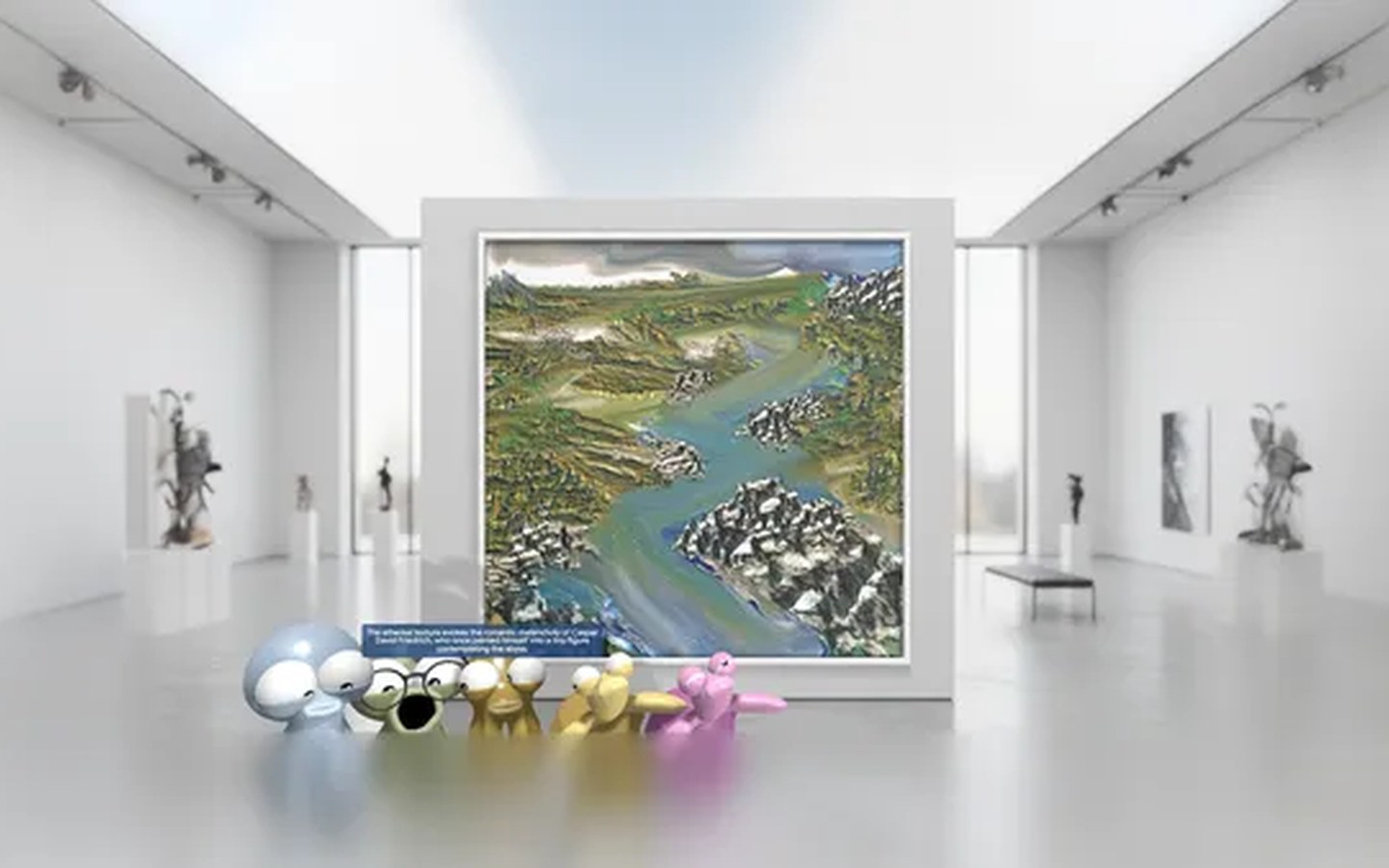
David Li has a knack for turning artificial intelligence into delightfully squishy playthings. After gifting the internet with Blob Opera and a cello-playing bird named Viola, the artist and Google Arts & Culture collaborator is back with Splash Canvas — a browser-based painting tool that replaces traditional brushes with a cast of chatty, highly opinionated sea creatures.
Launched as a free web experiment, Splash Canvas invites anyone to drag animated octopuses, squid, and turtles across a digital canvas, splashing fluid colours that bleed, blend, and swirl like real wet paint. But the real magic is the feedback: each creature, powered by Google’s Gemini and Chirp models, delivers live audio commentary on your work, tossing out playful critiques and unexpected art history facts as you go.
Your briny art studio
Five creatures make up your toolkit, each with a distinct personality and role:
- Splosh the octopus – spreads bold, billowing colour
- Splish the octopus – adds contrasting splatters and texture
- Splat the squid – dashes thin, energetic strokes
- Smudge the turtle – softens edges and blends existing marks
- Scrape the turtle – erases areas, letting you start fresh
They don’t just paint; they react. Complain about a muddy section and Splat might quote Matisse. Smudge might murmur about Rothko while slowly blurring your composition into a contemplative field. The dialogue is generated on the fly, making each painting session feel like a collaborative studio visit with a particularly well-read aquarium.
The tech that makes it squish
Beneath the whimsy lies a surprisingly sophisticated stack. A fluid simulator underpins every gesture, modelling how virtual paint spreads, pools, and mixes in real time. David Li fused this with neural cellular automata — a local AI technique that evolves patterns across a grid — to create organic, unpredictable paint behaviour that still feels physically coherent. Each brushstroke also triggers synthesised soundscapes: drips, splatters, and smears that respond to your speed and pressure, giving the experience a tactile, immersive quality.
Powering the creatures’ banter are two Google AI systems. Gemini handles natural language generation, crafting remarks that riff on composition, colour, or the big names of abstract expressionism. Chirp, a speech model, voices those remarks through each creature’s distinctive chirps, gurgles, and squawks. The result is a multimodal feedback loop where sight, sound, and witty commentary merge, making a simple paint session feel like performance art.
From canvas to curator
Once you decide your masterpiece is finished, Splash Canvas asks a final question: where does this painting belong? Drop it into a virtual museum for maximum prestige, onto an anniversary card for personal charm, or into a dentist’s waiting room — because why not? This small act of curation nudges you to think about context and audience, a subtle art lesson wrapped in a giggle.
Splash Canvas runs entirely in your browser, no app or install required, and is part of the Google Arts & Culture Lab’s ongoing program to support artists experimenting with emerging technology. It’s a reminder that AI tools can be as playful as they are powerful — and that sometimes the best critic is a squid with a fondness for Kandinsky.