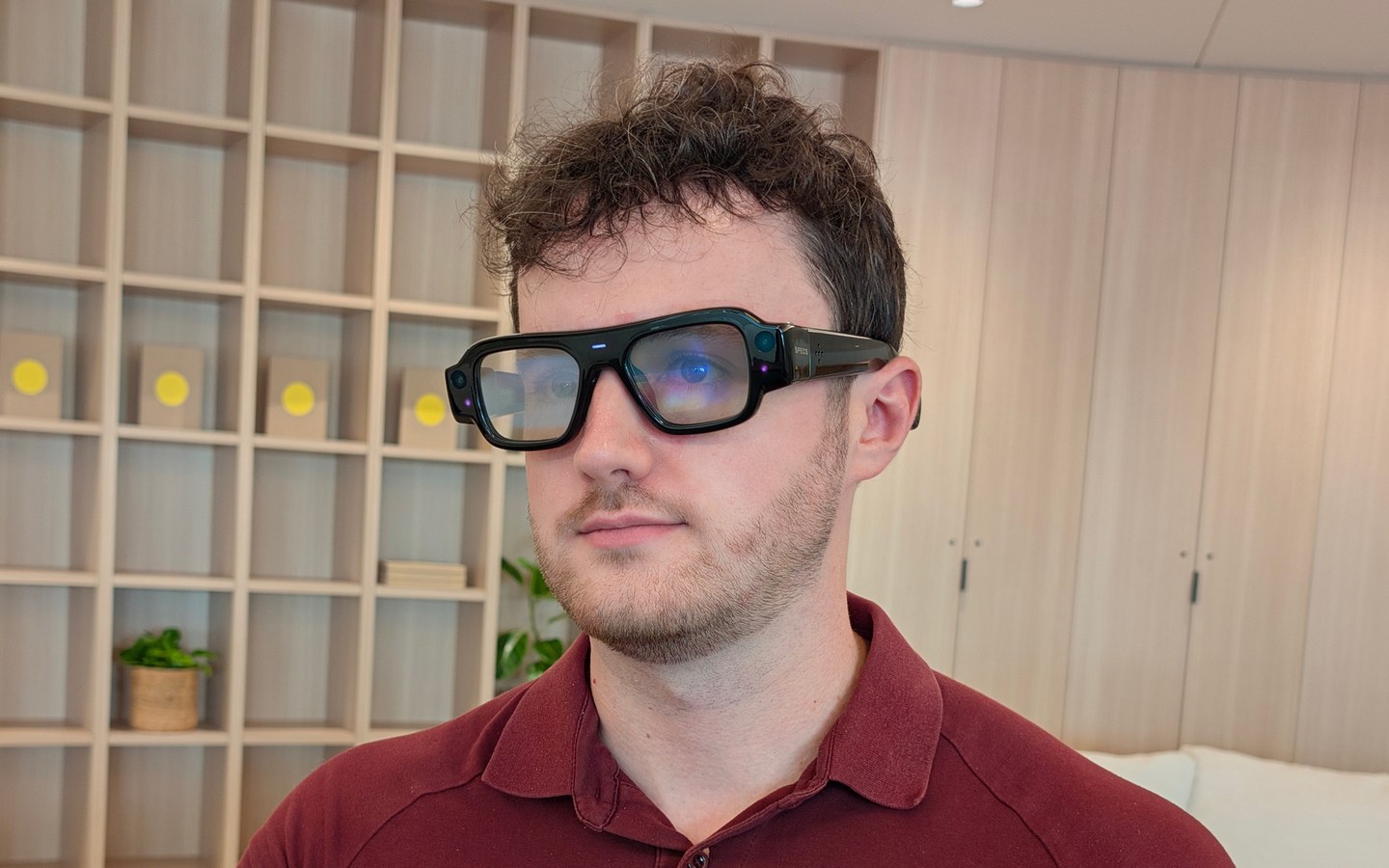
Snap has beaten Meta and Apple to a real, purchasable standalone AR headset—but the first look through the lenses is a cold shower. UploadVR's David Heaney went hands-on with Snap Specs at the company's Los Angeles event and came away convinced that the $2,195 glasses barely clear the bar for first-generation consumer true AR.
The Optical Reality Check
According to Heaney, the moment you put on Specs, optical artifacts dominate. There's a rainbow wash over the display area, poor color uniformity, and blue streaks from real-world light reflections. It isn't as crisp as a VR headset, and it's not even as clean as the much smaller Meta Ray-Ban Display HUD.
The bigger limitation is field of view. Specs delivers 51 degrees diagonal—roughly HoloLens 2 territory—while passthrough headsets like Quest 3 and Apple Vision Pro exceed 110 degrees. Snap renders and records a wider view than the hardware can show, so promotional videos and viral clips overstate what wearers actually see. In practice, virtual content appears as a rectangular slice, breaking object permanence and forcing users to hunt for where objects went. Heaney notes that designing around this FoV is possible, but the industry's long habit of overpromising transparent AR visuals sets people up for disappointment.
Where Specs Actually Shines
Despite the optics, the computer vision impressed Heaney. Even in low light with dozens of people moving nearby, positional and hand tracking stayed rock solid. Specs also handles real-time continuous scene meshing with occlusion, so real-world geometry blocks virtual content—at a very low power envelope.
The 6DoF anchoring changes familiar use cases. Translation captions attach to the person speaking rather than sitting in a fixed corner; navigation maps float at chest height instead of a tiny side panel. Heaney found this significantly more comfortable than on Meta Ray-Ban Display. The software stack also feels responsive: apps load quickly and never sluggish, thanks to Snap's optimized OS and Lens Studio development pipeline. Snap also announced that Specs will include a built-in cross-platform agentic AI assistant, with an optional cellular case for connectivity.
First-Gen Tradeoffs and the Verdict
The standalone form factor extracts costs that early adopters need to accept:
- 134 grams sits at the very boundary of “glasses,” and many experiences render at or below 30 FPS, though Snap wouldn't confirm a rate.
- There's no eye tracking, making point-and-pinch gestures tiring; Heaney expects Specs to be one of the last major XR devices without gaze input.
- Serious productivity via virtual monitors is questionable given display artifacts and FoV, with ultralight passthrough VR headsets or prism devices like Xreal Aura likely offering clearer, wider alternatives.
Heaney's verdict: Snap Specs is like trying to build an iPhone in the late 1990s. The idea is there, and for what current tech allows, the execution is excellent. But the underlying hardware isn't ready for a polished consumer experience. Enthusiasts who understand the compromise will find nothing else like it today; everyone else should wait for the 2030s.