Two configurations, one open-source mission
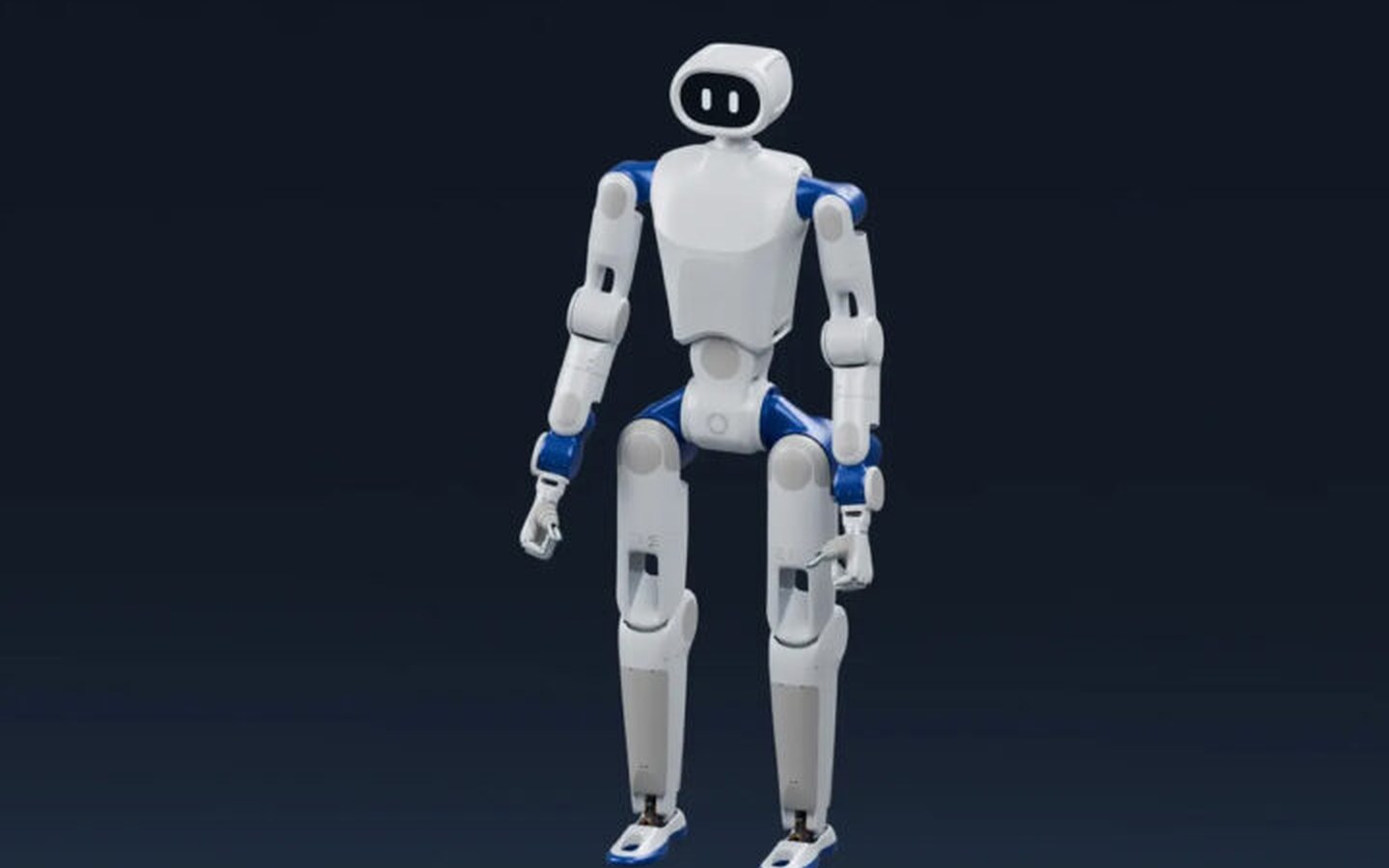
CNX Software reports that Shanghai-based RoboParty has published specifications for the RP1, also badged ROBOTO 01, an open-source humanoid built for robotics research, embodied AI work, and motion-control experiments. The robot stands 1.35 meters tall, measures 1350 x 450 x 200 mm, and weighs 39 kg in the base trim or 41 kg for the Pro.
The lineup splits along developer needs. The standard RP1 uses 24 degrees of freedom—six per leg, five per arm, and two at the waist. The RP1 Pro expands to 30 degrees of freedom, adding a seventh axis per arm and two head axes. That extra wrist and neck articulation matters for manipulation and perception, not just walking.
- RP1: 24 DoF, Rockchip RK3588 with a 6 TOPS NPU, 8 GB LPDDR4x, 32 GB eMMC; dummy hands and a motion-control head with simple LED eyes.
- RP1 Pro: 30 DoF, RK3588 plus an Allwinner A733 and an NVIDIA Jetson Orin NX (16 GB) module; 6-DoF dexterous hands and an interaction screen with microphone as standard.
Joints, power, and the safety layer
Motion comes from RoboParty's in-house ROMOMO joint modules. Four actuator designs use two-stage planetary reductions and inner-rotor motors; the 100 mm module is rated for up to 160 N·m peak torque. The company quotes a maximum running speed of 4 m/s, 30° slope climbing, and a 50 mm step height.
Power is handled by a 10Ah dual-battery system. A 48V main pack drives the robot, while a 30V auxiliary battery keeps critical control circuits alive during hot-swapping, so the RP1 does not need to shut down for a battery swap. Runtime is up to three hours. Charging over 140W USB-C takes about 1.5 hours, and the robot can operate while plugged in.
Safety is unusually explicit. The platform uses a three-channel emergency stop with hardwired or 433MHz wireless signaling to a 480 MHz real-time MCU. That MCU handles motion scheduling, power sequencing, and emergency-stop response, while the Linux side stays out of the hard real-time control loop. Joints are enclosed and pinch-resistant.
Four interchangeable heads give labs a way to add sensing without re-engineering the whole robot:
- Locomotion head: basic LED eye display, no camera.
- Interaction head: dedicated screen, speaker, and microphone.
- Perception head: optional Intel RealSense D435i depth camera and 3D LiDAR.
- Data-collection head: optional stereo RGB camera.
An open-source stack, with one missing policy
RoboParty has published hardware design files in the RP1_hardware GitHub repository under the CERN-OHL-W-2.0 license. That includes editable SolidWorks assemblies, Parasolid models, mechanical drawings, PCB fabrication files, Gerbers, BOMs, wiring harnesses, and manufacturing data for 14 custom circuit boards.
On the software side, the roboparty_deploy repository provides a ROS 2 deployment framework with motor and IMU drivers, RealSense integration, ONNX-based policy inference, and a Python SDK. Simulation and training live in roboparty_train, which includes NVIDIA Isaac Lab-based reinforcement learning, RSL-RL workflows, motion imitation, and MuJoCo Sim2Sim testing. The 24-axis RP1 configuration already supports a training-to-deployment path. The Pro model's 28-axis body, however, does not yet have dedicated training tasks or released default policy files, which is a notable gap for teams that want the full 30-DoF platform on day one.
Pricing has not been disclosed.