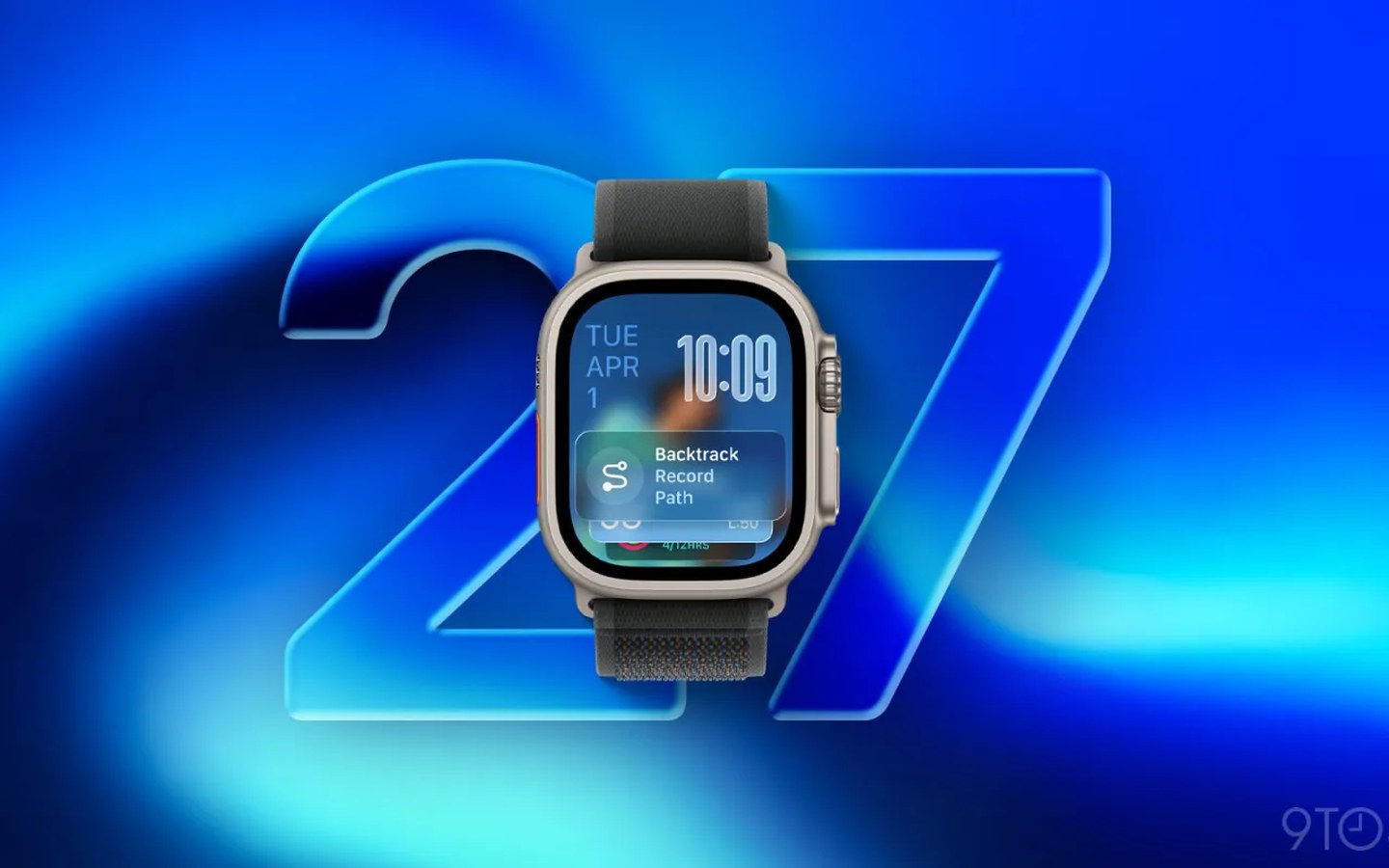
Apple’s wearable is about to get better at counting heartbeats—but the bigger AI health ambitions may need more time. According to a report from 9to5Mac, watchOS 27 will bring meaningful improvements to heart-rate tracking on the Apple Watch, refining accuracy and possibly introducing new metrics that tap deeper into cardiovascular signals. The changes are expected to be algorithmic, building on the sensor data the Watch already collects to deliver cleaner, more consistent readings during workouts, rest, and sleep.
The upgrade comes as fitness wearables face pressure to evolve from simple data collectors into intelligent health companions. Better heart-rate tracking isn’t just about tighter numbers; it means fewer false alerts, richer trends, and a more reliable foundation for the higher-level insights that users increasingly expect. For a device worn against the skin all day, even modest gains in signal processing can turn noisy optical data into something clinically meaningful.
But the same report confirms that Project Mulberry—Apple’s long-rumored AI-powered health coach—will not debut as part of watchOS 27. First teased last year, Mulberry was envisioned as a personalized coach that could interpret your health data and offer daily guidance: nudging you to move more, flagging irregular patterns, or suggesting lifestyle tweaks based on long-term trends. The feature would have represented a leap from passive monitoring to active, conversational health support, placing an AI agent directly on the wrist.
Instead, the coach appears to be hitting the kind of roadblocks that come with building trustworthy health AI. Delivering advice that is both safe and genuinely personal requires a depth of validation that’s hard to compress into a launch timeline. Health coaching isn’t a simple classification task; it demands contextual awareness, an understanding of individual baselines, and the ability to communicate uncertainty without eroding user confidence. Apple’s caution here mirrors a broader industry pattern: the hype around AI health companions keeps outpacing the engineering reality.
For portable AI, the split is instructive. On one hand, the heart-rate improvements show on-device algorithms steadily advancing—more refined models running locally can boost accuracy without sacrificing privacy. That’s the quiet, continuous progress that makes wearables more useful over time. On the other, the delayed coach underscores that language-based AI in health still sits at the frontier. Translating raw sensor streams into trustworthy, conversational guidance demands far more than a large language model; it requires rigorous clinical grounding and a user experience that never feels like a gimmick.
What this likely means for Apple Watch users is a near-term boost in core sensing that feels invisible but powerful, while the more ambitious AI layer waits for a future update—perhaps watchOS 28 or beyond. The decision to hold back a feature rather than ship it half-baked aligns with Apple’s established playbook on health features, where only thoroughly tested capabilities get the green light.
Still, the delay doesn’t dim the long-term trajectory. As sensor fusion improves and on-device processing becomes more capable, the difference between a coach that merely logs stats and one that understands context will shrink. Each iteration of heart-rate tracking, sleep staging, or temperature sensing builds the data pipeline that a true AI coach would need. watchOS 27, even without Mulberry, may be laying critical plumbing.
For now, the takeaway is pragmatic: expect your Apple Watch to become a sharper heart monitor, but don’t expect it to talk back with health advice just yet. That conversation is still being refined behind closed doors.