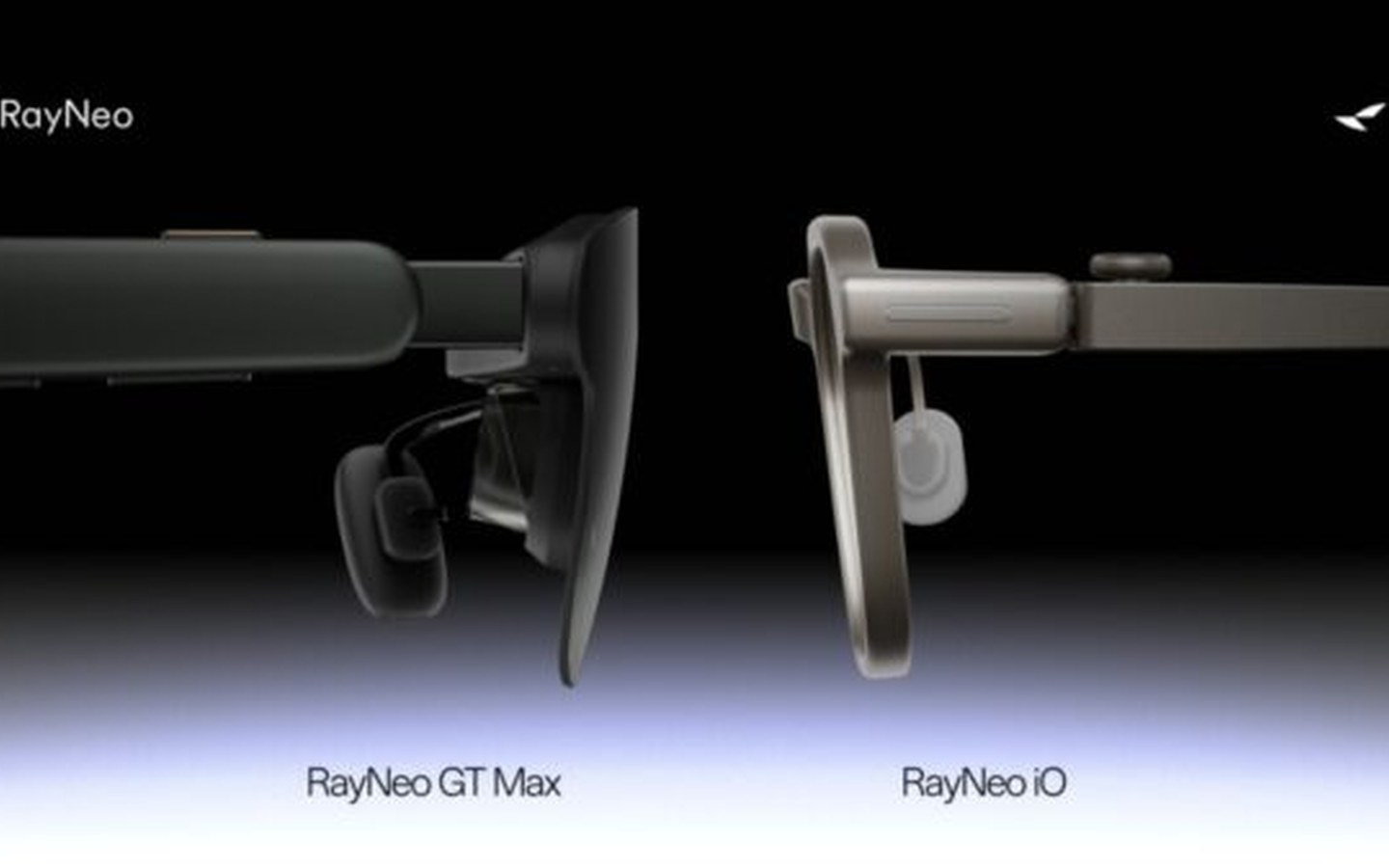
A split in the product line
RayNeo, the TCL-incubated AR glasses maker, is done asking one pair of frames to cover every use case. On August 21, 2026, the company announced two distinct hardware lines, according to Auganix: the RayNeo iO Smart Glasses for ambient AI productivity and the RayNeo GT Series for cinematic spatial viewing. Both go on sale September 4, 2026, with a public demo planned for IFA 2026 in Berlin. No pricing has been disclosed yet, but RayNeo is already positioning the iO against Meta’s AI glasses and the GT Series against XREAL’s immersive media hardware.
CEO Howie Li framed the move as a rejection of compromise. Instead of one device that tries to do everything, RayNeo is shipping two dedicated experiences: an all-day heads-up assistant and a personal theater. That split matters because it pushes the wearable AI market toward more specialized, purpose-built hardware rather than general-purpose screens.
The productivity-first iO
The RayNeo iO is the lightweight half of the equation. It weighs just 33 grams with a 50:50 front-to-rear weight distribution, using an AZ91D magnesium-aluminum alloy frame and dual aerospace-grade titanium temples. The display is a 0.085cc monochrome green Firefly Nano Engine driving a diffractive Blue Lake waveguide. RayNeo claims 97% optical transparency and 1,300 nits of eye-level brightness, with the projected text invisible to people nearby.
Software is where the iO gets interesting. RayNeo calls it an Ambient AI suite. A low-power Life Log captures schedules and conversation context in the background, then extracts action items after meetings and prompts calendar updates that users can confirm with a head nod. Core LLM features run on RayNeo AI and Gemini 3.1 Flash Lite, with an optional multi-model tier that swaps between:
- Gemini
- ChatGPT
- Claude
- DeepSeek
For live translation, the iO leans on Timekettle’s BabelOS 3.0, covering 55 languages and 109 accents at roughly 1-second latency. There are no speakers; a four-microphone array and a bone conduction sensor isolate the wearer’s voice for transcription in noisy environments. The 240mAh battery is rated for up to two days of typical use, 18 hours of continuous recording, or 6.2 hours of continuous translation. Other practical touches include a physical Smart Crown rotary dial, Bluetooth 5.4 with Apple MFi licensing, IP54 dust and water resistance, and a hardwired LED status light during recording.
Cinema-grade GT and GT Max
The GT Series splits into a standard GT and a higher-end GT Max. Both models use a dual-chip architecture: a Vision 4000 display chip and a Zone 360 3DoF tracking chip. The GT Max steps up to RayNeo’s Peacock Optical Engine 3.0 Max and a 5.5th-generation Tandem MicroOLED panel, producing a 59-degree field of view and a virtual screen that can scale across 227-inch, 267-inch, and 307-inch sizes. The standard GT uses a Birdbath optical engine for a 46-degree FOV and up to 231 inches.
When paired with the RayNeo Pocket TV Pro, RayNeo says the GT Series becomes the world’s first AR glasses system with native Dolby Vision playback and real-time AI SDR-to-HDR conversion. Dedicated 3DoF processing supports three viewing modes:
- Steady Mode: filters bumps and turbulence during travel
- Pinned Mode: anchors the virtual screen in 3D space
- Follow Mode: keeps the screen in the wearer’s line of sight
Audio comes from a Bang & Olufsen-tuned quad-speaker system with head-tracked spatial audio and a directional Whisper Mode. The GT weighs 68 grams; the GT Max is 78 grams and comes in three interpupillary distance sizes. Both models support custom prescription lens inserts.
The iO launches in Polar Night and Dune colorways. RayNeo’s decision to split its lineup into productivity and entertainment hardware may look obvious in hindsight, but it sharpens the competitive stakes: one product is chasing Meta’s AI assistant market, while the other targets XREAL’s video-centric audience. Whether both can win without disclosed pricing is the next question.