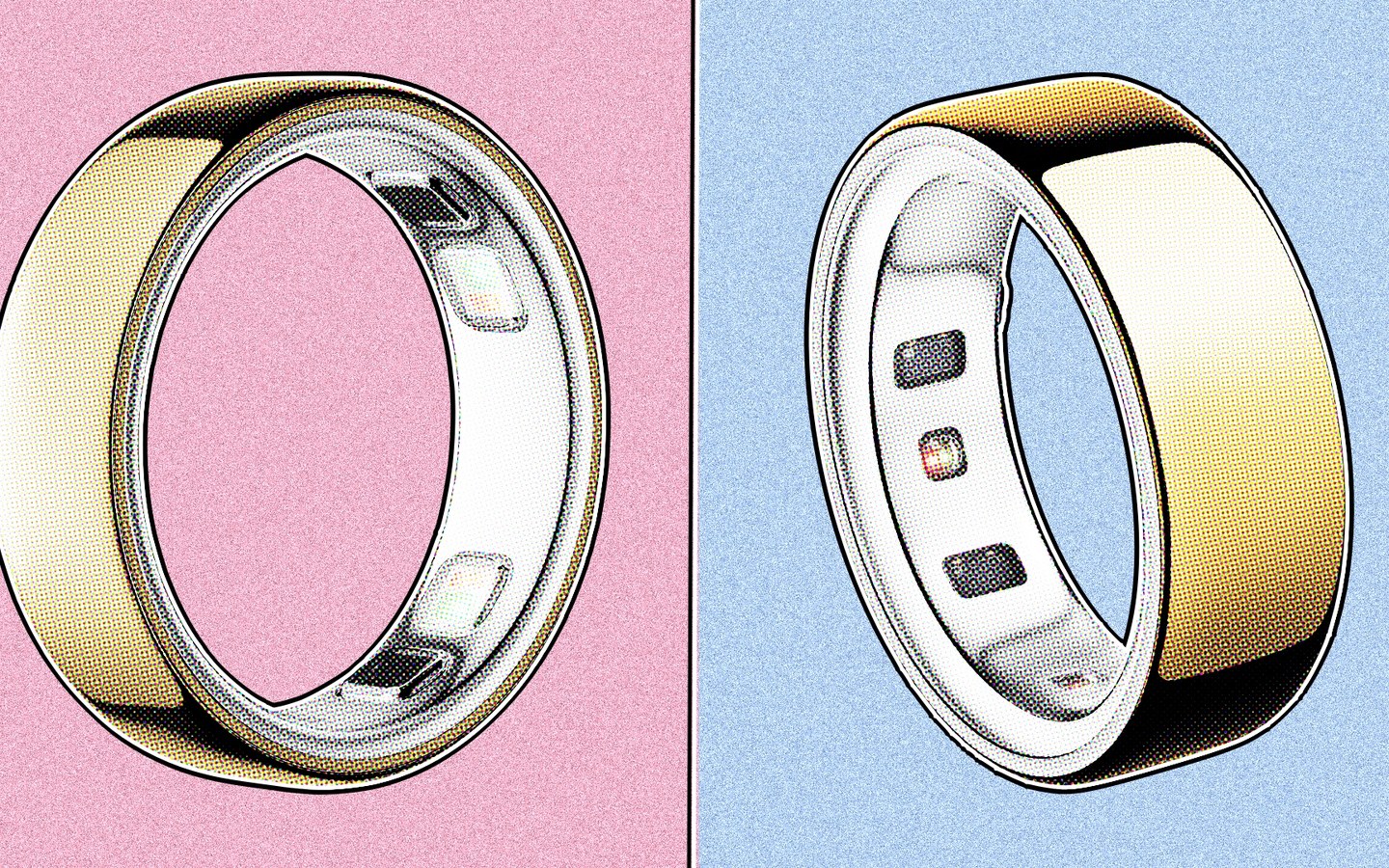
A radically smaller design
The most immediate difference between the Oura Ring 4 and the new Ring 5 is physical: the Ring 5 is 40% smaller in overall mass. The Ring 4 measured 7.90mm wide and 2.88mm thick, while the Ring 5 slims down to 6.09mm wide and 2.28mm thick. On the weight scale, the Ring 4 came in at 3.3–5.2g depending on size; the Ring 5 weighs a featherlight 2–2.69g. During a brief hands-on session, the difference was immediately noticeable—the Ring 5 feels more like a traditional wedding band than a chunky gadget, disappearing on the finger in a way the Ring 4 never quite managed.
However, comfort nuances remain. The Ring 5 reintroduces subtle sensor bumps (far less pronounced than the Ring 3’s) after the Ring 4’s completely flat interior. On first wear, they’re imperceptible, but activities like gripping a steering wheel or clenching a fist will be the real test. Oura also updated the physical vapor deposition (PVD) coating for better scratch resistance, though the Ceramic Edition of the Ring 4 still holds the durability crown. Finish options have been refreshed: the Gold is now a lighter, less brassy tone, and Deep Rose replaces the old Rose Gold. One caveat: the Ring 5 is currently limited to sizes 6–13, dropping the extended sizes (4–5 and 14–15) that the Ring 4 later offered. Oura may expand this later, as it did with the previous generation.
Sensors reimagined for precision
Where the Ring 4 debuted with 18 signal pathways and a recessed smart-sensing architecture to counteract ring rotation, the Ring 5 takes a more targeted approach with 12 signal pathways and an array of low-profile sensor domes. On paper, fewer pathways might seem like a downgrade, but Oura claims the domes and more powerful LEDs provide cleaner, more consistent skin contact—especially crucial during movement.
In our initial testing of the Ring 4, automatic workout detection and live heart rate during exercise were hit-or-miss, sometimes misreading chores as yoga or losing the plot during high-intensity runs. The Ring 5’s raised sensor nodes and brighter LEDs aim to eliminate data gaps caused by slippage, potentially improving the reliability of metrics like overnight heart rate, HRV, and Cardio Capacity estimates. We won’t know if accuracy rivals gold-standard wearables until long-term testing is complete, but the hardware redesign is a clear attempt to address the Ring 4’s main weakness.
Both generations share the same software ecosystem built on Readiness, Sleep, Activity, and Stress scores. There are no exclusive new software features for Ring 5—except a Bluetooth-powered Locate function that helps pinpoint a misplaced ring or charger from the app. This means the Ring 4 remains a perfectly capable device for those less concerned about the size or exercise-tracking fidelity.
Pricing and the subscription reality
The jump in price is another key differentiator:
- Oura Ring 4 launched at $349 for Silver or Black, with premium finishes reaching $499.
- Oura Ring 5 starts at $399 for Silver or Black, while Gold, Stealth, Brushed Silver, and the new Deep Rose cost $499.
The sold-separately charging case stays at $99. Crucially, Oura’s mandatory $5.99/month membership remains a constant, required to access any meaningful insights regardless of which ring you wear. If you’re upgrading from Ring 4 and already paying the subscription, the additional cost is purely hardware. The Ring 5’s higher base price may give some pause, but the substantial design overhaul and sensor retuning could justify it for those who found the Ring 4 too bulky or exercise data too unreliable. As always, the full verdict will depend on weeks of real-world wear.