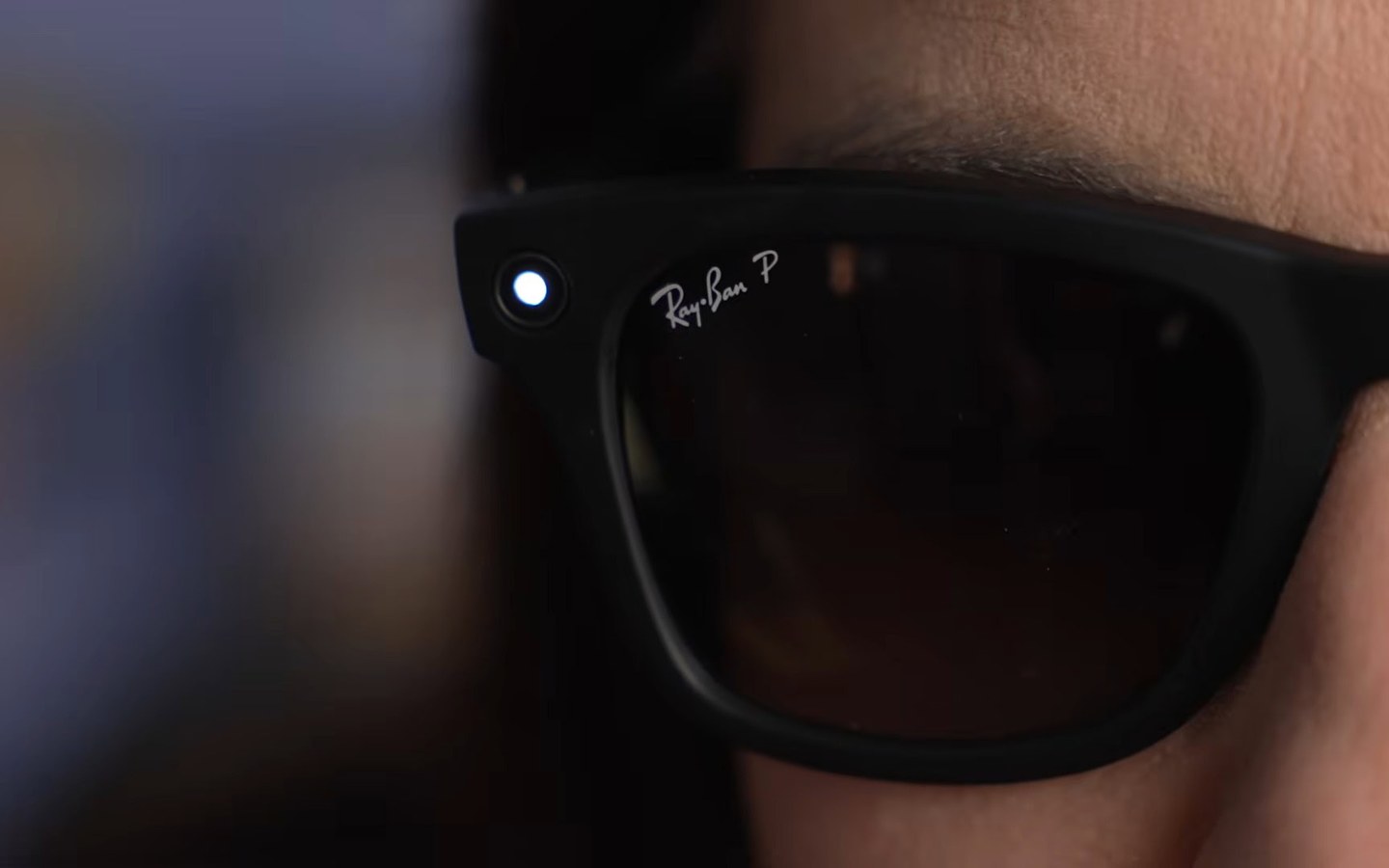
When London activists swapped out official Meta smart glasses ads with guerrilla posters branding the devices “the biggest advance in pervert technology since the trenchcoat,” most expected a delicate, diplomatic response from the eyewear giant. Instead, Leonardo Del Vecchio, Ray-Ban President and Chief Strategy Officer at EssilorLuxottica, reposted the hacked ad to his Instagram story with nothing but a laughing emoji. The move, playful on its surface, opens a rare window into how the luxury brand copes with escalating privacy backlash—by winking at it.
A Guerrilla Ad Campaign That Hit a Nerve
The unauthorized posters appeared across London public spaces, mimicking Meta’s real marketing visuals but swapping the tagline to a blunt jab at the camera-equipped frames. One placement sat near the company’s London headquarters, maximizing visibility. Del Vecchio’s Instagram story, captured before it expired after 24 hours, added a second message: “If we can’t laugh about it why should anyone trust us?” The remark, clearly meant to defuse tension, instead underscores a deeper legitimacy problem: privacy critics aren’t laughing, and the features fueling their anxiety are set to expand.
Executive Laughter Amid Mounting Privacy Fears
The timing is awkward. A recent Financial Times report revealed Meta is developing next-generation smart glasses with a “super sensing” mode that could continuously capture audio and imagery from the wearer’s environment. Even more alarming, the company is reportedly considering allowing the recording indicator LED to be switched off entirely, removing the most visible consent signal for bystanders. Meta’s public moves have, until now, pointed the opposite direction: the company just pushed a mandatory firmware update that detects physical tampering with the privacy LED and disables the camera if the LED is compromised. Yet Del Vecchio’s flippant tone suggests that, at least inside the partnership, the gravity of these concerns hasn’t fully landed.
The Paradox of Trust: Jokes vs. Action
- Meta’s recent safeguards: Forced firmware update that kills the camera if the LED is drilled or blocked; ban on ad accounts promoting camera modifications; active legal pursuit of tamper-enabling sellers.
- Planned capabilities: Persistent environmental sensing in next-gen glasses; potential removal of the LED indicator function that signals recording.
- Public perception problem: Activists and privacy advocates see a product inherently prone to covert misuse; a jokey executive response risks trivializing real harassment scenarios.
While Del Vecchio’s logic—that humor builds trust—may work in a boardroom, it clashes with the lived experience of those who’ve been filmed without consent in public places. Wearable cameras already carry social friction, and every leaked feature that moves toward invisible recording erodes the very trust Del Vecchio claims to cultivate. The contrast between engineering teams tightening privacy controls and marketing executives laughing off criticism reveals a fragmented corporate narrative. If Meta and EssilorLuxottica hope to mainstream AI glasses, they’ll need a response that matches the technology’s gravity, not one that disappears after 24 hours.