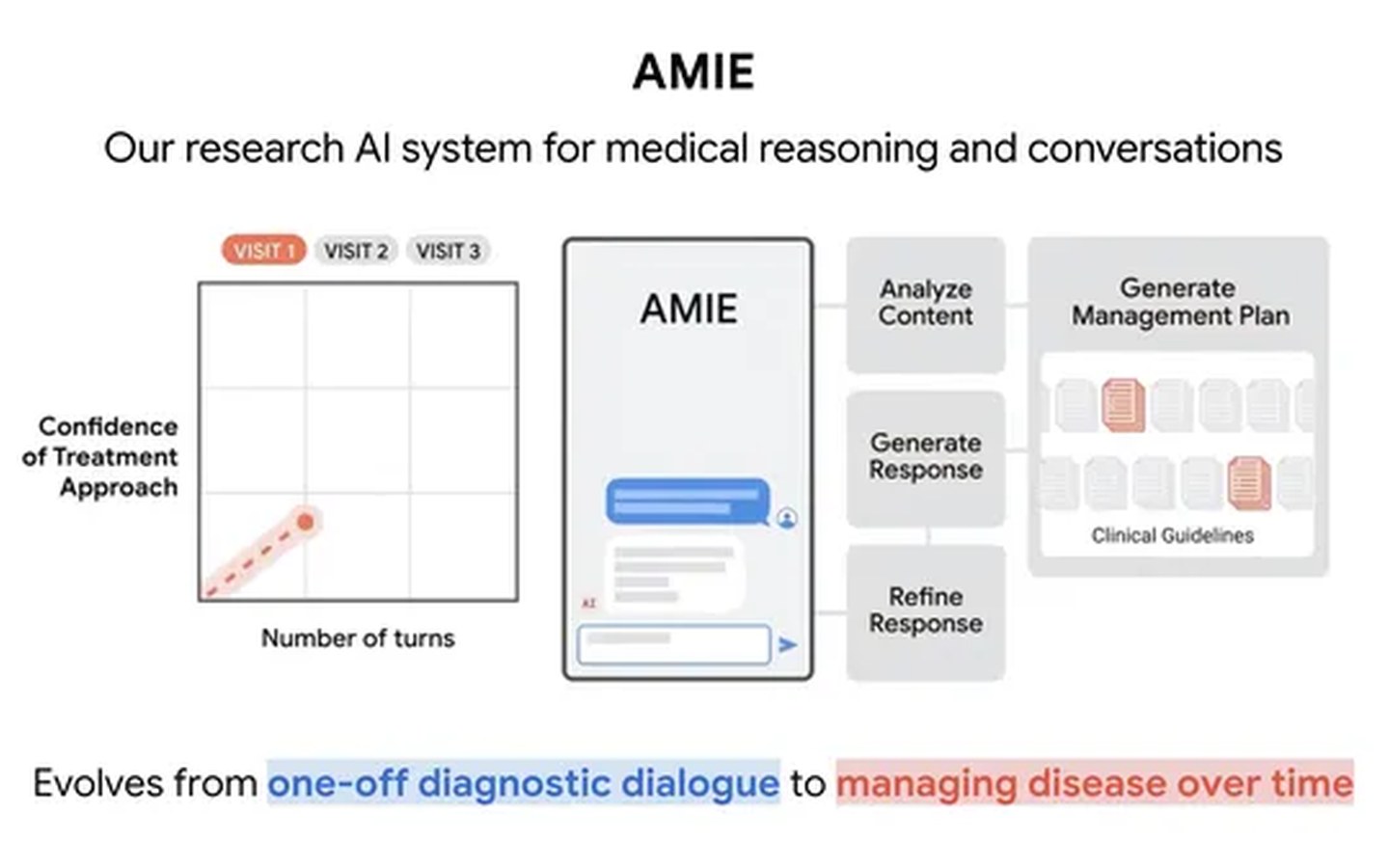
Diagnosing a patient is only the first mile of a marathon. The longer, harder road is managing a condition over time—tracking shifting symptoms, reconciling updated clinical guidelines, and tweaking drug regimens visit after visit. That’s exactly the territory explored in new research published in Nature today by Google, where the Articulate Medical Intelligence Explorer (AMIE) evolves from a one‑shot diagnostic conversationalist into a full‑fledged disease management partner.
From one‑and‑done to longitudinal care
Earlier versions of AMIE focused on single‑encounter diagnostic dialogue. The latest iteration, built on the long‑context muscle of Gemini models, stretches across multiple appointments, drug formularies, and living clinical guidelines. In a blinded study, specialist physicians compared the AI’s management plans against those of 21 primary care doctors during simulated patient encounters with actors. The headline result: AMIE matched clinicians in overall management reasoning and scored significantly higher in two telling categories—plan preciseness and guideline alignment. The AI didn’t just hold a conversation; it wove together hundreds of pages of clinical policy into treatment steps that felt sharper and more up‑to‑date to the experts reviewing the transcripts.
Inside AMIE’s dual‑agent architecture
What makes this possible is a deliberate split in how AMIE thinks and speaks. The system pairs:
- A real‑time empathetic dialogue agent that listens, asks the right follow‑ups, and mirrors the warmth patients expect from a doctor.
- A background management reasoning agent that pores over guidelines, drug interaction tables, and patient history, assembling a coherent plan before the AI opens its mouth.
Because Gemini can hold vast amounts of text in context—entire collections of guidelines, past visit notes, lab trends—the reasoning agent doesn’t truncate or guess. It cross‑references everything, flagging when a medication renewal would clash with an updated blood‑pressure threshold or when a symptom trajectory suggests a guideline shift. The dialogue agent then translates that analysis into plain, empathetic language, keeping the patient anchored during what can feel like an overwhelming journey.
Toward the clinic—and the home
The Nature paper isn’t the end; it’s a permission slip for the next phase. Google is already exploring how AMIE could fit into real clinical workflows, and a nationwide study is underway to stress‑test the AI in real‑world virtual care settings. The vision isn’t a robot replacing a physician but a tireless assistant that handles the recurring cognitive grind of disease management, freeing doctors to spend more time looking patients in the eye.
The stakes are high: chronic conditions consume an outsized share of healthcare resources, and physician burnout often traces back to documentation and decision fatigue. If AMIE can reliably shoulder the routine reasoning—checking guidelines, drafting precise plans, surfacing medication mismatches—it could reshape what a primary care visit feels like for both patient and doctor.