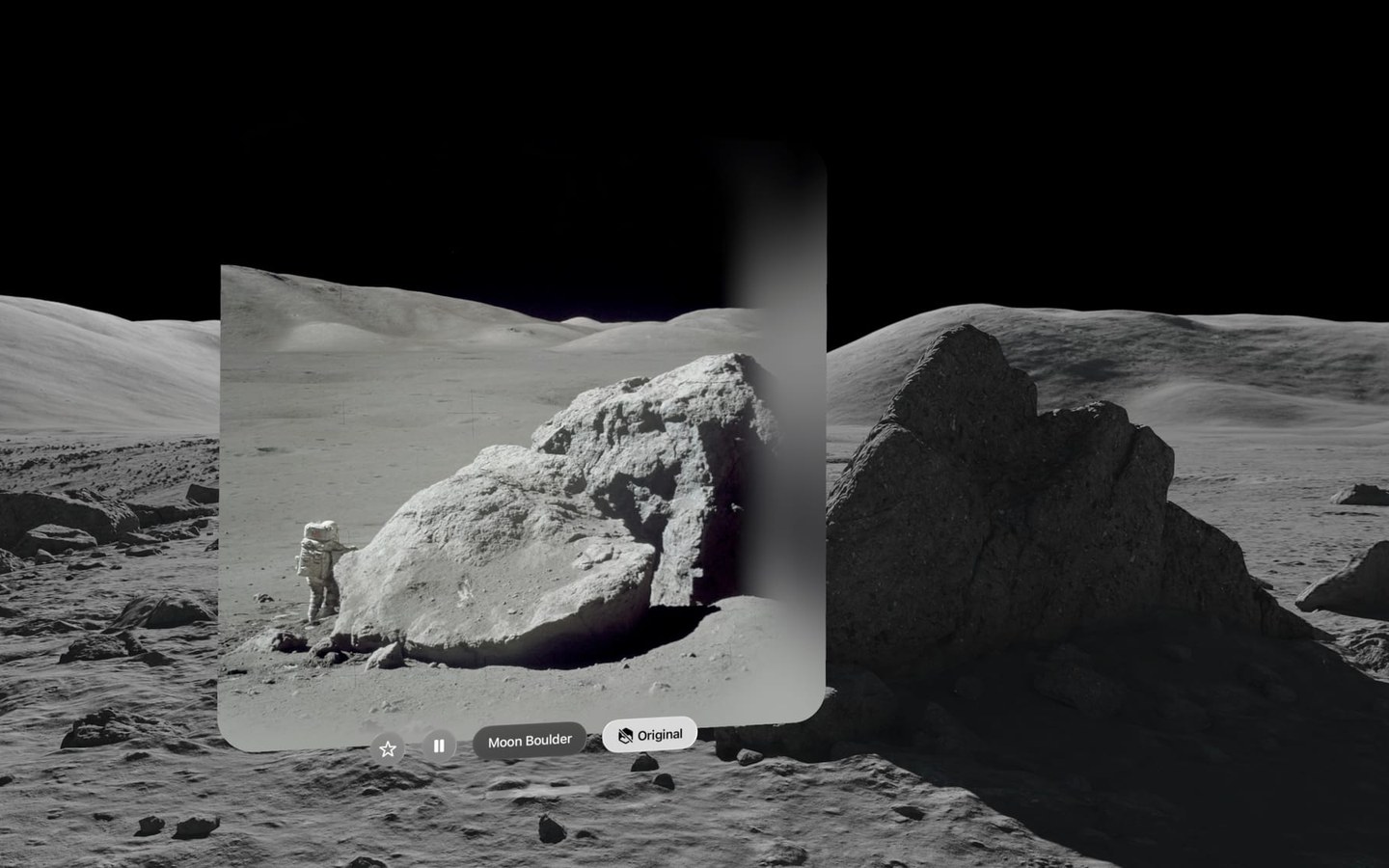
When spatial apps are intentionally designed to support curiosity and discovery, they feel more like engaging experiences than educational lessons.
The Museas and Astronoma apps for Apple Vision Pro are gold standard examples of this approach. Developed entirely by Miguel Garcia Gonzalez, founder of Augmenos, Museas brings centuries of art history into users’ homes, while Astronoma offers a unique form of space exploration. Both use real-world source material and factual information to create experiences that encourage exploration and repeat visits, especially as new content is added.
Here are some of the themes I took away from my interview with Gonzalez on creating captivating immersive edutainment experiences.
“Learning a new subject can be difficult, but that experience is much more engaging when done with immersive technologies. It shouldn’t have to feel like a tedious lesson, but rather a curious journey that you happen to learn from in the end” shares Gonzalez. As he designs experiences, he starts with the “wow” moments to capture a sense of awe and then layers in different design elements that “let the user freely explore at the depth and scale they are naturally interested in reaching.”
So as to not overwhelm users with the many options they have to explore in his apps, Gonzalez “compartmentalize[s] more specific content through exhibitions” to allow them to proceed down a path should they choose to keep engaging with a particular subject.
“There is a lot of content in art and science that is better presented in 3D, which no phone or tablet can produce as well as a mixed reality device” explains Gonzalez. “It feels more ‘hands-on’, even if virtual, helping users literally grasp concepts better.” But not everything needs to be spatial in an immersive app. The integrity of the content must be preserved above all else. “With newer Apple APIs like Spatial Scenes, I can convert select artworks and space images into 3D.” He is, however, selective about which content gets this treatment so that only the images that present well in Spatial Scenes are integrated.
Choosing to present some content in 2D also focuses more attention on the 3D elements. For example, in Astronoma, when “learning about Sputnik 1, the spacecraft is presented in 3D while the content complimentary to it (archival images, diagrams), appears planar in spatial coordinates. This centers the attention on the 3D content without distracting elements on the peripheral."
Immersion Should Support the Content, Not Compete With It