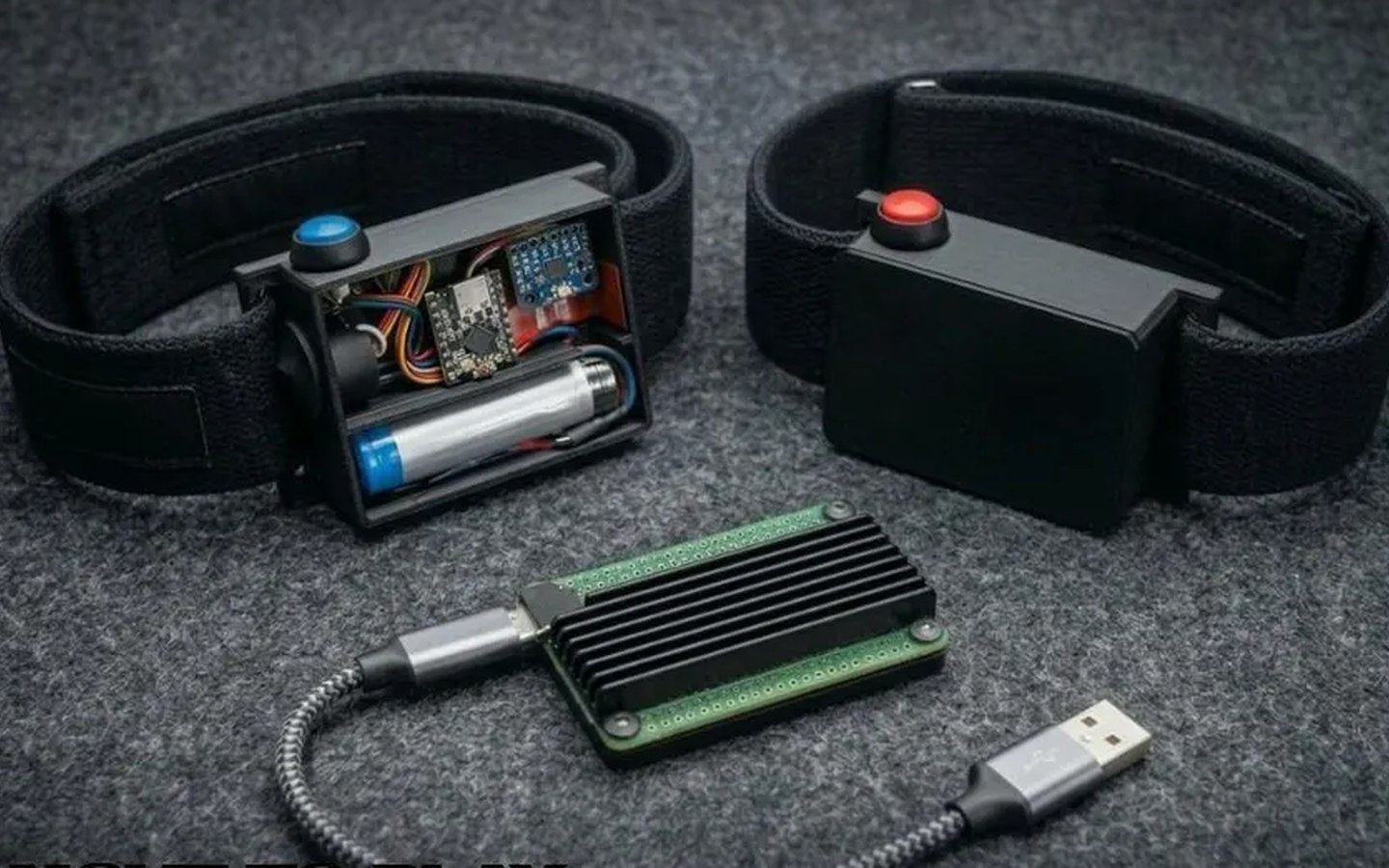
A Belt That Turns Movement Into Game Input
Hackaday reports on a project by [Tolko] that tries to solve a familiar problem: kids want to play games, but parents want them to move. The answer is BlobJump, a Raspberry Pi-based game in the spirit of the Chrome dinosaur runner, with one big twist. Instead of a keyboard or touchscreen, the controller is a belt worn on the body.
Jump in real life and the on-screen avatar jumps. Duck and the avatar ducks. The whole setup is wireless, so there are no cables to trip over or tether the player to a desk. It is an elegant example of the body-as-input pattern: no gamepad, no camera, no phone in hand.
The Hardware Inside the Belt
Each belt packs a compact but capable set of components:
- ESP32-C3 microcontroller for wireless communication and sensor processing
- MPU-6050 six-axis inertial measurement unit to detect jumps, ducks, and orientation
- Rechargeable battery to keep the belt self-contained
That is a low-cost, documented stack that many hobbyists already have in a drawer. The project does not require a dedicated controller or complicated motion-capture setup.
Hackaday notes one open question: no video shows actual kids playing, so it is unknown how physically active they really were. Could they just sit down and wave the belts in their hands? Probably. But the design intent is clear, and even a seated version still requires arm movement. For a first prototype, that may be enough.
What This Could Teach Beyond the Game
The writeup positions BlobJump not just as a game but as a gateway project for getting a kid interested in hardware and software. The build touches on:
- Reading and filtering IMU data
- Wireless communication between an ESP32 and a Raspberry Pi
- Basic game logic and input mapping
- Battery management and physical enclosure design
These are the same skills needed for countless portable and wearable AI projects. The idea is not brand new, Hackaday acknowledges, but the execution is clean and approachable. For a parent or mentor, a project like this can do double duty: it encourages movement while demystifying the technology inside everyday devices.
If the player gets truly lazy, the article's comment section suggests there is always the option to skip the game entirely. But for anyone curious about motion input, BlobJump is a friendly on-ramp.