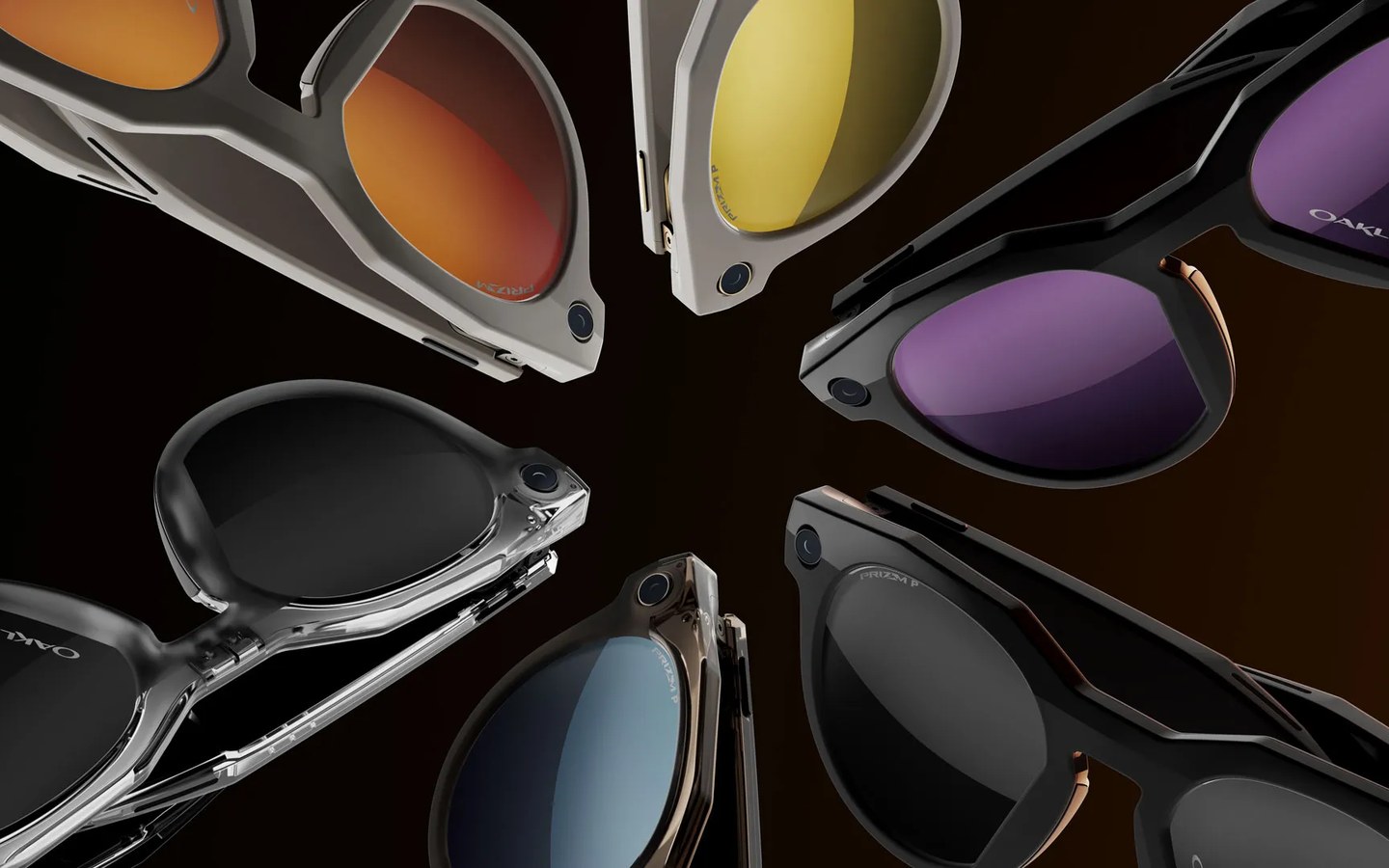
Four Models and a Pendant: Meta’s Hardware Blitz
Meta is accelerating its wearable ambitions with a wave of new devices, according to a leaked internal memo from Reality Labs VP Alex Himel. The Information reports that the company aims to launch at least four new smart glasses models this year, alongside an AI pendant that goes into testing in 2025. The memo, though still unconfirmed by Meta, suggests a hardware roadmap far more crowded than the Ray-Ban and Oakley frames we’ve seen so far.
The first new glasses, codenamed Modelo, could arrive as soon as June, followed by two more in the fall: Luna and an RBM2 Refresh — the latter pointing to a hardware update for the Ray-Ban Meta line. Come December, a model called Mojito VIP is expected to close out the year. Beyond those, the company is reportedly testing Artemis and SSG (“supersensing”) glasses, hinting at more specialized sensing capabilities.
An equally intriguing addition is the AI pendant. Described as similar to technology from Limitless — the startup Meta acquired in 2025 that focused on recording, transcribing, and summarizing conversations — the pendant would mark Meta’s first foray into screen-free, voice-first AI hardware. Testing is pegged for next year, positioning it as a companion to the glasses lineup rather than a replacement.
Scaling for Tens of Millions: Production and Revenue Moves
Meta isn’t just adding devices; it’s scaling supply and revenue models. The memo reiterates a target to sell 10 million wearables in the second half of 2026. Recent reports suggest Meta and its manufacturing partner EssilorLuxottica — with whom it extended a partnership until 2030 — are already preparing for numbers that could far exceed that. Bloomberg noted production capacity could double to 20 million units annually by end of 2026, with headroom to hit 30 million units if demand spikes.
To make the economics stickier, Meta is planning a “Wearables for Work” subscription service. Targeting business users, the service would layer recurring revenue onto device sales, likely bundling enterprise-focused AI features, administration tools, and perhaps productivity integrations. That marks a shift from pure hardware margins toward a more durable, services-anchored model.
A Strategic Pivot: From VR to AI Wearables
This hardware push is part of a broader Reality Labs pivot. Earlier this year, Meta’s XR division reshuffled priorities to center on AI and smart glasses, sharply de-emphasizing the VR and metaverse projects that once dominated. The new glasses will naturally pack Meta’s AI models, but the memo also flags an AI agent called Hatch, designed specifically for the glasses experience — potentially enabling proactive assistance, contextual reminders, or conversational smarts that go beyond today’s voice commands.
The expansion beyond Ray-Ban and Oakley signals a desire to court diverse style preferences and price points. Meta is expected to introduce multiple brands and form factors, likely leveraging EssilorLuxottica’s vast portfolio. If executed well, a combination of better-looking glasses, practical AI, and a subscription angle could finally transform smart glasses from niche gadget to mainstream tool.