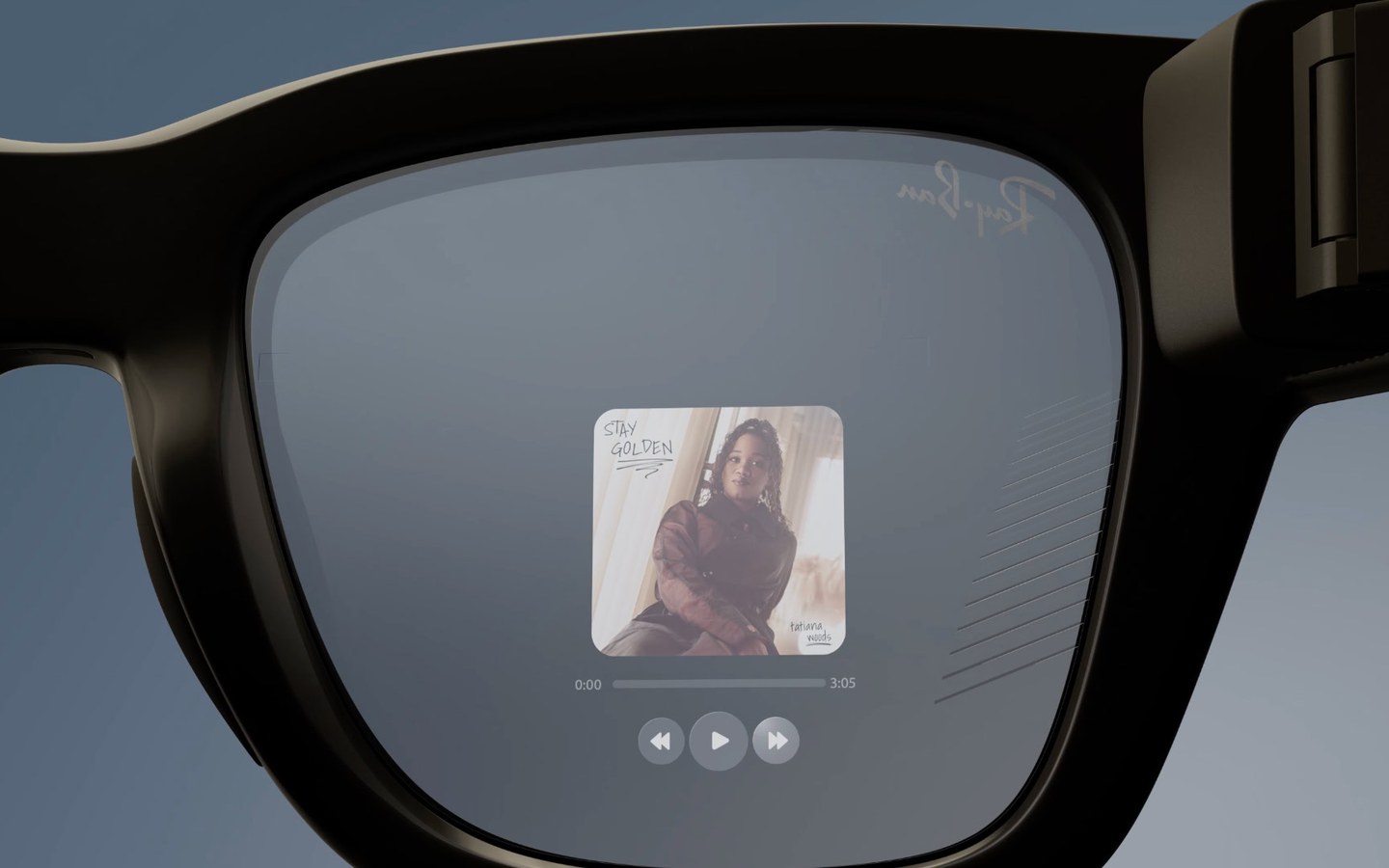
Meta's $999+ Ray-Ban Display smart glasses just received a substantial brain transplant, and the result is a wearable that feels noticeably more aware and responsive. The version 127 software update, rolling out now, swaps in the new Muse Spark AI model—a compact powerhouse that Meta says matches the performance of its much larger Llama 4 Maverick with 10x less compute. For users, that translates to quicker answers, more contextually relevant suggestions, and a better understanding of what you're actually looking at.
Smarter eyes, quieter hands
The headline feature is Neural Handwriting with Meta AI, an early-access program (US and Canada only) that transforms any flat surface into an input canvas. Instead of triggering the assistant with "Hey Meta" and speaking aloud, you simply double-tap your thumb on the included Neural Band, find the "Write" button on the AI Home screen, and trace your prompt in the air with a fingertip. The glasses interpret the gesture via electromyography, freeing you from verbal commands in crowded spaces. It's a privacy-first interaction that feels straight out of science fiction.
Underpinning everything is Muse Spark itself—a model purpose-built for on-device AI that doesn't just parrot search results but processes visual context. Meta claims it now delivers smarter responses throughout the day, nudging you with proactive suggestions based on what the glasses see. Whether it's translating a street sign, identifying a plant, or remembering where you saw that item on a shelf, the AI seems more like a quiet companion than a clumsy chatbot.
Social media, voice-first
Beyond the AI core, Meta is weaving its ecosystem deeper into the glasses. The update introduces full Threads support: browse your feed, engage with posts, or share updates entirely by voice. On Instagram, you can now search for popular Reels, forward them to contacts, and check comments without touching a phone. For content creators, voice commands like "Hey Meta, post an Instant" streamline hands-free sharing.
These additions matter because they position the Ray-Ban Display as a standalone communication tool, not just a head-mounted screen. Crucially, the glasses already bundle the Neural Band—unlike earlier models where it was a separate purchase—so every owner gets access to neural handwriting and gesture control out of the box. At a price point matching an entry-level Google Pixel 10, the package is still expensive, but the intelligence gap between it and simpler smart glasses has just widened considerably.