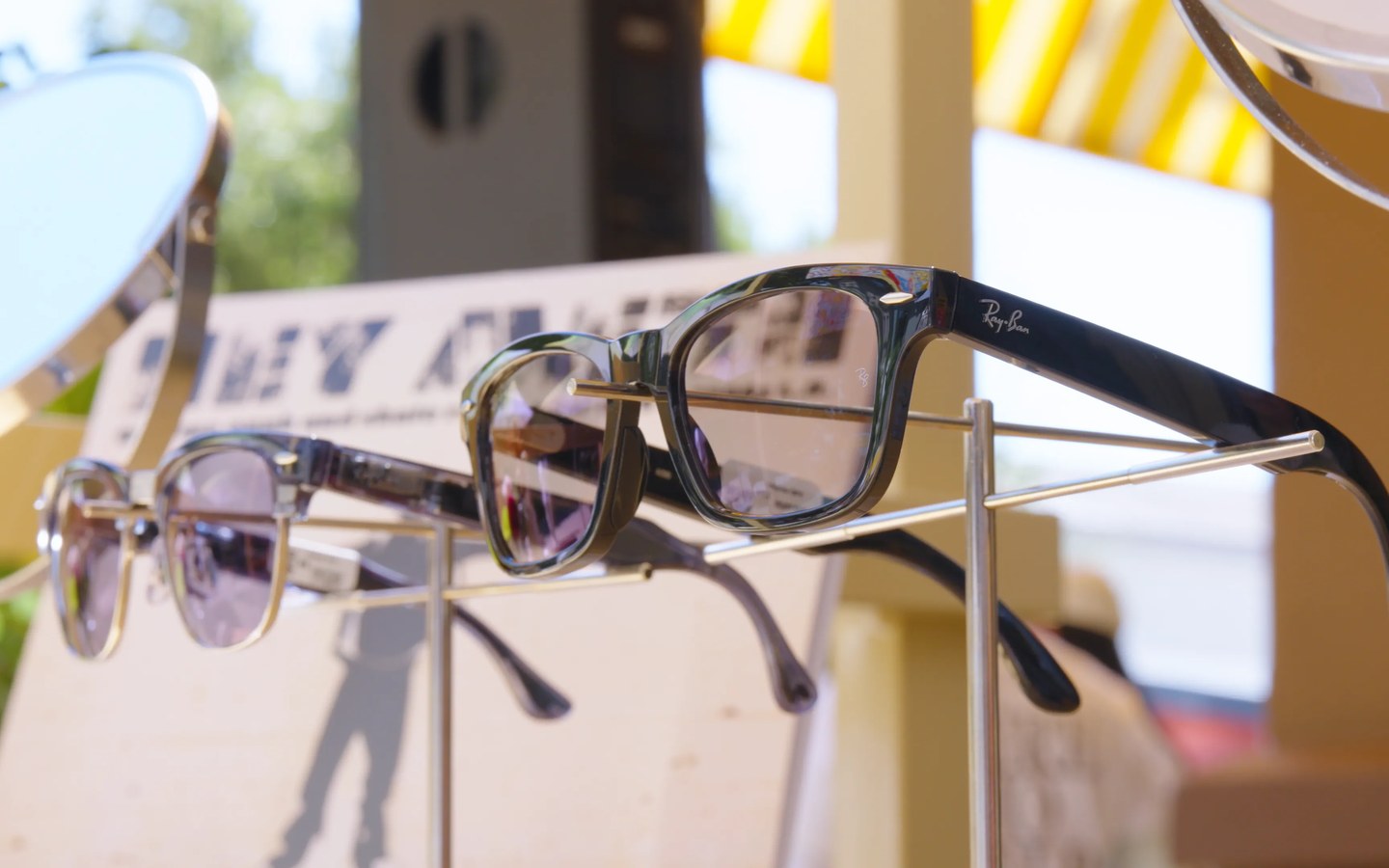
At Meta Connect 2026, the company revealed a split in its smart-glasses lineup, and the standout product is one that deliberately omits the component most associated with wearables today: a camera. The Verge reports that the new Ray-Ban Meta Audio Glasses start at $349 and arrive alongside camera-equipped follow-ups, but their pitch is simpler—open-ear audio, Meta AI voice access, and nothing recording the people around you.
A camera-free option arrives
Meta's VP of wearables, Alex Himel, told The Verge that audio was identified as the top use case for AI glasses two years ago, making this a product of long-term planning rather than a sudden response to "perv glasses" backlash. Whatever the timing, the removal of the camera allowed Meta to "rearchitect" the frame. The audio-only models weigh 43 grams, compared with roughly 50 grams for the Ray-Ban Meta Gen 2 and 69 grams for the Meta Ray-Ban Display. The result is thinner arms and a more flexible design.
The line launches with two styles: a Clubmaster-inspired frame and the Wayfarer-reminiscent Burbank. They offer 23 color and lens combinations, adjustable temple arms and nose pads, and the same wide prescription range as the Ray-Ban Meta Optics lineup. Functionally, the glasses handle Meta AI queries, phone calls, podcasts, and music. Because there is no camera battery drain, Meta estimates 12 hours of battery life. Himel stressed the glasses only listen for a wake word and do not record conversations, a notable distinction in a device category increasingly scrutinized for surveillance.
The Gen 3 gets a quiet upgrade
The camera-equipped Ray-Ban Meta Gen 3 is less of a redesign than a refinement. The new model adds a sixth microphone for clearer calls, bumps battery life from eight hours to nine hours, adds Dolby Atmos spatial audio capture, and introduces adjustable temple arms. It comes in 27 color and lens combinations plus three seasonal options, and it now starts at $449, up from $379 for the second generation.
- Microphones: six on Gen 3 vs. five on Gen 2
- Battery: nine hours on Gen 3 vs. eight on Gen 2
- Audio: Dolby Atmos spatial audio on Gen 3
- Fit: adjustable temple arms on Gen 3
These are incremental changes, but they keep the camera glasses on a parallel track with the audio-only pair, giving buyers a clearer choice between capture and discretion.
Fashion, hearing help, and the privacy question
Meta also expanded its more affordable Meta Glasses line with two new shapes, Capri and Nova, and two $399 celebrity editions. The ivory Kylie Jenner pair and a Blackpink's-Lisa model with pink lenses and a blind-box charm are aimed at broadening appeal beyond a male-skewing Wayfarer audience. Non-celebrity Meta Glasses start at $249.
Beyond the styles, a newly FDA-cleared hearing assistance feature will arrive for eligible glasses at an extra $149, and Meta says it will be FSA/HSA eligible. Meanwhile, Meta's Muse AI agent will appear across the entire glasses family, with demos showing it can remember context and attempt tasks like buying snacks, though early interactions still hit snags.
Notably absent from the announcement were any major new privacy controls for camera-equipped glasses, even as the company leans into camera-free options as a partial answer to public discomfort. Meta seems to be betting that segmentation—lighter audio frames for some, camera glasses for others—can ease the tension without abandoning the more controversial hardware. Whether that bet is enough remains an open question outside the tech-bubble optimism of Connect.