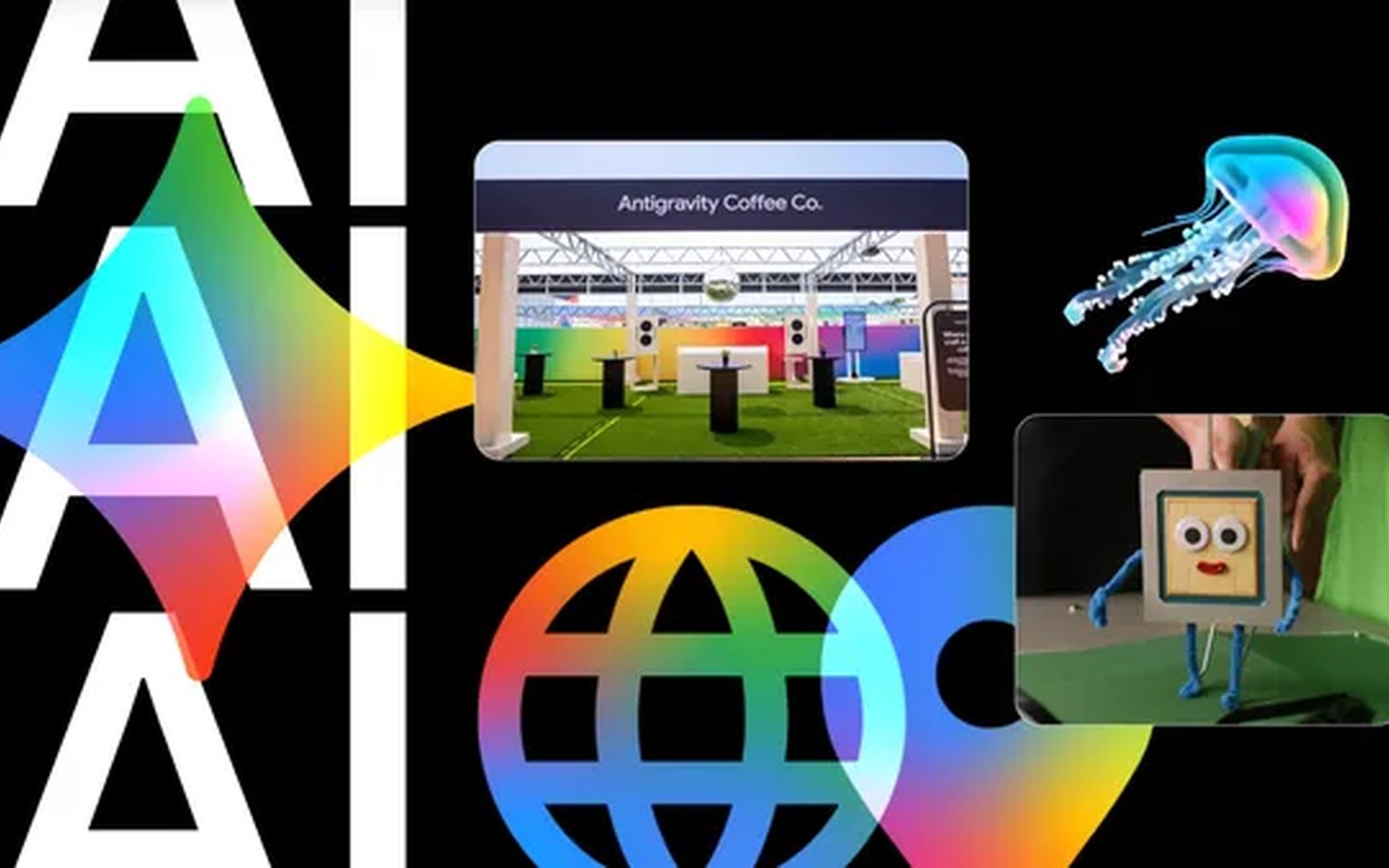
Google I/O 2026 didn't just announce new AI; it was built with them. From the jellyfish-inspired pre-show music to a cardboard-puppet film starring a nervous TPU, the event’s creative team leaned heavily on the very tools they were putting on stage. The result is a fascinating look at what happens when you seed your own product pipeline with experimental models—and a prompt to the rest of us: “What can you really do with AI?”
From Puppets to Pixels: The Making of 'TPU Training Day'
One of the most ambitious projects was a short film called “TPU Training Day” (internally nicknamed “Timmy TPU”). The goal was deceptively simple: could a handful of cardboard puppets, markers, and traditional animation be elevated into a cinematic piece using AI—while preserving the charm of human imperfection?
The team worked with director Laurie Rowan and Nexus Studios. First, they captured raw puppet performances and simple 3D animations. Then came the AI pipeline. Nano Banana generated stylized first frames from the footage, and a custom tool inside Google AI Studio let them test those frames at scale to ensure consistency. Gemini Omni and other experimental DeepMind models merged the base animation with stylized frames, adding cinematic polish without erasing the tiny wobbles that give puppetry its soul.
The takeaway: AI wasn’t a replacement for craft but a force multiplier—accelerating the labor-intensive parts while safeguarding creative intent.
Generative Design and Interactive Experiences
The event’s visual identity was born from a similar loop. The team fed five years of I/O recaps and brand guidelines into Gemini models, then iterated with Nano Banana to explore icon styles. They landed on a four-color gradient system where flat 2D icons dynamically transform into hyper-textured 3D versions—a cohesive look that worked across keynotes, signage, and digital apps.
Live experiences pushed things further:
- Jellectronica, a pre-show collaboration with the Monterey Bay Aquarium, translated moon jelly movements into music. A YOLO8 model trained in Google Colab ran on a Coral NPU to track jelly positions, driving a generative score built with Google Flow Music and the Lyria 3 Pro API. More jellies in the bass zone meant louder, more energetic bass lines.
- Infinite Scaler, a multiplayer game, let players generate endless 3D worlds from text prompts. Nano Banana turned user prompts into sprite sheets, while the Gemini API planned level layouts. Foreground elements were fed back into Nano Banana to create normal, roughness, and emission maps—inferring depth from 2D images and mapping them onto WebGL-rendered cardboard boxes. In-game music was composed entirely by Lyria 3.
- Code the Countdown invited creators worldwide to design numbers in Canvas or AI Studio; those were stitched into a playable countdown powered by community code.
- An attendee-facing coffee app used generative UI and the A2UI protocol with Flutter. Nano Banana handled complex reasoning to let people design custom latte art, while Google Antigravity’s agentic coding allowed attendees to quickly build their own unhinged coffee-ordering apps.
The Tools That Made It Possible
Underpinning everything was a stack that Google’s own developers are dogfooding:
- Google AI Studio for rapid prototyping and massive-scale frame testing.
- Nano Banana and Nano Banana Pro for image generation, style transfer, and 3D map creation.
- Gemini Omni and experimental DeepMind models for video generation, animation, and cinematic compositing.
- Lyria 3 and Lyria 3 Pro for music generation.
- Google Antigravity for vibe-coding infrastructure, stem generation, and agentic development.
- Google Flow and Veo for motion prototyping and video prompt iteration.
- Coral NPU and Google Colab for on-device ML inference.
The common thread: AI handled the repetitive, heavy-lift tasks—testing frame consistency, generating sprite sheets, drafting icon variants—so that human creators could spend their best hours on taste, narrative, and emotional resonance. As the team put it, “When done right, the event is amazing on its own, and, as a viewer, you stop thinking about how AI was used.” That shift—from tool to transparent collaborator—is the real story of I/O 2026.