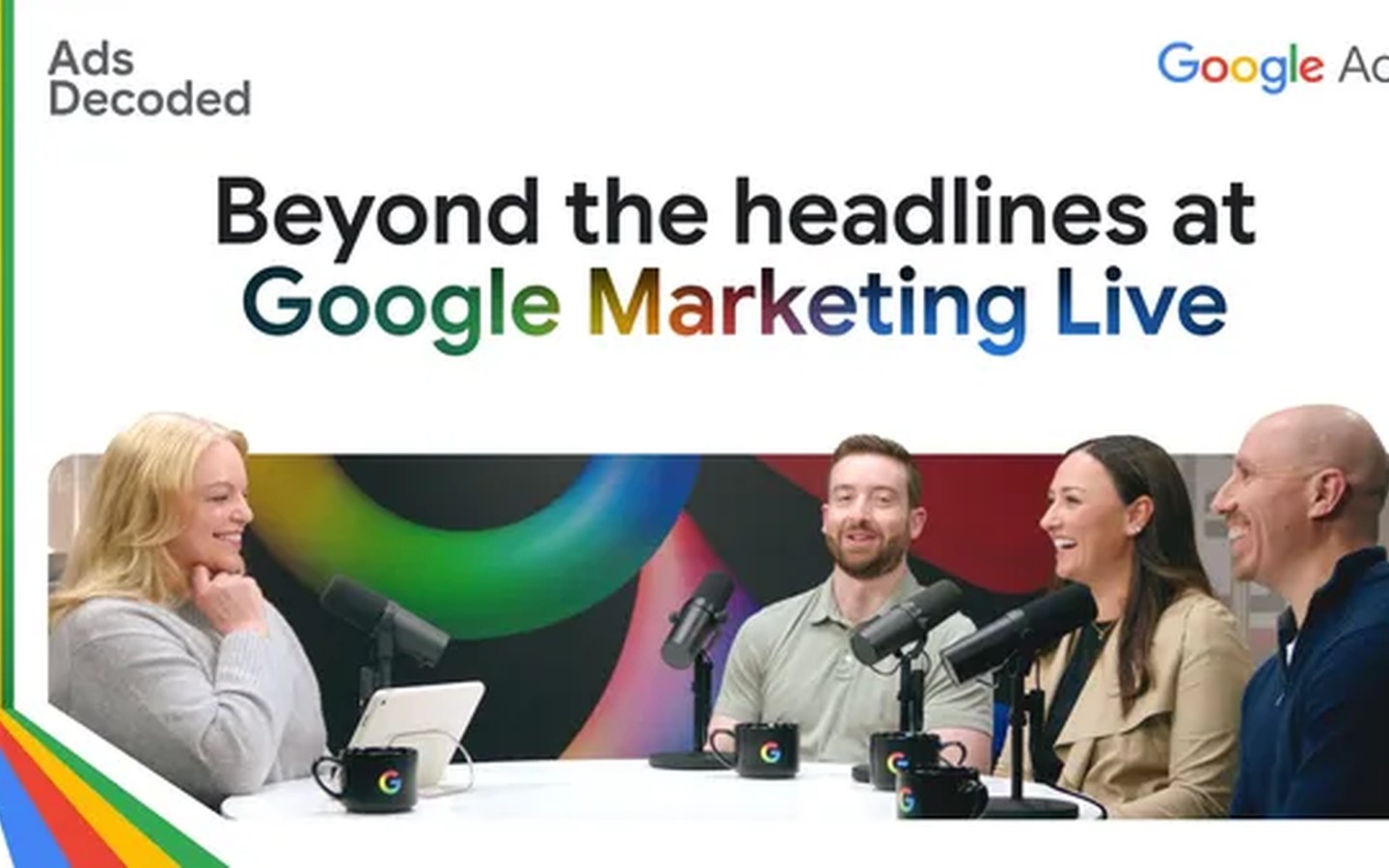
At Google Marketing Live 2026, the season finale of the Ads Decoded podcast laid bare a thorough overhaul of digital advertising, with AI at the center. Vidhya Srinivasan, VP and GM of Ads and Commerce, stepped off the keynote stage to explain how Gemini models are already reshaping businesses’ presence on Search and YouTube. Her message was clear: the era of static, one-size-fits-all ads is over. Instead, Gemini enables messages that understand user intent in real time, adjusting content and format based on context. For anyone carrying a smartphone, that means the ads you see are no longer generic interruptions; they behave more like a useful signal woven into your flow.
That vision gets concrete when you examine how AI-driven Search is changing. Chris Monkman, Senior Director of Product for AI Experience, described a landscape where natural language queries and multimodal inputs—voice, text, image—are the norm on portable devices. Advertisers now must “reimagine their ads” for a Search experience that feels conversational and anticipates follow-up questions. For portable AI enthusiasts, this is the same paradigm shift that made virtual assistants more human. The ad unit becomes a dynamic reply, not a fixed billboard, fitting neatly into the small screen while respecting the user’s train of thought.
But smarter ads demand smarter measurement. Christine Turner, Managing Director of Global Product Solutions, underscored that data strength and new metrics solutions are critical for evaluating performance on portable devices, where attention spans are notoriously fragmented and sessions are short. Traditional click-through rates no longer tell the whole story, especially when an AI-generated ad might nudge a purchase days later via a different device. Turner’s team is building measurement frameworks that capture these cross-surface journeys, tying together mobile, web, and app interactions. It’s a recognition that AI-driven advertising on portable devices is not a siloed channel but a connected thread.
On the creative front, Josh Moser, Senior Director for Ads Platform, walked through how Asset Studio now integrates advanced AI models to produce optimized assets at scale. This isn’t just about resizing a banner for a phone screen; it’s about generating short videos, carousel images, or even animated stickers that feel native to each platform—and doing it automatically based on performance data. For marketers, this reduces the manual grind of producing dozens of variants for different screen sizes and orientations. For users, it means more visually coherent, less jarring ad experiences on everything from foldable phones to smartwatches. The AI learns which creative elements resonate when and where, then iterates without human intervention.
Underpinning all these threads is the same Gemini technology that powers chatbots and on-device assistants. While the models run on Google’s servers, their output directly shapes the interfaces of the devices we carry. That proximity raises important questions about privacy. AI-driven ads thrive on data—location, search history, app activity—and collecting that on always-on portable devices can feel invasive if not handled transparently. The Ads Decoded conversation didn’t shy away from this tension, suggesting that future solutions will lean into on-device processing and differential privacy techniques to maintain trust.
What emerges is a portrait of marketing’s new foundation: an invisible, proactive layer that aims to serve the right message at the right moment without breaking the user’s flow. As portable AI continues to evolve, the line between a helpful suggestion and an ad will blur, but for now, Google’s signal is unequivocal: the ads on your phone are about to get a lot smarter.