Google just dropped one of the most convincing arguments yet for why you'd want a pair of smart glasses: a city tour that floats directions and sightseeing info right in front of your eyes. In a new developer blog post, the company unveiled an experimental XR Geospatial Tour demo that blends Android XR, Gemini, Google Maps, and Visual Positioning System (VPS) to create a hands-free, heads-up navigation experience. Instead of glancing down at a phone or listening to generic audio cues, users see glowing 3D arrows and labeled points of interest overlaid directly on the real world, while a Gemini-powered voice narrates the walk like a personal guide.
The Demo: Walking Tours Reimagined
The proof-of-concept demo imagines someone strolling through a city, with the system suggesting nearby routes—historical, food, or nature-themed. Once you pick one, floating 3D navigation markers lead the way, and contextual voice narration kicks in automatically as you approach landmarks. Everything is pinned to physical locations using Google's VPS, which gives the headset centimeter-level positional awareness without relying on GPS alone.
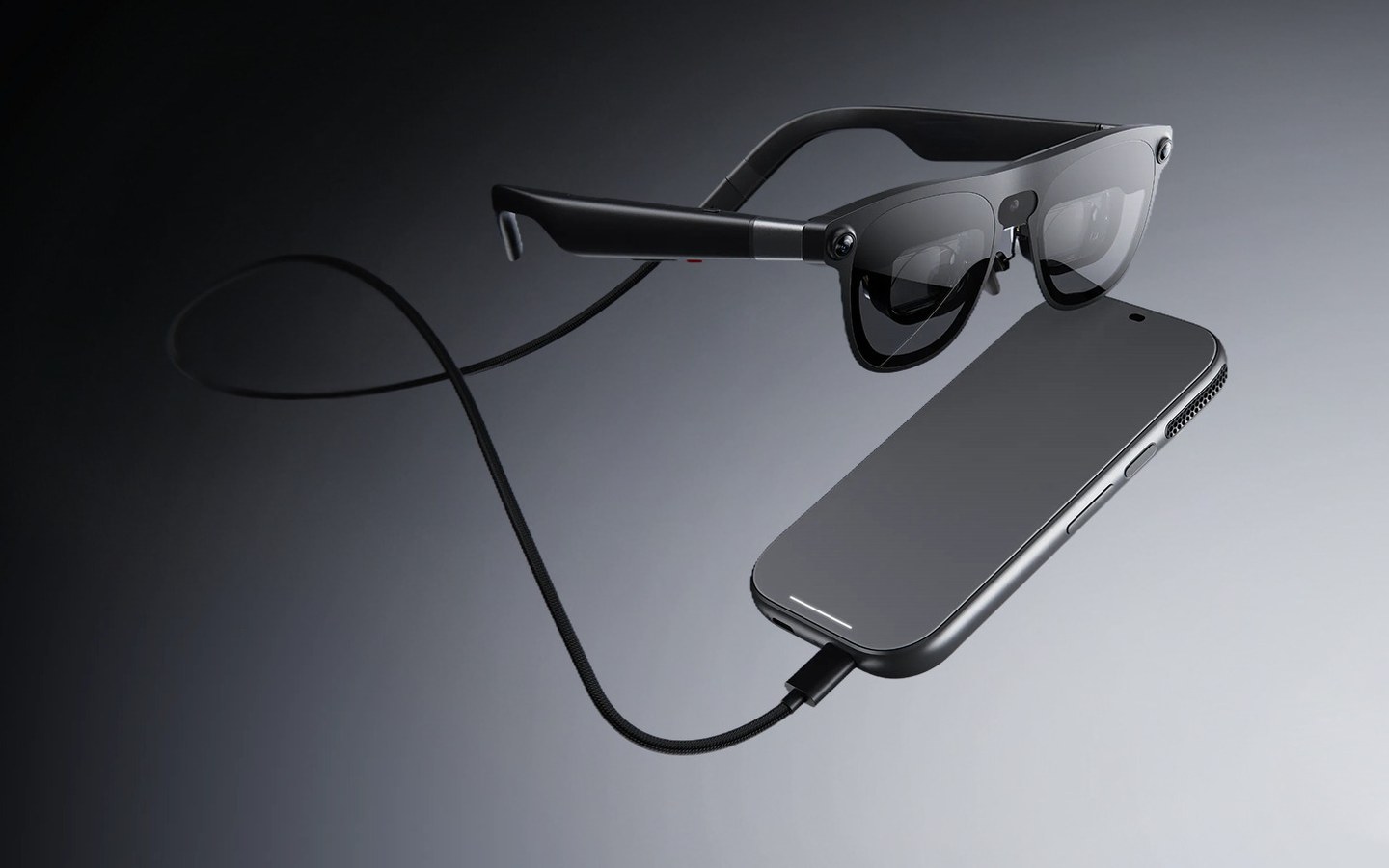
The experience is designed for wired XR headsets—Google specifically cites the now-official XREAL Aura glasses, which feature a 70-degree optical see-through display. That wide field of view makes overlays feel far more natural than the narrow holographic windows of older headsets. The demo purposely avoids referencing Google's own upcoming smart glasses made in partnership with Warby Parker, Gentle Monster, and Samsung, because those devices lack a display entirely—they're audio-only assistants. The XREAL Aura shows what's possible when you mix spatial computing with true optical see-through.
Technology Stack: Stitching Together Google's Strengths
What makes this demo tick is the tight weaving together of several Google technologies:
- Android XR: the operating system for extended-reality devices, handling rendering and interaction.
- Visual Positioning System (VPS): uses camera imagery and Street View-like data to pinpoint location within centimeters.
- Google Maps: provides the underlying geographic data, points of interest, and route planning.
- Gemini: the large language model generates the walking tour content (which landmarks to visit, what to say) and drives text-to-speech for the guide's narration.
The workflow is smart: VPS locates you precisely, Gemini cooks up a culturally relevant tour route, Maps supplies the navigation path, and Android XR paints the glowing arrows and info cards into your field of view. Then, as you move, Gemini's voice whispers facts into your ear, no phone needed. It's an end-to-end system that turns passive location data into an active, immersive storytelling tool.
What It Means for the Future of Smart Glasses
This demo is explicitly a proof of concept, not a polished feature rolling out tomorrow. Yet it offers a clear answer to the "why wear them?" question that has dogged smart glasses. Navigation and tourism are universal needs, and removing the phone from the equation while adding visual guidance and spatial audio narration feels like a genuine productivity leap. It also underscores why display-equipped glasses matter: audio-only assistants (like Google's upcoming partnership models) can give you turns, but they can't show you the arrow hovering exactly where you need to go, or let you glance at a landmark's name and rating without breaking stride.
The XREAL Aura glasses run Android XR natively, and with a 70-degree field of view, they hit a sweet spot for these kinds of overlay experiences. While rival platforms like Meta have focused on camera-first AI features without displays, Google's approach with XR suggests that the killer app for face computers might be as simple as never getting lost while discovering a city hands-free. Keep an eye on how this demo influences the developer ecosystem—if more tour-guide-style tools emerge, we could see a wave of actually useful XR content before the first consumer devices even ship.