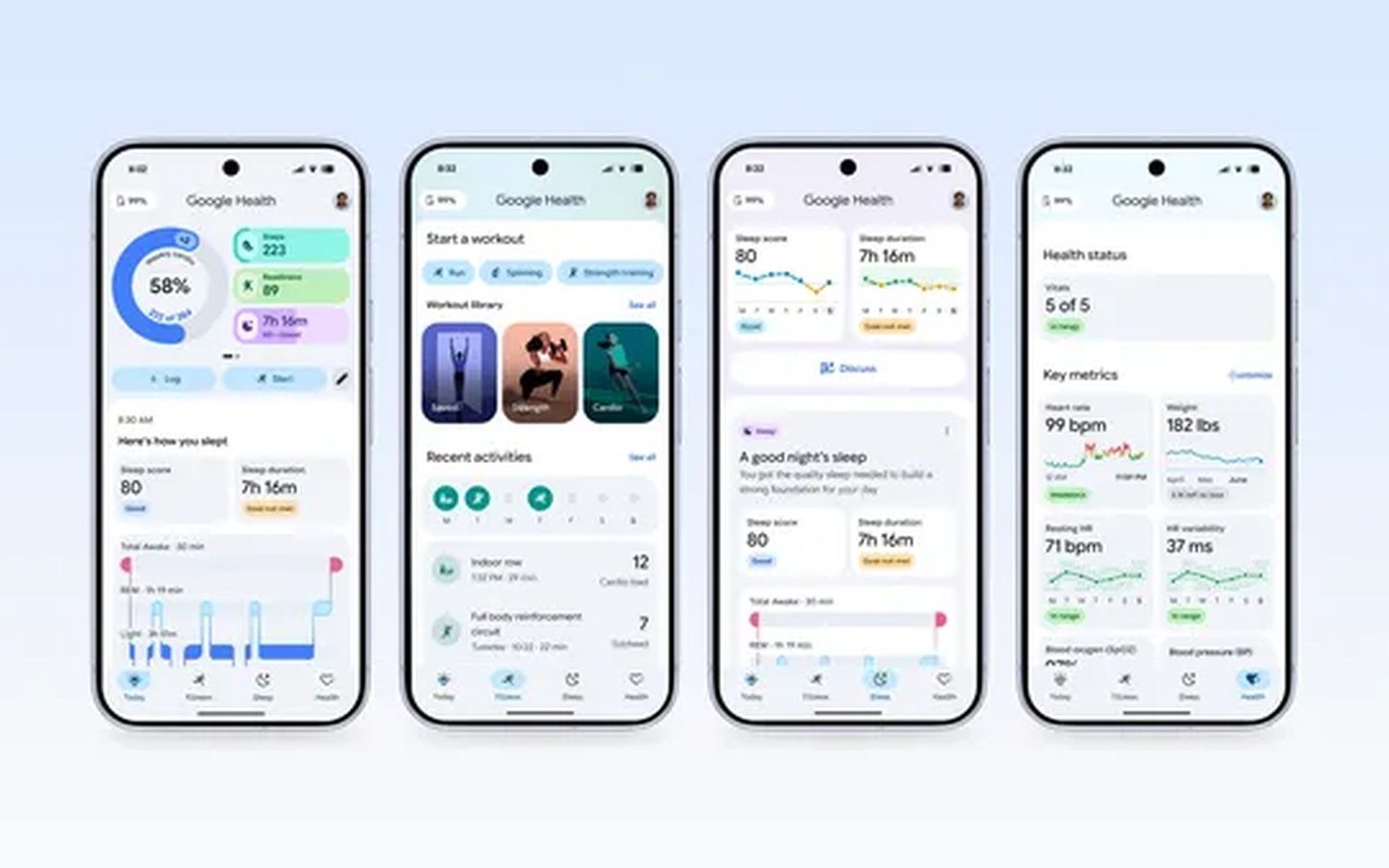
Your health data is scattered across devices, apps, and portals. A smartwatch logs your runs, a scale tracks weight, your doctor’s portal holds lab results, and a food app knows what you ate—but none of them talk to each other. Google Health aims to change that.
At its core, the Google Health app is a central hub that pulls data from almost any source: wearables like Fitbit or Apple Watch, smart scales, third-party apps such as MyFitnessPal, and even medical records if you’re in the U.S. It stitches these streams together, resolves overlaps, fills in gaps, and surfaces trends you’d otherwise miss. Behind the scenes, a new AI-powered feature called Google Health Coach turns that merged data into personalized, proactive recommendations—nudging you toward better sleep, more movement, or simply reminding you to hydrate.
This isn’t just another siloed health dashboard. The app is built on an open philosophy, connecting through Health Connect on Android, Apple Health on iOS, and the newly rebranded Google Health APIs (formerly Fitbit APIs). That means hundreds of devices and services can feed into your profile without locking you into one brand. If you’re someone who wears a Garmin for cycling, an Oura ring for sleep, and a Withings scale, the Google Health app becomes the first place where all those signals make sense together.
The promise goes beyond aggregation. By merging lab results, vitals, and wearables data in one timeline, the app can flag anomalies—like a resting heart rate that’s creeping up alongside irregular sleep—before they become obvious. The Coach then suggests small adjustments: a wind-down routine, a visit to your doctor, or a change in workout intensity. Over time, this feedback loop could turn the app into a genuine health companion rather than a passive log.
Data control is a central theme. Google stresses that health data won’t be used for ads, and you can delete, export, or revoke sharing permissions at any time. Export options include Google Takeout for a full archive, plus TCX files for fitness platforms. Coming soon: Smart Health Links that let you share medical records directly with providers or family members, and even command-line interfaces for developers who want to build on their own health data.
For the portable AI community, the implications are hard to overstate. Until now, building a personal AI that understands your whole health required heroic efforts to collect and normalize data from multiple APIs. Google Health provides a ready-made, privacy-conscious backbone that any app or service can tap into. A startup working on an AI nutritionist, for example, could plug into Google Health rather than integrating with a dozen different food loggers separately. This dramatically lowers the barrier to entry for innovation.
There are still unanswered questions. Medical records support is U.S.-only at launch; international expansion is promised but not yet scheduled. Deeper integrations and new data types are in the pipeline, but the roadmap remains vague. And as with any platform, centralizing sensitive health data inside Google’s ecosystem will invite scrutiny about long-term data governance, even with the ad-free pledge. For now, however, the Google Health app represents a genuine step toward making your personal data work for you—not the other way around.
If the industry follows Google’s lead on openness, we may finally see the fragmented health-tech landscape fuse into something cohesive. And when that happens, portable AI won’t just be a concept; it will be the quiet intelligence running behind every health decision you make.