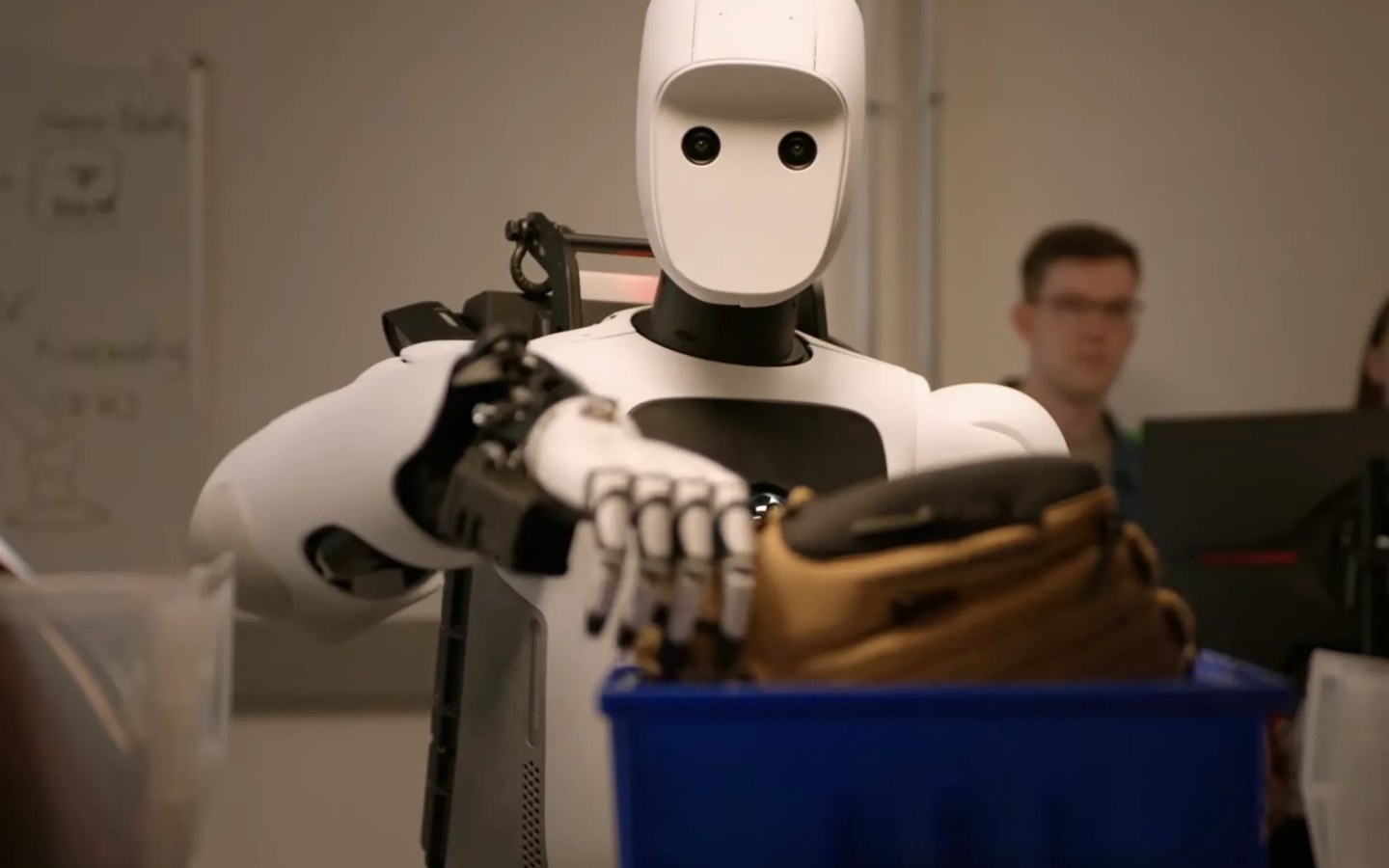
Google DeepMind has taken a decisive step toward robots that can move and manipulate like humans. The latest version of its Gemini Robotics AI model, Gemini Robotics 2, now exercises “whole-body” control—spanning everything from a robot’s feet to its fingertips—as reported by The Verge.
From upper body to full-body dexterity
Previous iterations focused narrowly on upper-body tasks. The new model adds walking, crouching, and stretching, letting humanoid robots perform coordinated, full-body movements. In a demo with Apptronik’s Apollo 2, the robot bends to pick up a watering can, locates specific objects on a shelf, and retrieves them without tripping over its own mechanics.
Dexterity gets a parallel upgrade: the model now handles complex five-fingered hands. That unlocks fine-motor actions such as:
- Sealing a Ziploc bag
- Tying a plastic trash bag
- Unscrewing a lightbulb
The improvement marks “an important step towards the skills needed to complete more complex, real-world tasks that require whole-body coordination,” the company said, even as movement speed remains a work in progress.
Safer, smarter multi-step execution
Alongside full-body control, Google DeepMind updated Gemini Robotics ER 2, its embodied reasoning model. This vision-language system helps robots parse surroundings, follow instructions, and string together extended sequences of actions. The new version can now tell when a task begins and ends, making it viable for prolonged chores.
It also allows robots of different types to collaborate. One video shows Apollo 2 instructing a dual-arm Google robot to put tools into a bin while cleaning a garage.
Safety is foundational: Gemini Robotics ER 2 is the company’s “safest robotics model to date.” It detects when humans are nearby and initiates a safe stop if someone gets too close—critical for deployment around people.
On-device gains and cross-embodiment adaptability
Finally, the Gemini Robotics On-Device Model now runs locally, without an internet connection, and adapts faster to robots with “drastically different shapes, sensors and degrees of freedom.” That means lower latency and broader real-world readiness, whether in a warehouse or a home. Google DeepMind acknowledges the robots have more to advance in movement speed, but the trio of updates—whole-body control, safer multi-step reasoning, and device-local agility—paints a clear trajectory toward capable, dexterous machines.
Tech Close Tech Posts from this topic will be added to your daily email digest and your homepage feed. Follow Follow See All Tech
Posts from this topic will be added to your daily email digest and your homepage feed.
AI Close AI Posts from this topic will be added to your daily email digest and your homepage feed. Follow Follow See All AI