A Mid-Year Software Shift
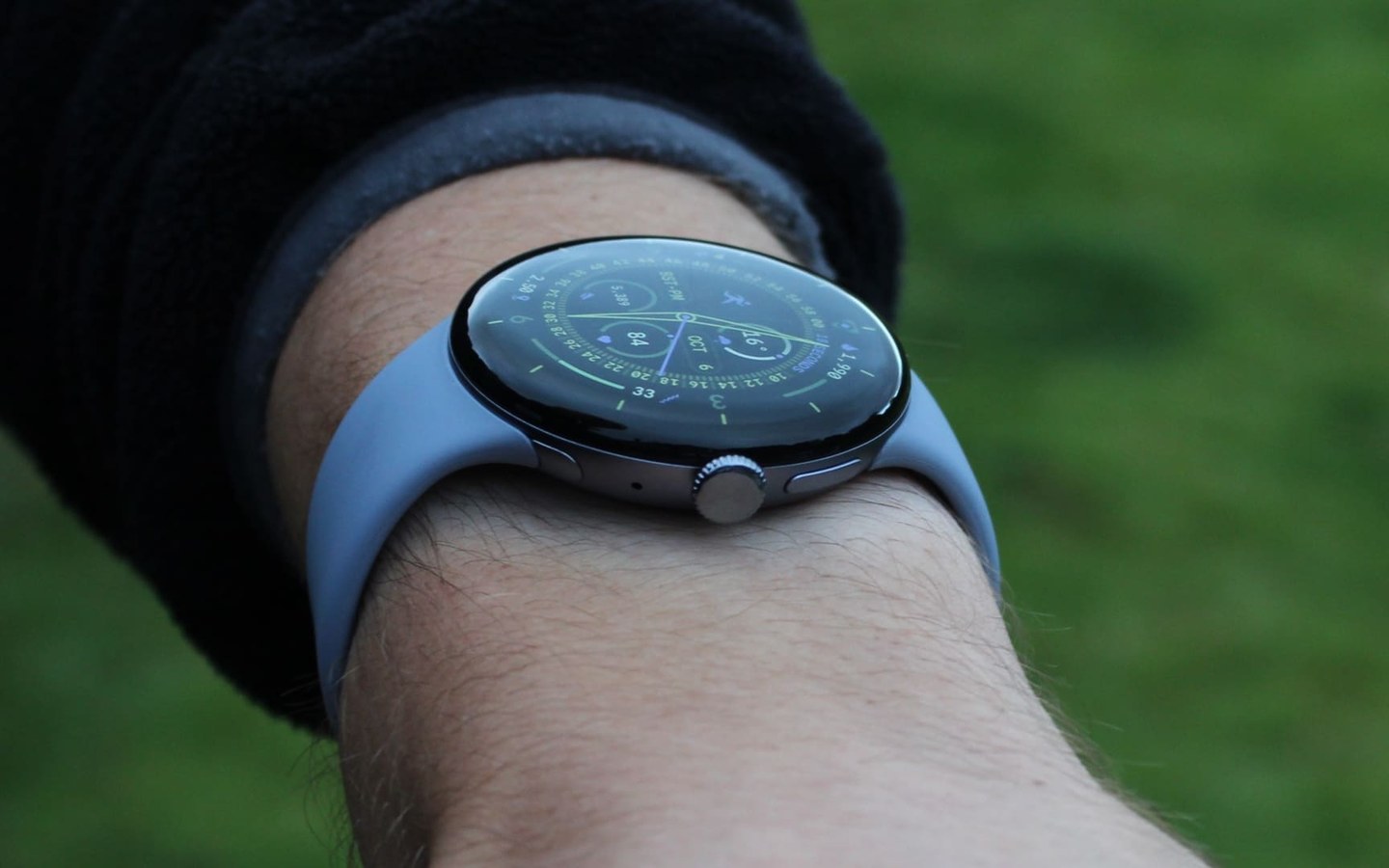
Since the modern Wear OS revival in 2021, Google has tightly bound major platform updates to the hardware launch cycle, dropping new versions alongside Pixel Watches each October. That cadence just got upended. Wear OS 7 is now live on the Pixel Watch 4, Pixel Watch 3, and Pixel Watch 2—months ahead of the usual autumn debut. (When checking for the update, we had to use the repeatedly-tap-the-screen trick on the “Your watch is up to date” page to force it to appear; your mileage may vary.)
This decoupling signals a more ambitious alignment with the stock Android schedule. It also hands Pixel owners first dibs on the latest wearable software, a privilege Samsung traditionally claimed. However, Samsung is expected to reveal its next-gen Galaxy Watch and One UI 9 Watch—also built on Wear OS 7—next month, so the window of exclusivity won’t be wide. For now, the early drop gives Google room to show off what its own reference hardware can do.
Live Updates and Smarter Audio Routing
The marquee addition is Live Updates—a feature lifted from smartphone lock-screen notifications. Wear OS 7 embeds real-time information directly into the active watch face and the top of the notification shade, eliminating the constant app-hopping that fragmented the wrist experience. A dynamic element at the bottom of the display can stream sports scores, track a food delivery, or follow navigation without ever opening a dedicated app. It’s a meaningful nudge toward a truly glanceable assistant, something Google has been telegraphing with on-device Gemini AI promises later this year.
A second convenience upgrade comes in the form of a universal audio output overlay. Tapping into a tiny speaker icon from any screen lets you reroute audio between Pixel Buds, connected smart speakers, and eventually devices in the Android XR ecosystem. This lightens the friction of managing audio sessions and hints at a more ambient, multi-device OS—one where your watch acts less as a dependent accessory and more as a central remote.
Google has also polished media controls, expanded Wear Widgets, and—if the I/O previews hold—improved health-service integrations. But the most tangible, everyday benefit might be the claim of a 10% reduction in background battery consumption compared to Wear OS 6. That figure comes with caveats: heavy use of Live Updates or poorly optimized third-party apps will chip away at it. Still, even a modest efficiency gain is welcome on devices that often struggle to last a full day.
Battery Gains and a Fragmented Reality
Google’s push for platform parity stumbles over a stubborn reality: ecosystem fragmentation. Major partners like OnePlus and Xiaomi are still mid-rollout for Wear OS 6 on their flagships. That means Wear OS 7 remains, for the foreseeable future, a Google-exclusive affair. The company’s accelerated timeline, while exciting for Pixel Watch owners, widens the gap between what developers can reliably target and what users on other brands can expect. If Wear OS wants to compete with the uniformity of Apple’s watchOS, it will need to bring these partners closer in lockstep.
Yet the update’s direction is clear. By decoupling software from hardware and loading up on proactive, glanceable features, Google is repositioning the wrist computer as an ambient intelligence layer rather than a passive notification mirror. The early arrival of Wear OS 7 is more than a scheduling quirk—it’s a statement that wearable AI should move on its own timeline, not wait for a shiny new case to justify itself.