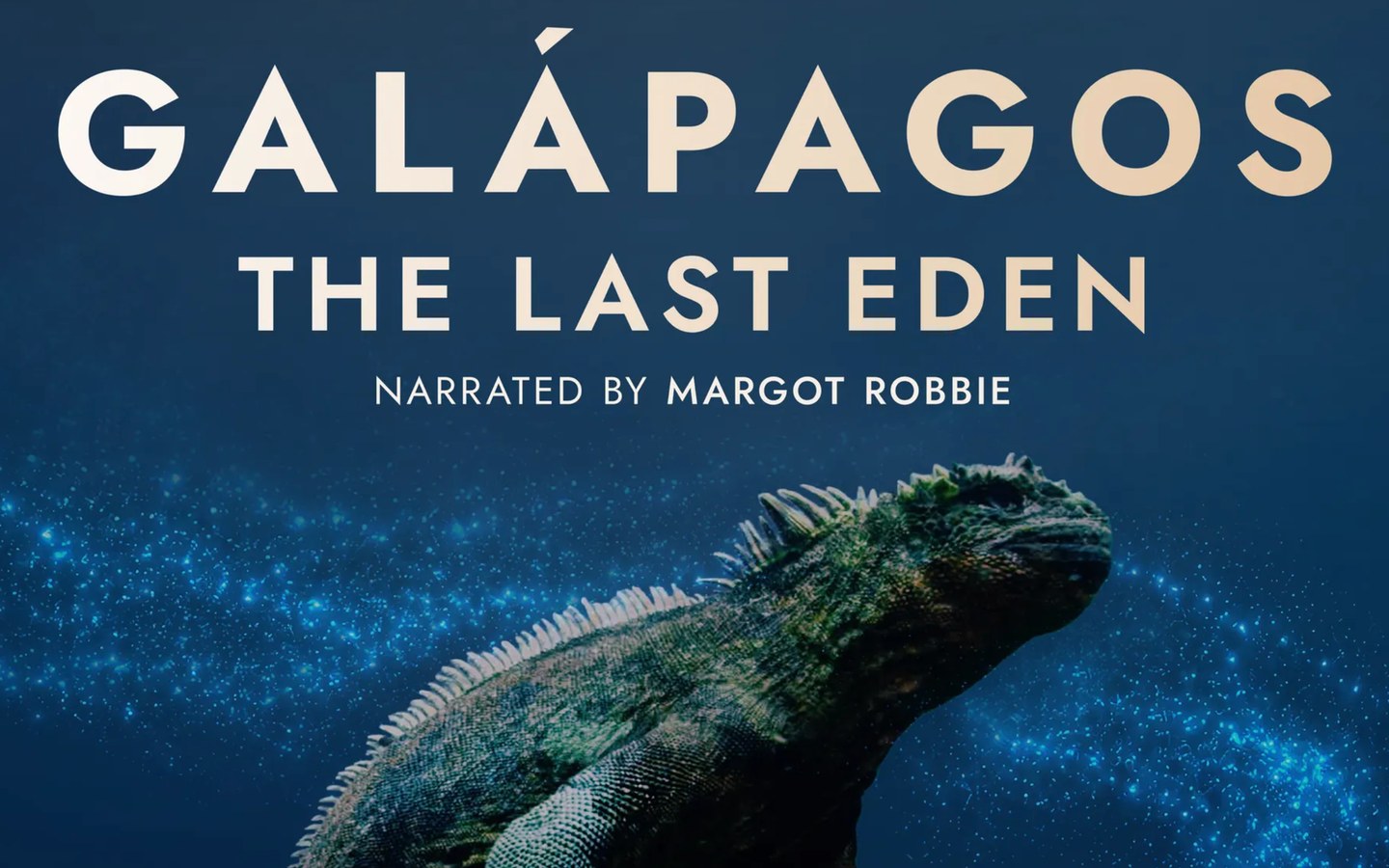
The hour-long Android XR experience is made in collaboration with Google and narrated by Margot Robbie.
Galápagos: The Last Eden will let visitors explore the wildlife, oceans and volcanic history of the Galápagos Islands through an interactive experience running on Xreal Aura at Venice Immersive this week.
The 60-minute experience was produced by documentary filmmaker and Atlantic Studios founder and CEO Anthony Geffen, directed by Lina Zilinskaite and Marcus Moresby, and narrated by Margot Robbie. It's made in collaboration with Google using Android XR and is competing at this year's Venice Immersive.
A representative for the project confirmed to UploadVR that the Venice presentation will run on Xreal Aura.
But Galápagos isn't simply an immersive nature film viewed through a headset. Visitors can interact with the environment as the experience explores the volcanic activity that formed the islands, their surrounding oceans, and the evolution and behavior of their wildlife.
Geffen says the team used several specialized camera systems to capture the Galápagos in stereoscopic 180-degree video. The primary system was Blackmagic's URSA Cine Immersive, which uses dual 8K sensors, alongside a RED camera fitted with a specialized dual-lens VR rig for underwater footage and a custom-adapted drone for stereoscopic 180-degree aerial capture.
The experience also lets visitors have a personalized conversation with Charles Darwin using Google's Gemini Live API. The creators say Darwin's responses are grounded in research and material from the production, with a system prompt used to define his personality and speaking style. His animated appearance is driven using OpenXR blendshapes in Unity.
Geffen has a long history of using emerging technology for immersive documentary storytelling. His company, Atlantic Productions , and its former immersive arm, Alchemy Immersive, produced several VR experiences with Sir David Attenborough, including Micro Monsters and Kingdom of Plants. Atlantic Productions was also involved in the 2022 expedition with deep-sea mapping specialist Magellan that captured more than 700,000 images of Titanic to create a highly detailed digital twin of the wreck . That scan later formed the basis of the National Geographic documentary Titanic: The Digital Resurrection.