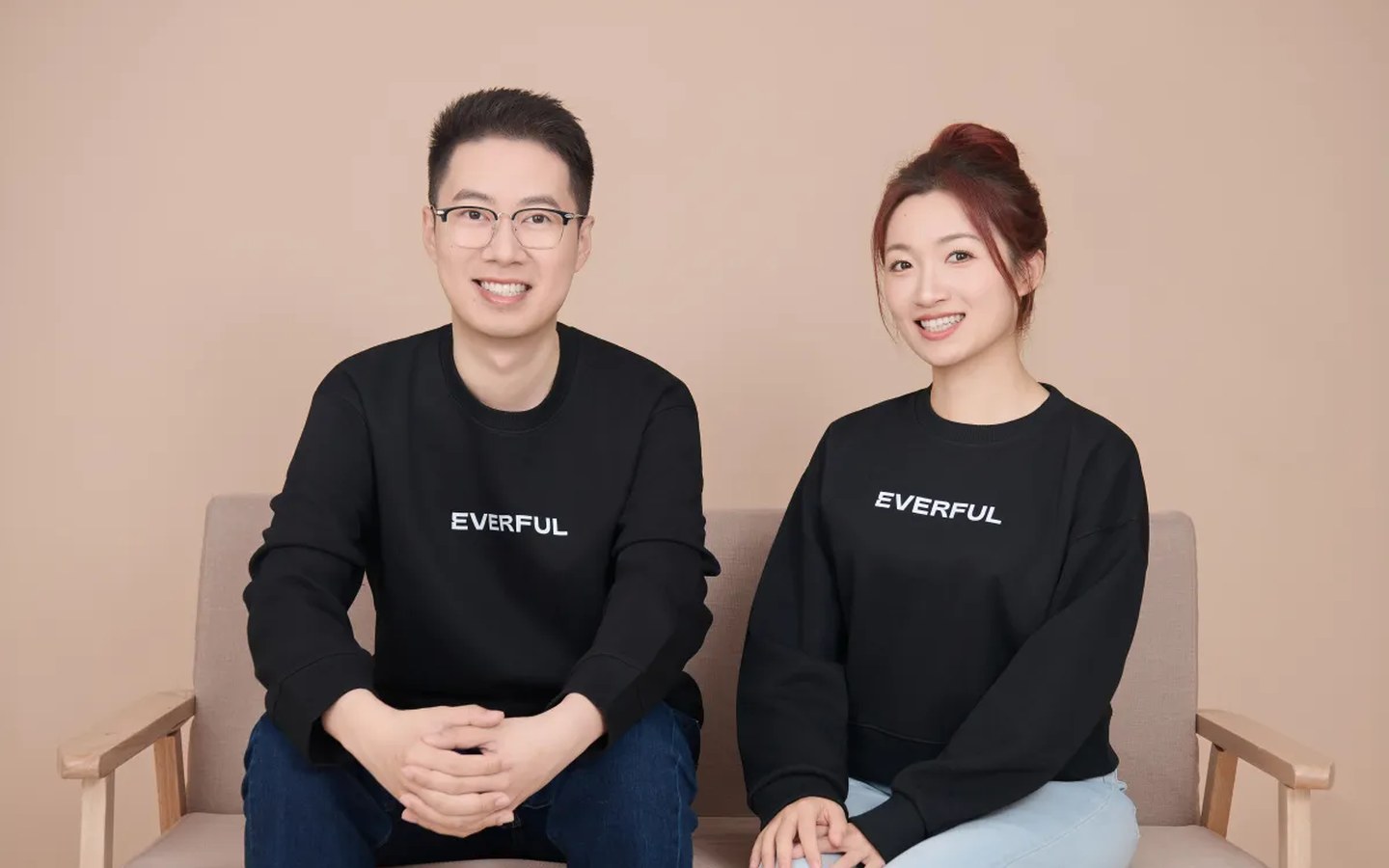
The startup world has plenty of marketplaces that connect buyers to factories, but Everful is betting that small retailers will pay for someone to own the entire sourcing mess. TechCrunch reports that the San Francisco- and Singapore-based company just closed a $48.5 million Series A to scale a factory-direct platform that handles order consolidation, quality control, and logistics—not just supplier discovery.
The round was led by Vertex Ventures Southeast Asia & India and January Capital, with existing backers Square Peg and Lightspeed joining. It's a meaningful vote of confidence for a company that is already on track to hit $100 million in annualized revenue by the end of the year, roughly two and a half years after launch. According to co-founder Sisi Song, Everful ships more than 5 million items a month to customers in over 60 countries, works with 30,000-plus factory partners, and maintains a wholesale catalog of more than 20 million products.
Song, a former Alibaba executive, co-founded Everful in 2024 with serial entrepreneur Kevin Han, who previously sold a company to Amazon. The business started as a jewelry wholesaler before expanding into multi-category sourcing. The pitch is aimed squarely at smaller retailers and brands that lack dedicated sourcing teams and often get stuck with intermediaries, high minimum order quantities, and long capital-locking cycles.
What makes Everful different from a marketplace
Everful's co-founders argue that big platforms such as Alibaba and Faire mostly facilitate transactions. Everful instead takes responsibility for the entire sourcing operation. In Han's words, the company handles sourcing, order consolidation, quality control, and logistics—work that typical marketplaces leave to the buyer.
That end-to-end control matters because many small retailers can't afford to place large orders before consumer trends are proven. Everful's model lets them source smaller batches from vetted factories, then rely on the platform to manage the messy middle. The startup also verifies the factories it works with, aiming to reduce the risk that a promising supplier turns into a costly mistake.
AI agents and the work behind the interface
The most interesting part of Everful's technology is not the catalog, but the AI layer behind it. Kevin Han says the company deploys AI agents to automate labor-intensive sourcing tasks. That includes:
- Tracking consumer trends to spot what retailers should buy next
- Identifying and vetting suppliers across a large factory network
- Coordinating orders that span multiple factories
- Managing logistics and order consolidation without manual handoffs
The fresh capital will go toward expanding those AI capabilities, particularly around product customization and deeper e-commerce integrations. Everful already has a Shopify integration, and it plans to build more connections to become end-to-end sourcing infrastructure rather than just a purchasing tool. The company employs about 70 full-time staff, with 45 in research and development, and has set up an AI operations team to bridge engineering and business workflows.
Tariff risk and the local-seller thesis
Everful's dependence on Chinese factories puts it directly in the path of U.S.-China trade tensions. Song says the team has considered geopolitical risk since day one. One obvious pressure point is the Trump administration's suspension of the de minimis exemption, which had allowed shipments valued at $800 or less to enter the U.S. duty-free. Removing that exemption changes the unit economics for small parcels, but Song frames it as an argument for a hybrid model: overseas sourcing combined with local retail sales.
'Long-term cross-border commerce will be cross-border B2B sourcing plus local selling,' she says. In practice, that means helping local retailers sell to local customers while Everful handles the cross-border supply side. The company plans to expand in the U.S. and Europe, with particular focus on the UK, France, and Italy, and to invest in automating more of the sourcing workflow.
If Everful's AI can truly absorb the complexity of direct factory sourcing, it could give small retailers a way to compete with larger players without building their own global procurement teams. The round gives it the runway to prove that thesis.