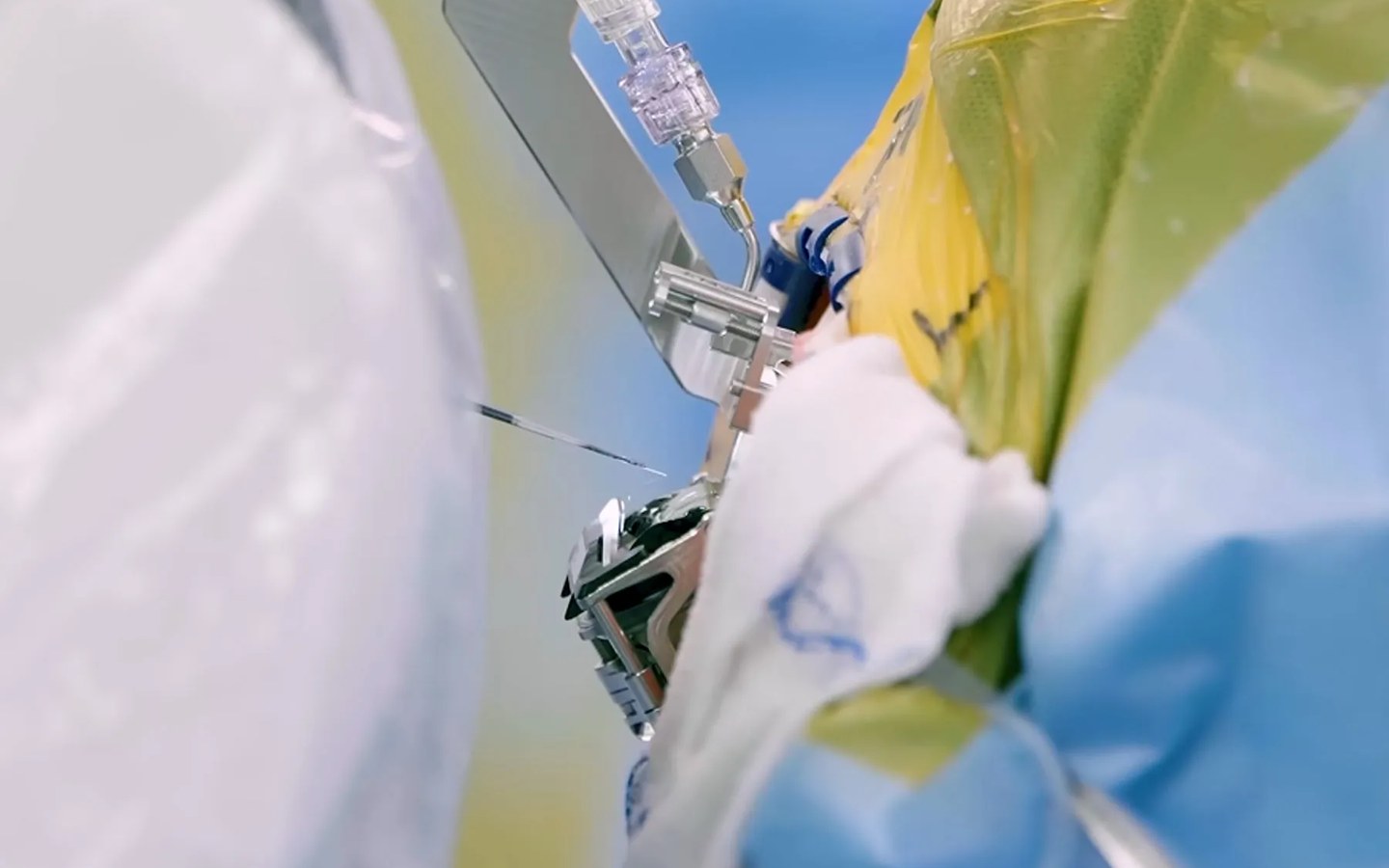
Elon Musk’s brain-computer interface (BCI) startup Neuralink announced the company has successfully performed its first transdural brain implant surgery, which promises to increase scalability while significantly reducing surgical trauma.
In a new video (seen below), Neuralink reveals it has implanted electrode threads through the dura—the brain’s thick, leather-like membrane that sits just below the skull—without cutting or removing it like in the company’s previous human clinical trials .
The procedure was carried out in May 2026 during a clinical trial at University Health Network’s Toronto Western Hospital, which is intended to make implantation safer, less invasive, and faster, the company says.
To do this, Neuralink redesigned its insertion needle to better penetrate the dura, which can be over 10 times thicker than the company’s electrode threads, which are thinner than a human hair. The key issue though is the brain beneath is constantly moving, and the dura obscures a dangerous network of blood vessels that need to be avoided.
Neuralink also developed synthetic dura models for extensive testing, allowing researchers to test new imaging systems to better view the brain below the dura.
As seen in the video, Neuralink’s new technique uses indocyanine green (ICG) video angiography, an imaging technique that uses a fluorescent dye to visualize blood flow in real-time, and optical coherence tomography (OCT), which can precisely measure the distance to the brain’s surface as it throbs and moves beneath the dura.
Neuralink says eliminating the step of removing the dura simplifies the procedure and is an important step toward more automated, scalable brain implant surgeries.
“We like to say ‘the best step is no step’ and deleting the durectomy takes one of the most delicate manual steps out of the procedure,” the company says. “This potentially means a safer, more repeatable surgery, and a real path to scaling Neuralink to the many people who could benefit.”