Affiliate links on Android Authority may earn us a commission. Learn more.
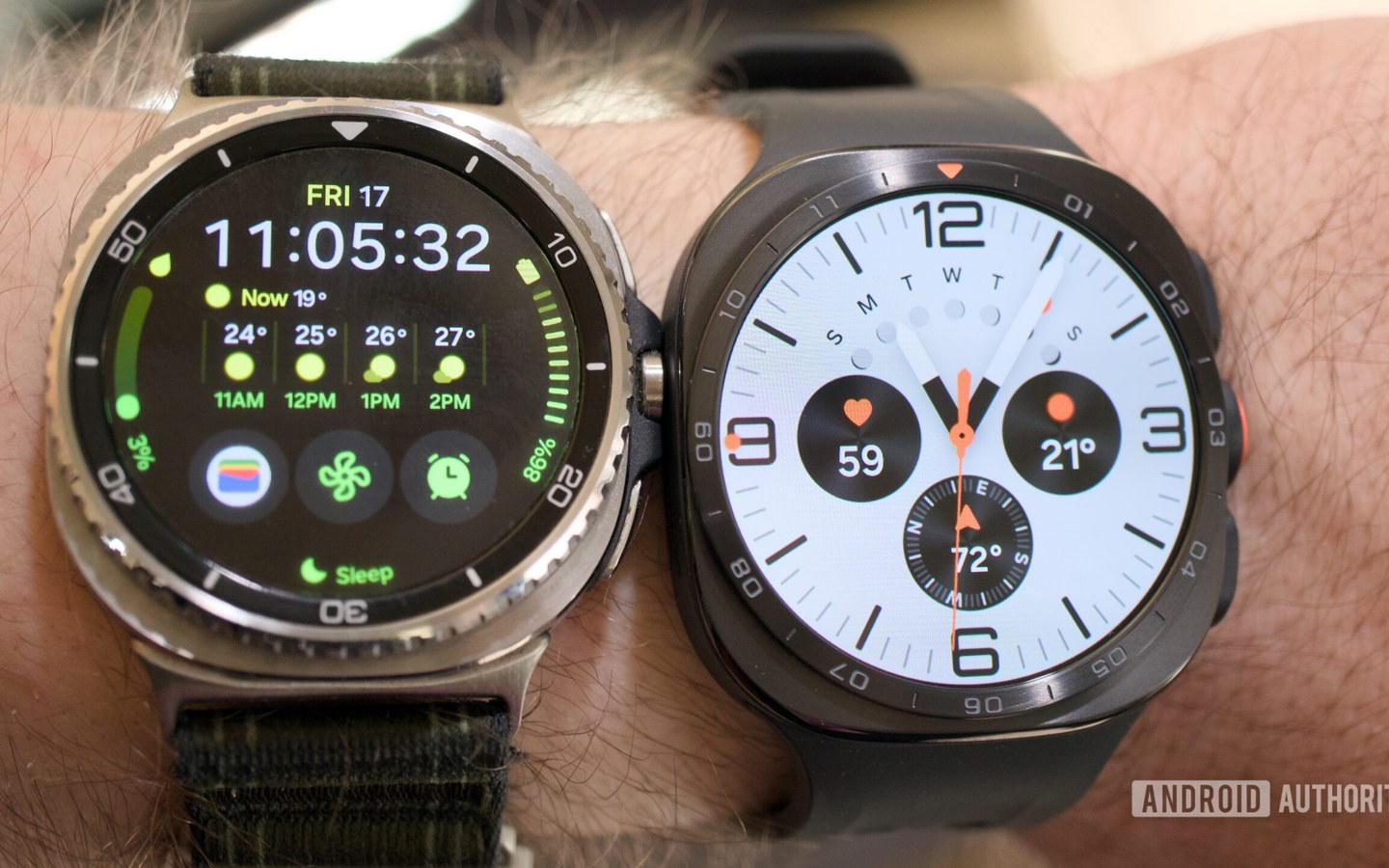
Samsung introduced the Galaxy Watch Ultra 2 with Qualcomm’s Snapdragon Wear Elite chip and a massive 800mAh battery (up 35% from 590mAh), yet official estimates still quote the same “up to 60 hours with Always-On Display” as the original Watch Ultra model.
The Galaxy Watch 9 models also increased battery sizes and switched from Exynos W1000 to Snapdragon Wear Elite, but Samsung continues to quote up to 40 hours of runtime without Always-On Display across both generations.
The lack of runtime improvement despite Wear OS 7’s efficiency improvements and larger batteries could stem from power draws like the brighter 5,000-nit display, lower processor efficiency, or simply outdated marketing specs.
Samsung officially announced the Galaxy Watch Ultra 2 at its latest Unpacked event, introducing a major silicon pivot to Qualcomm’s Snapdragon Wear Elite SoC alongside a massive 800mAh battery cell. Curiously, despite the larger battery and newer chip, Samsung’s official spec sheet quotes the exact same “up to 60 hours with Always-On Display” runtime as the original 590mAh Exynos W1000-totting Galaxy Watch Ultra.
The spec discrepancy was first highlighted by Phonefuturist on X , who questioned whether the Snapdragon Wear Elite is better than the Exynos W1000, given that it seemingly erased a 35% battery capacity jump.
In Samsung and Qualcomm’s defense, the Galaxy Watch Ultra 2 does have a few other changes that could be gnawing at this larger battery. The Galaxy Watch Ultra 2 features a Super AMOLED display that reaches 5,000 nits, up from 3,000 nits on the Galaxy Watch Ultra. However, note that this peak brightness applies only to a small part of the display for a small duration . All the display pixels will not reach 5,000 nits simultaneously, nor will this peak be sustained for long on individual pixels.
The Galaxy Watch Ultra 2 also has a slightly higher resolution of 498 x 498 pixels, compared to the Watch Ultra’s 480 x 480, but this is a small difference that doesn’t explain how such a large battery capacity difference yields practically no improvement in battery life.