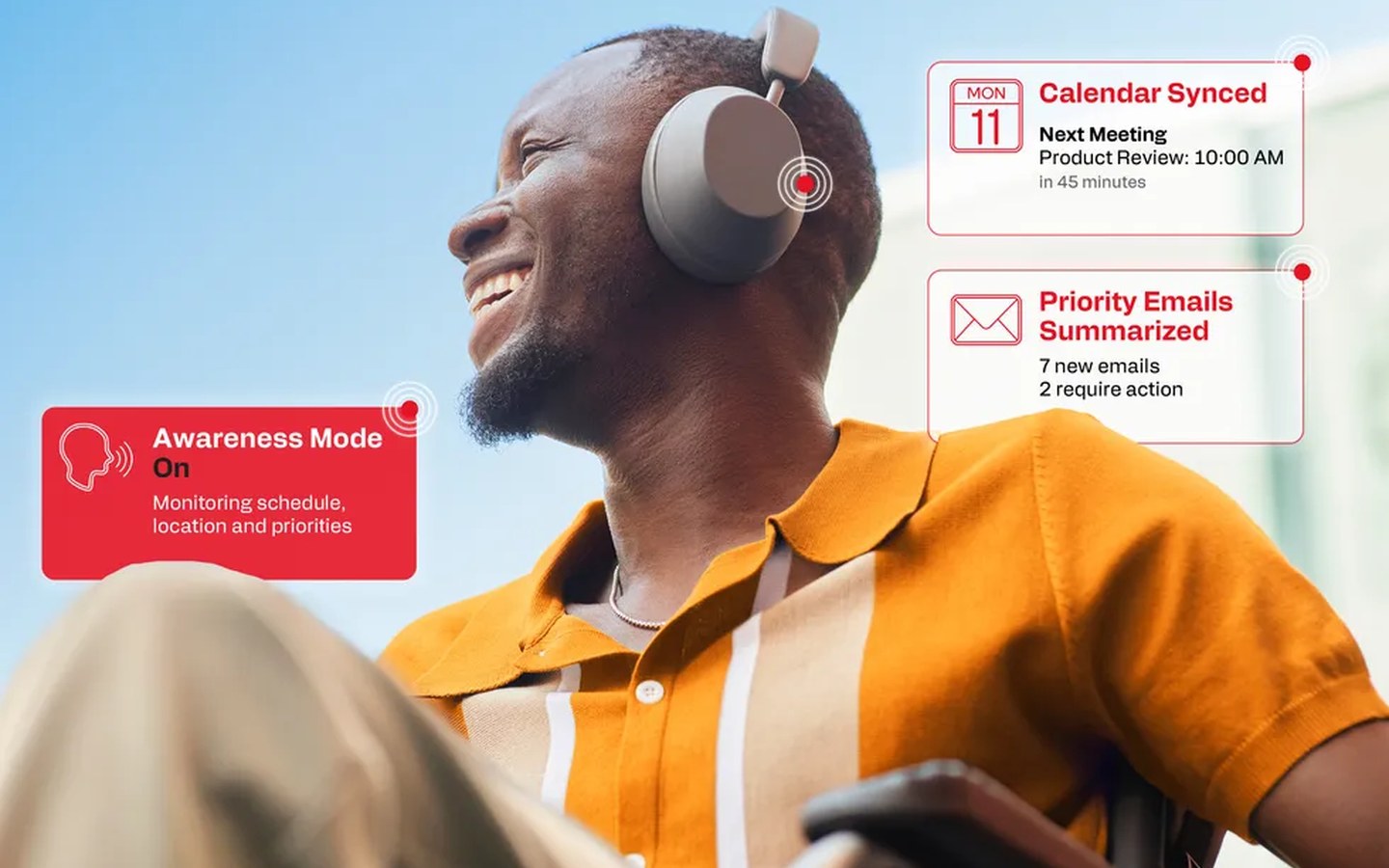
The next device you buy may not win you over with a larger display or a faster processor. It may win you over by listening more carefully. A new Qualcomm Technologies survey, covered by IEEE Spectrum, polled more than 12,000 people across global markets and found that nearly 70 percent want an AI assistant in their next device. That is no longer a niche request; it is the mainstream expectation.
A voice-first, cross-device expectation
What respondents describe is not another chatbot trapped in a single app. The assistant they want is voice-first and orchestration-heavy. They expect to speak naturally, have the system understand context, and then let it coordinate calendars, messages, settings, and other apps without forcing them through a phone screen.
The survey's headline number hides a more specific demand:
- Conversational interaction that feels natural rather than command-line rigid
- Seamless management across devices, apps, and everyday tasks
- Ambient control that removes the need to constantly check a screen
That combination matters. Consumers are not simply asking for faster answers from a search box; they are asking for a personal agent that can act on their behalf across the hardware they already own.
The hardware implications for portable AI
For portable AI, this is a loud demand signal. Phones, earbuds, smart glasses, and other wearables all become candidate endpoints for the same assistant. The value shifts from raw model access to reliable cross-device execution. A user who starts a request on a phone may want the result spoken through earbuds, confirmed on a watch, and then adjusted through a smart display. The assistant is the connective tissue, not any single gadget.
Hardware makers searching for a reason to add microphones, sensors, and always-on connectivity to everyday devices now have a clear consumer story to test against. Vendors can position these devices as access points to an ambient assistant rather than as standalone products. The survey suggests consumers are already comfortable with that trade-off, at least in theory.
Why the survey should be read carefully
The report is vendor-sponsored, so it should be read as evidence of consumer appetite rather than proof of purchase intent. It also does not disclose product timelines or name specific devices in the excerpt available. Still, the size of the sample and the consistency of the voice-and-task-management ask are notable.
The open question is whether assistants can deliver seamless app and device control without the friction that has slowed earlier voice products. Permissions, battery life, and privacy remain unsolved in many current implementations. If those issues can be managed, the next device cycle may be defined less by screens and more by ambient, portable assistance. If not, the survey will simply record a desire that the hardware ecosystem could not yet fulfill.