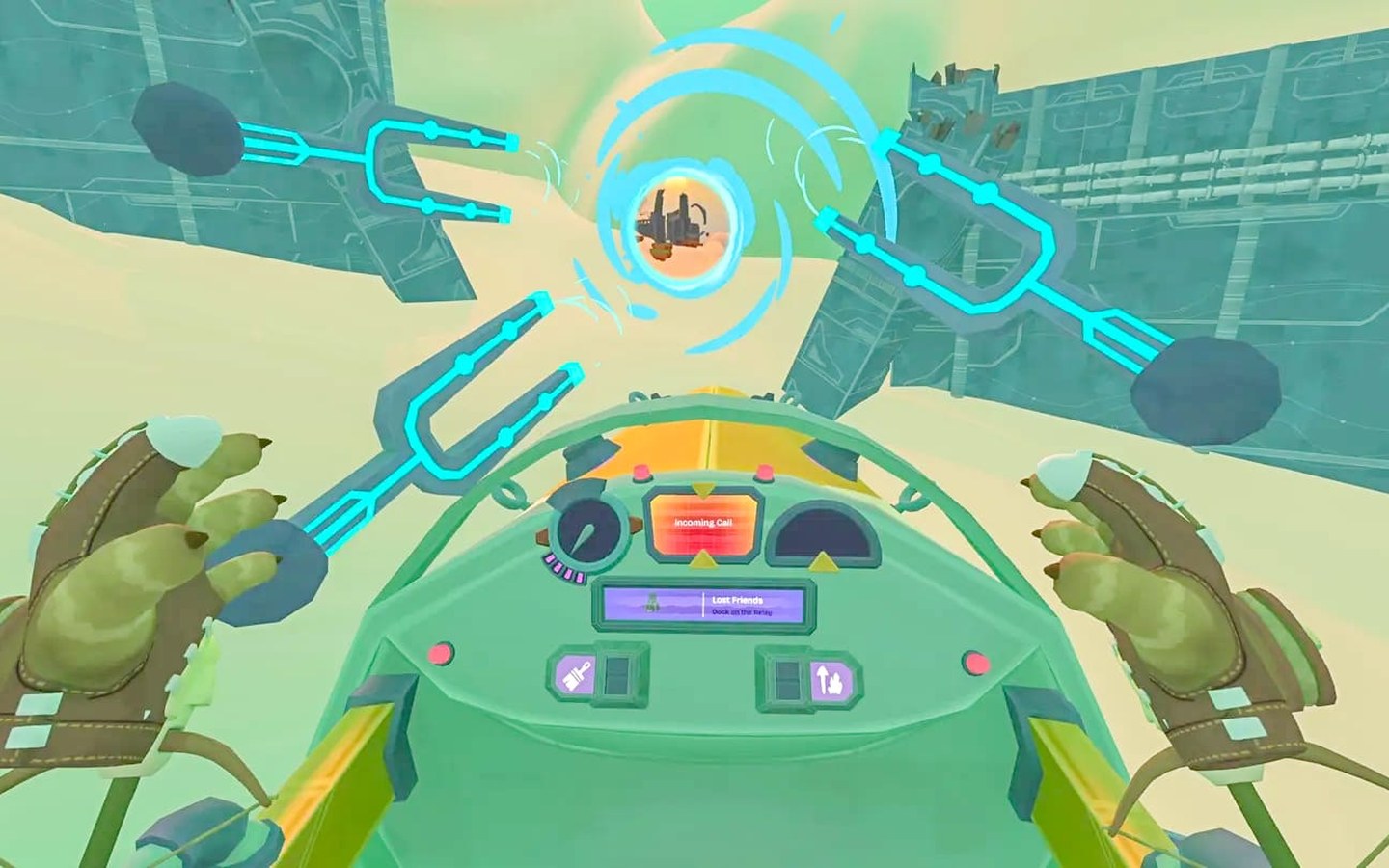
The reviewer’s 1967 BSA A65 motorcycle is a stripped-down machine—no ABS, no computers, just pure riding. Compass, a VR game from developer Vactrax (published by Clover Bite), channels that same philosophy. It’s a flight game for people who want to fly, not manage systems. The yoke is all you need: push to dive, pull to climb, bank left and right. Within minutes, you’re threading a nimble airship through floating ruins, leaning into turns like you’re carving a canyon road.
Intuitive Flight Controls That Feel Like Riding a Motorcycle
Grab the yoke with both hands and the connection is immediate. No memorizing button combos or monitoring altitude gauges. The controls are direct and forgiving, letting you feel the ship’s weight shift. There’s a muted fine-adjustment sensitivity, but the magic is in the broad, instinctive motions. The review draws a direct line to motorcycling: “banking my nimble little airship … in instinctive imitation of leaning a motorcycle into a long curve on an empty road.” That physicality—leaning into turns without thinking about it—is where Compass shines.
What elevates the experience are the moments of quiet. Ambient music hums, marshmallow clouds drift past, and you’re alone in an endless sky. It’s meditative, trusting atmosphere over adrenaline. For players tired of games that fear empty space, this is a balm.
Exploration and Puzzles: A Meditative Loop
The core loop is simple:
- Fly to a hub, talk to quirky anthropomorphic alien animals, and accept quests.
- Harvest floating crystals to unlock mist-shrouded puzzle zones.
- Solve environmental puzzles—pulling grappling hooks, redirecting energy beams—to reactivate towers.
- Link sub-areas to power up a wormhole and jump to the next zone, all while outrunning a giant space whale on a mission to deliver a cosmic egg.
The puzzles break up the flight time and grow in complexity, but they never truly stump you. They’re competent, sometimes clever, but rarely memorable. Still, they serve their purpose: adding variety and a dose of interactive storytelling to the journey.
Where Compass Could Soar Higher
For all its charm, Compass can feel repetitive. Quests often boil down to fetch-and-return errands. Zones lack visual diversity, and the world teases a larger, stranger universe that never fully materializes. Long sessions become physically wearing, and stick-based flight (which would be easier for extended play) isn’t the default. The minimalist world-building that makes the early hours mysterious eventually tips into feeling underdeveloped.
Yet those flaws don’t sink the game if you’re the right kind of pilot. Compass is a niche experience: slow, atmospheric, and unafraid to let you just exist in its sky. For VR explorers who value sensation over spectacle, it’s a flight well worth taking.
Source: Adapted from UploadVR’s review of Compass.