Google’s education announcements at ISTE 2026 double down on a clear philosophy: AI belongs in the classroom only when teachers are firmly in the cockpit. Instead of generic chatbots, the company is rolling out a set of connected, context-aware tools across Google Classroom, Chromebooks, and the Gemini app that are built to amplify—not replace—the human relationship between educator and student. The common thread is that every feature starts with teacher intention and is grounded in real curriculum.
Educator-Led AI: From Study Guides to Real-Time Insights
The centerpiece is a new family of teacher-led AI activities in Google Classroom. Educators can now create interactive study guides, assign adaptive quiz prep, and offer personalized homework support—all drawn directly from the specific class materials they select. Teachers get a dashboard with individual and class-level insights into how students engage with the content, so they can spot knowledge gaps and adjust instruction on the fly.
Three concrete experiences are landing soon:
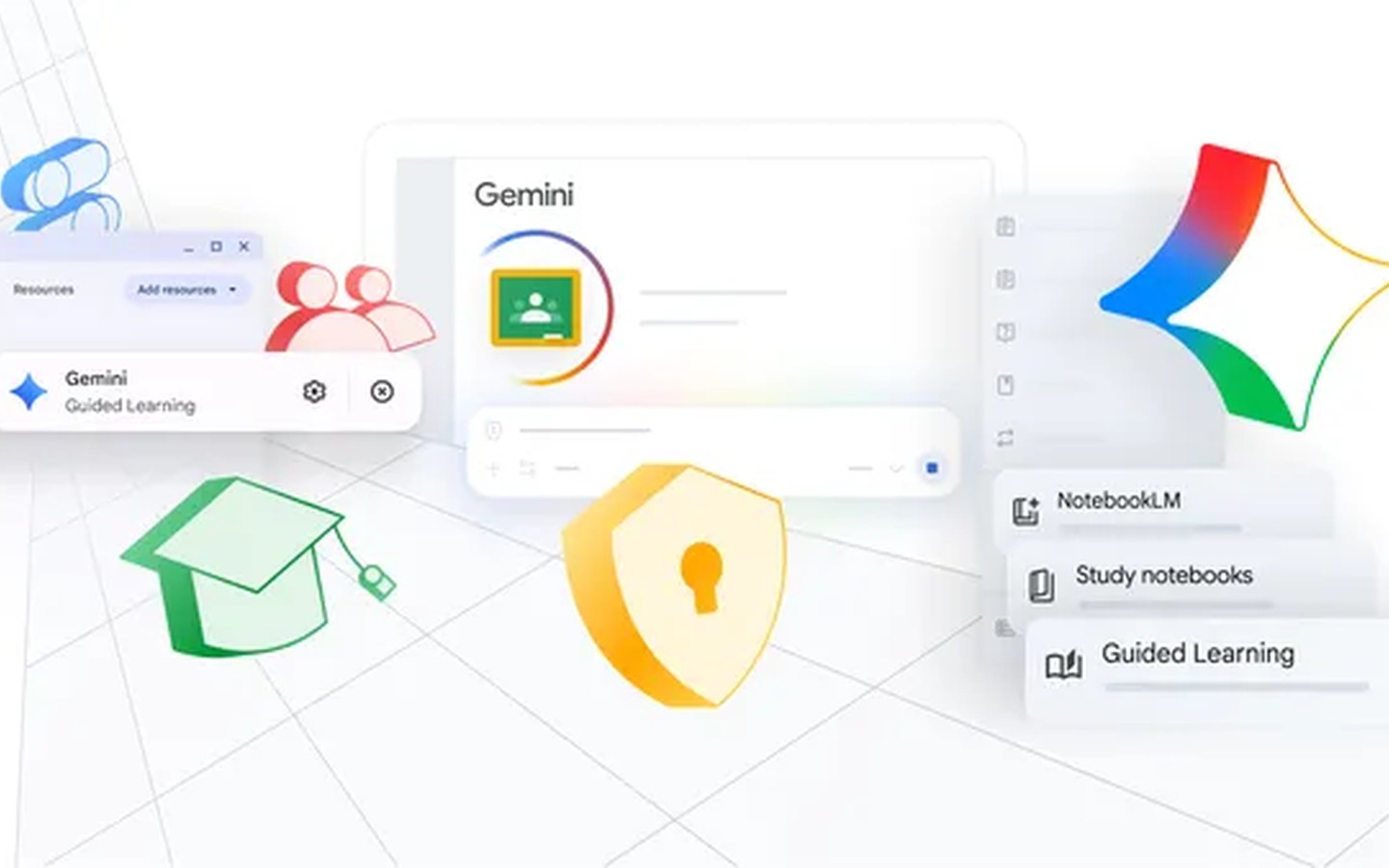
- Guided Learning in Gemini: A distraction-free, curriculum-informed space where students receive real-time support, while teachers monitor progress.
- Study notebooks in Gemini: Bite-sized lessons and quizzes that adapt as a student learns—ideal for exam prep anchored in class material.
- Teacher-led NotebookLM: Turns uploaded handouts into interactive flashcards, podcasts, and summaries, again with teacher insight into what’s working.
The approach is deliberately integrated: educators stay in the lead by curating source material, and the AI operates within that bounded context. This is a significant shift from open-ended chatbots that can go off-script.
Distraction-Free Chromebooks and a Classroom App Inside Gemini
Keeping students on task is a perennial challenge. Google is answering with Focus Mode inside Class tools on Chromebooks. Teachers can lock student screens to a single app—say, NotebookLM for vetted research or a Guided Learning session for in-class practice. A forthcoming toggle will let educators flip on real-time AI support with one click, reducing the temptation to wander.
On the back end, the new Classroom app in Gemini gives teachers a personal AI assistant that understands their unique class situation. It securely pulls in assignments, grades, and materials to help analyze student progress, spot trends, and draft tailored activities. Because it runs inside Google Workspace for Education, none of this data is used to train AI models. In the coming months, Google will also release a Google Classroom Model Context Protocol (MCP) server, allowing third-party EdTech platforms to build secure connections that tap into Classroom context without siloing workflows. That means a teacher could use their favorite grading tool and still have it reference the same assignments and standards.
Building AI Confidence, Not Just Tools
Tool-building is only half the equation. Google is pairing these releases with a major investment in educator readiness. The Google AI Educator Series, developed with ISTE+ASCD, aims to deliver AI training to all 6 million U.S. educators, helping them decide when and how to use these new capabilities. Additional funding is flowing to aiEDU to support Title 1 districts in building AI strategies, and to ISTE+ASCD for research into best practices for AI in student assessments.
On the student side, partnerships with The Princeton Review will provide no-cost practice ACT and GRE tests, making high-stakes test prep more equitable. These resources will be available directly through Google tools, connecting portable AI on a student’s phone or Chromebook to real academic outcomes.
Google’s overarching message is careful: technology should feel like a trusted teaching assistant, not a replacement. By keeping curriculum at the center, locking down distractions, and pouring resources into educator training, the company is positioning its AI as a classroom upgrade that respects the art of teaching.