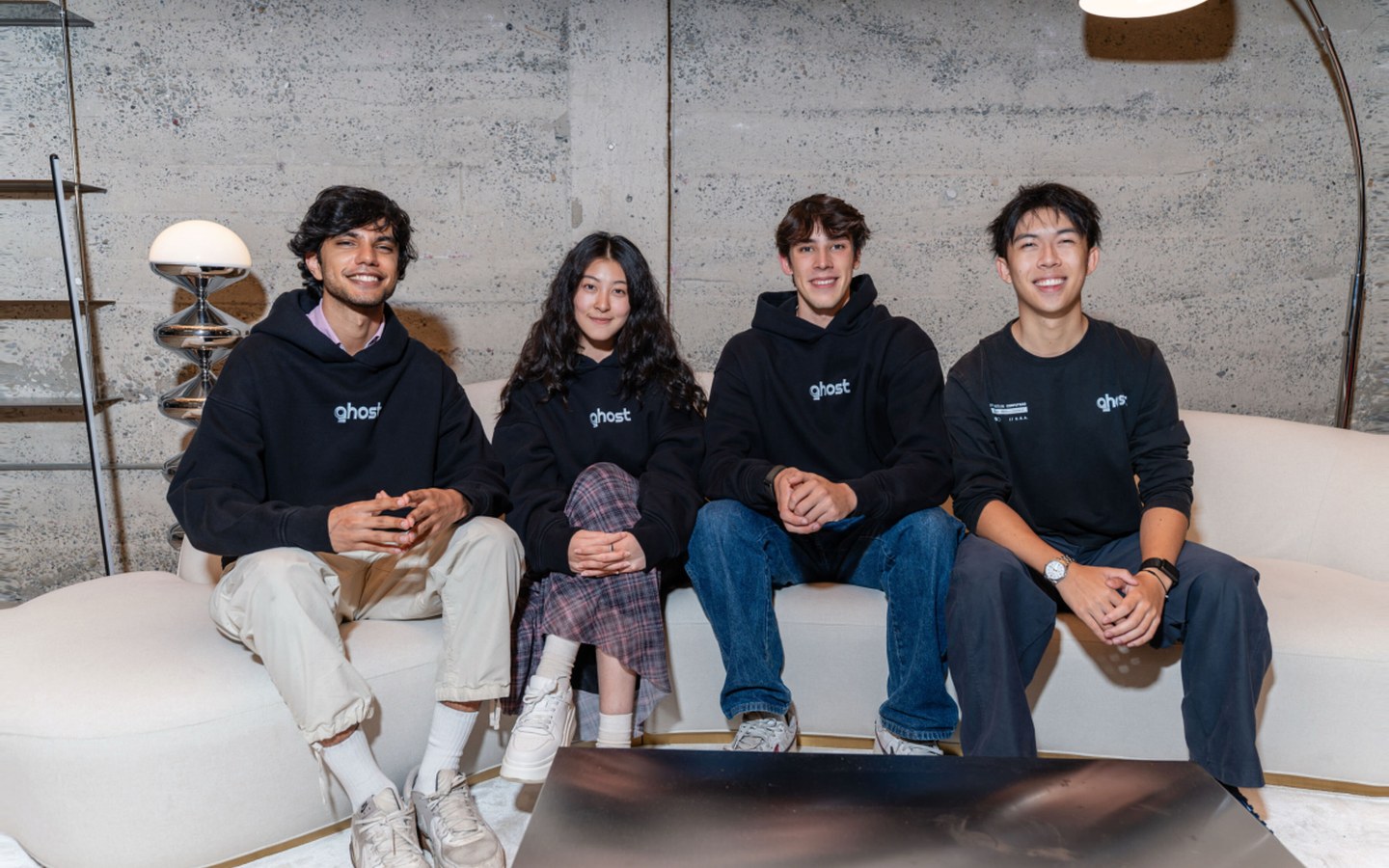
When Zain Javaid was 19, he thought he wanted to be a quant. He was one, got bored, and then ChatGPT arrived in 2022. Now he is the CEO of Ghost, a startup that just emerged from stealth after a year of building with an $11 million seed round led by Andreessen Horowitz. Other investors include Abstract, Audacious Ventures, SV Angel, and Nova. His founding team is strikingly young: Nicholas Chua, 19, Yifei Chen, 24, and Guatam Sharda, 23.
Ghost's first product is Core, a $3,499 personal computer designed specifically for AI agents that can take actions on a person's behalf. Javaid calls it a "brain box" without a screen. Users interact with it through a phone or app, and voice mode is available—though you speak into the Core app, not the box itself.
Inside Core
Core bundles an Nvidia RTX Pro 4000 SFF Blackwell GPU into the price, so customers don't need to buy a separate graphics card. It ships with three models preinstalled:
- Qwen-3.8-Next
- Qwen-3.8-27B
- Gemma-4-31B
Users can also install other models from Hugging Face or load their own trained models. Javaid says the device has its own software layer, browser, and filing system, and it can continuously process information and tasks without constant prompting. Pre-orders for the first batch opened Monday, and shipping is scheduled for the last week of October.
Core is built at Ghost's San Francisco facility. Javaid says the goal is to sell a fully functioning computer that doesn't require complex setup. The device can receive over-the-air updates, similar to how Tesla pushes software improvements. If a new generation of models comes out, Ghost asks users whether they want to switch, and auto-updates are available.
Local, private, and meant to outlive the company
Javaid is emphatic that Core is not a cloud service in disguise. Models and personal memory run locally, and all personal information is encrypted so that no cloud provider or third party—including Ghost itself—can meaningfully access it. Users control how much autonomy they give their Core agents.
He says all of the source code, logic, and model weights live on the device, not on external services. The team is also building a firewall that monitors every outgoing network request. If it sees the agent performing a sanctioned action or exfiltrating data it shouldn't, it rejects the request and flags it for user review. The device is programmed to keep working even if Ghost shuts down.
"The user owns all of it," Javaid says. "Once you buy the hardware, everything is stored, run, and processed on the device."
Why not just repurpose a Mac Mini?
Asked how Core differs from Apple's small desktop, Javaid argues that the Mac Mini is a general-purpose computer that can be configured for AI, while Core's hardware and software were built specifically for running AI agents from day one. Models are already installed, and the system is designed to reason over your life—how it remembers, takes action, and decides when to reach out.
He offers an example: Core might proactively send you a notification that you might be getting sick because it sees your resting heart rate is elevated, notices from computer history that you were up late working on a project, and knows it is flu season in San Francisco.
Javaid says he is not too worried about competition from established tech companies. "People sometimes give incumbents credit for having already built the product because they have the ingredients," he says. "If we can't do that, Apple isn't the reason we failed."
This report is based on TechCrunch's coverage by Dominic-Madori Davis.