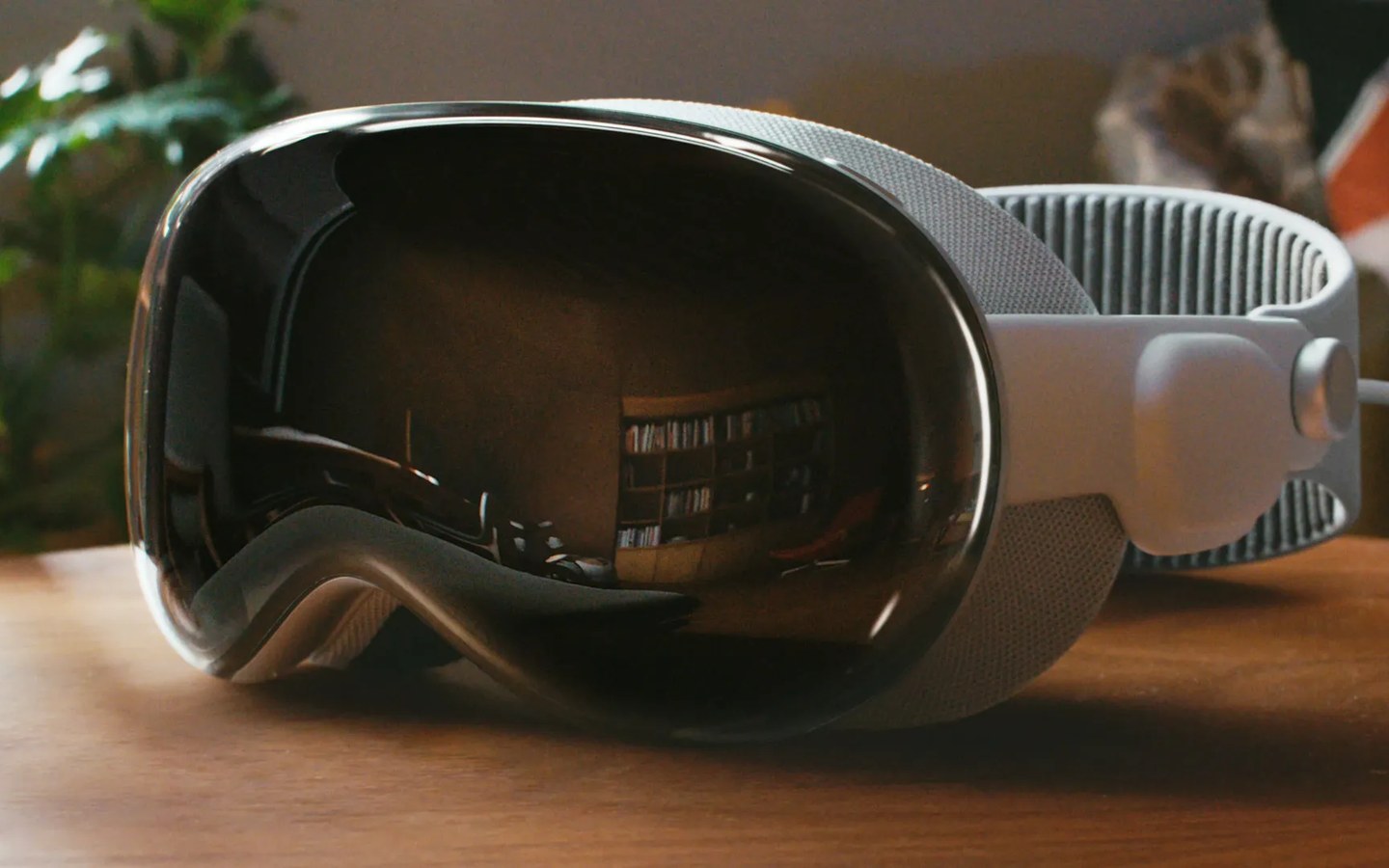
Apple uses a developer session to restate its spatial computing bet
Road to VR reports that Apple hosted a day-long Meet with Apple developer session this week focused on visionOS. Yuri Imoto, a product manager in Apple's Spatial Computing division, was direct: "We want to ensure that we're obviously very committed to the platform." He added that spatial computing "has evolved pretty rapidly" in a short time, and pointed to real-world use across a set of professional fields:
- surgery
- healthcare
- education
- training
- immersive film
The clearest third-party hardware news came from Blackmagic, which unveiled a pro-level ambisonic microphone with a 108-microphone array and an internal processor that converts signals natively for Apple spatial content. For immersive video creators, that removes a manual stitching step between capture and editing. It is a small but concrete sign that Apple's ecosystem is pulling in specialized tools.
The Vision Pro M5 was an evolution, not a leap
Apple's most recent headset release remains the Vision Pro M5, shipped in October 2025. Road to VR describes it as an incremental step, with improvements in:
- processing performance
- visual clarity
- refresh rate
- comfort
Those are welcome upgrades, but they do not answer the bigger question about next-generation hardware. The software and content side has been faster. Over the past year, Apple has added user-experience work for both casual and enterprise users, immersive documentaries, live MLB baseball games, and third-party support for tracked controllers and accessories on Vision Pro.
Road to VR makes a useful distinction: Apple is committed to spatial computing and the visionOS platform, but that is not the same as committing to Vision Pro as a product line. Apple is known to be developing smart glasses and AR hardware alongside mixed reality devices, any of which could run a version of visionOS.
What the tea leaves suggest
Supply chain analyst Ming-Chi Kuo reported earlier this summer that a Vision Pro 2 has been pushed to late 2028 or 2029 at the earliest. Apple is said to be prioritizing smart glasses by late 2027, aiming at rivals such as Meta and Google/Samsung.
That timing matters. If the next major Apple wearable is lighter and more AR-focused, visionOS will likely evolve toward that hardware rather than chasing a faster headset refresh. Road to VR expects the platform to keep appealing to professionals, while consumers continue to evaluate the current Vision Pro M5.
Does that conflict with Apple's public message? Not really. The company can be fully committed to visionOS as an operating system and developer platform while letting expensive mixed-reality headsets take a back seat. The developer session was not a hardware roadmap, but it was a clear signal that spatial software is not winding down.