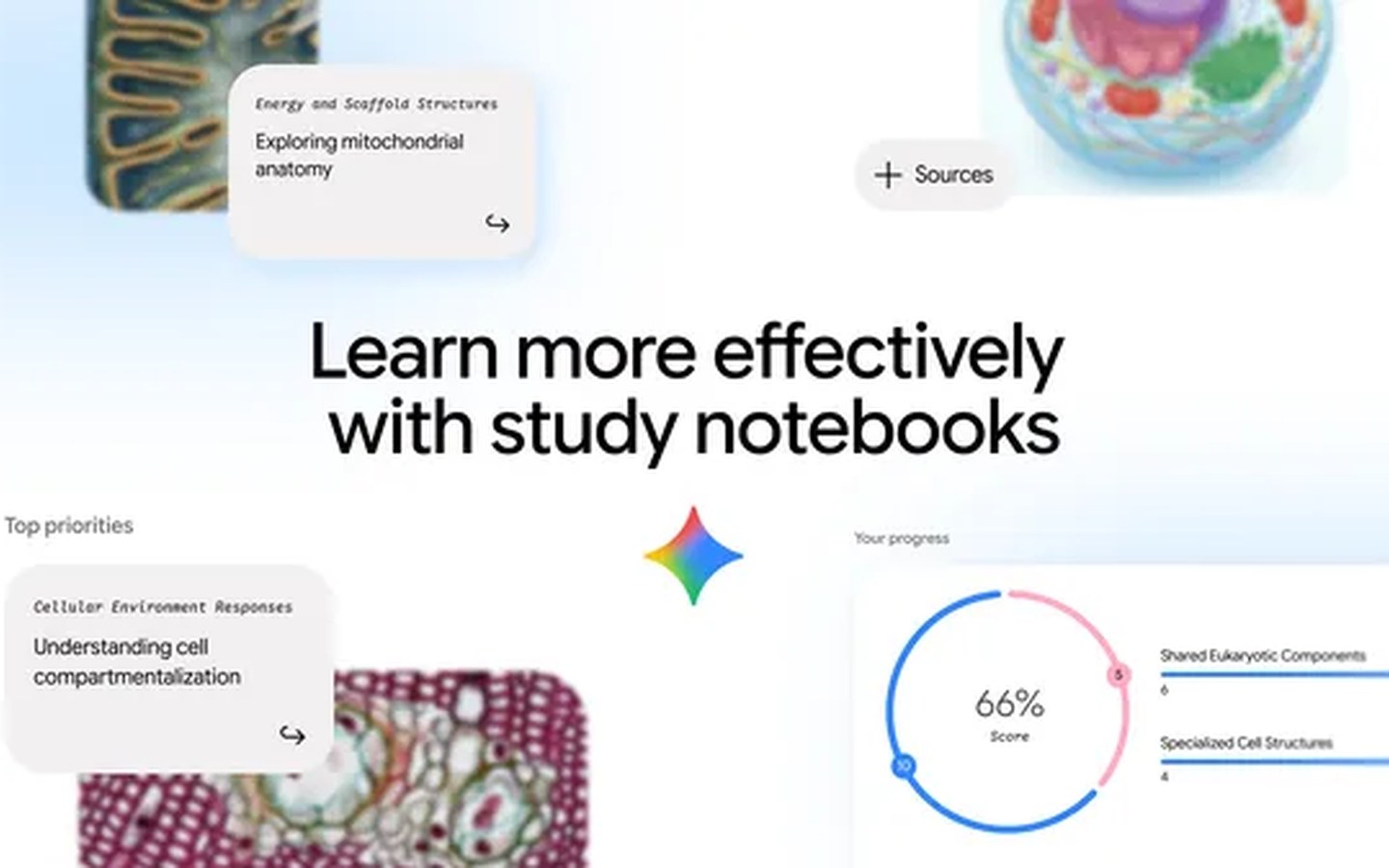
Google has quietly transformed the Gemini app into something much more ambitious than a chatbot: a full-fledged adaptive learning platform. The new study notebooks feature creates a dedicated, interactive space where students can upload class materials, receive tailored lessons, and track mastery of specific skills—all powered by Gemini’s AI. It’s an attempt to replace scattered study sessions with a focused, data-driven routine that adapts in real time.
Building Your Personalized Foundation
Every study notebook starts with what you bring to it. Rather than generic study guides, you upload your syllabus, lecture notes, reading materials, or any other course content. Gemini app immediately puts those documents to work by generating a custom diagnostic quiz that establishes your academic baseline. The AI then parses the results into a clear map of strengths and weaknesses—no guesswork, no wasted review.
This initial assessment is the engine behind the entire notebook. It pinpoints exactly which subtopics need attention, replacing a one-size-fits-all approach with a hyper-personalized curriculum. From there, the notebook builds a sequence of short, targeted lessons designed to address your specific knowledge gaps. Each lesson weaves in practice quizzes that pull directly from the materials you provided, so the link between what you uploaded and what you’re tested on stays transparent and relevant. While studying, you can pause at any moment to ask clarifying questions right inside the notebook—no need to jump to a separate chat. Google says later this summer, lessons will gain even more depth with interactive diagrams and visualizations.
Adaptive Practice and Real-Time Progress Tracking
Once you’re moving through lessons, the backend does something unusually granular. Study notebooks break your learning goal into more than 100 specific learning objectives, then group them under broader topics. A live progress dashboard labels each objective as one of three states: “Strengths,” “Focus areas,” or “Not started.” These labels update automatically as you complete quizzes in follow-up lessons, so you always see exactly where you stand.
This isn’t passive tracking. The dashboard actively ranks and recommends your top-priority lessons based on your performance, guiding you to the areas that will move the needle fastest. Yet you’re not locked into a rigid path—you can filter and browse by strengths, focus areas, or any topic to double down on specific challenges or review material you’ve already mastered. The system turns a sprawling subject into a manageable, ordered list of micro-skills, and the feedback loop feels immediate.
Acing Standardized Tests and Connecting with NotebookLM
For students facing high-stakes exams, study notebooks now include dedicated prep for the SAT, using authoritative questions from The Princeton Review. The same structure applies: an initial diagnostic, personalized bite-sized lessons, and progress checks that mirror the test’s demands. This means authentic practice without the need for a private tutor or a costly prep course. Google plans to expand this to other major exams this summer, including JEE, NEET, ENEM, ACT, and GRE, making the feature useful for a wide range of academic and career gateways.
Behind the scenes, the notebook’s uploaded sources are integrated across the Gemini app and NotebookLM. That means you can seamlessly reference past chats or pull your class materials into NotebookLM to generate interactive flashcards, Video Overviews, and other study aids without re-uploading anything. It’s a contiguous ecosystem: the Gemini app handles adaptive quizzing and lesson delivery, while NotebookLM offers deeper, multi-format review.
Study notebooks are rolling out globally in all languages. This is not a limited pilot or English-only experiment. The combination of phone-first access, personalized syllabus-based learning, and connected AI tools could change how millions of students prepare, practice, and measure their understanding—anytime, anywhere.